What should you compare before buying?
Start with how long you usually iron for and which fabrics you iron. Then check how each appliance fits your storage space and the maintenance you’ll be able to keep up with.
Steam iron
Worth considering: for shorter sessions, if you want an appliance that’s easy to set up and put away.
The trade-off: if you regularly iron very large loads or difficult fabrics, compare its crease-removal results with those of a steam generator.
Steam generator
Worth considering: if you often have large piles of laundry and difficult fabrics to iron, as UFC-Que Choisir’s guide suggests.
The trade-off: the base takes up more space than an iron, and filling and set-up requirements vary by model.
| What to consider | What to check | What I need |
|---|
| Amount of laundry |
Reservoir capacity, whether you can top it up during a session and the instructions in the manual. Check whether a steam generator has a limited run time or can be refilled while in use. |
I often iron large piles of laundry and want to avoid having to stop to refill the reservoir. |
| Difficult fabrics |
Crease-removal results on the fabrics you iron, if comparable test results are available. Steam output in g/min or a steam boost figure alone doesn’t tell you how well creases are removed: UFC-Que Choisir also assesses performance on different fabrics. |
I often iron linen and thick cotton; I want to judge results on these fabrics, not just look at a steam output figure. |
| Handling |
Weight of the iron in your hand, cord length and how much space it takes up on the ironing board. For a cordless iron, check how often you’ll need to return it to its base. |
Taking out the appliance and using it for a long time should both feel manageable. |
| Set-up and storage |
How long the model takes to heat up, the size of the base and where you can store it after use. If you need to move a steam generator, check whether it has a transport lock. |
My sessions are sometimes short, and I need to be able to put the appliance away without reorganising the cupboard. |
| Water and limescale |
Which type of water is permitted, and the descaling frequency and method specified in the model’s manual. Philips notes that limescale builds up more quickly in hard-water areas on the appliances concerned. |
If I live in a hard-water area, I want to be able to follow the water and maintenance guidance for the appliance I choose. |
Which brands should you consider?
These examples show different configurations worth comparing. Features listed for one model don’t necessarily apply to the brand’s entire range.
Calor
Calor offers standard and cordless irons, as well as steam generators.
- Calor’s product listing for the Freemove Power FV6672C0 cordless iron specifies a charging base, a weight of 960 g and a 30-second heat-up time.
- For a long session, check how often your chosen iron needs recharging. For a steam generator, check the filling and maintenance requirements for the specific model.
Philips
The range includes steam irons and steam generators, with reservoir sizes and features that vary by model.
- Philips specifies a 1.5 L reservoir for its PSG7200/20 steam generator. Consider this alongside the length of your usual ironing sessions.
- Water requirements depend on the appliance. Philips recommends taking particular precautions in hard-water areas for the models concerned.
Braun
The CareStyle range includes steam generators whose capacity and maintenance requirements should be checked for each model.
- Braun specifies a 2 L reservoir and an integrated CalcClean system for the CareStyle 3 IS3132WH.
- These details apply to the IS3132WH. Don’t assume they apply to another CareStyle 3 model, and check its own maintenance instructions.
Steam generators available on Joybuy
These three steam generators give you a chance to compare appliances designed for ironing large amounts of laundry. Their inclusion here doesn’t replace comparing them with an iron if shorter sessions, set-up or storage are your priorities.
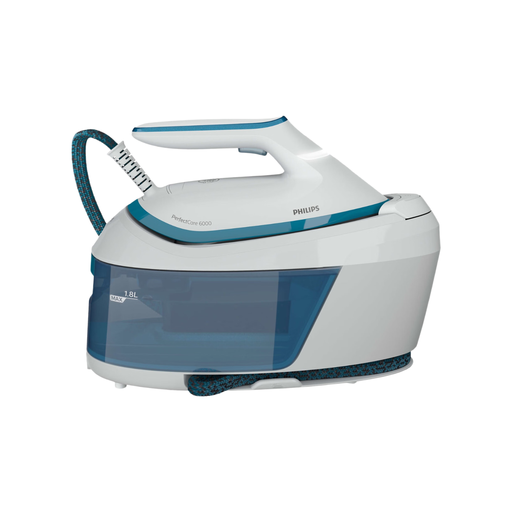 Image unavailable
Philips PerfectCare 6000 PSG6022/20 steam generator
For longer sessions, check in the manual whether you can refill this steam generator while ironing. Also check the water guidance and descaling instructions before choosing.
View on Joybuy
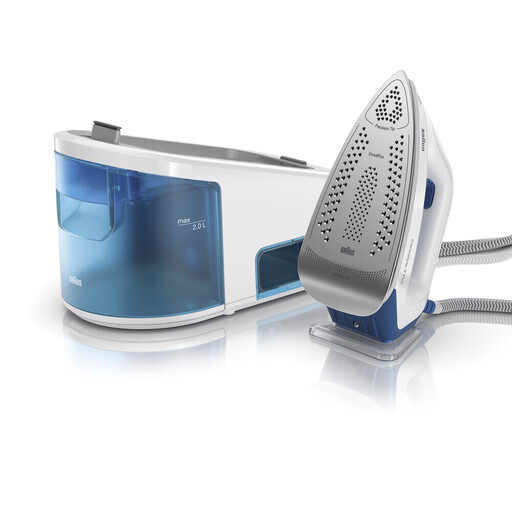 Image unavailable
Braun CareStyle 3 IS3157BL, 2 L, 2 400 W
The 2 L reservoir is worth considering for longer sessions, but it doesn’t tell you exactly how long you can iron for. Check the IS3157BL manual for instructions on refilling during use and descaling.
View on Joybuy
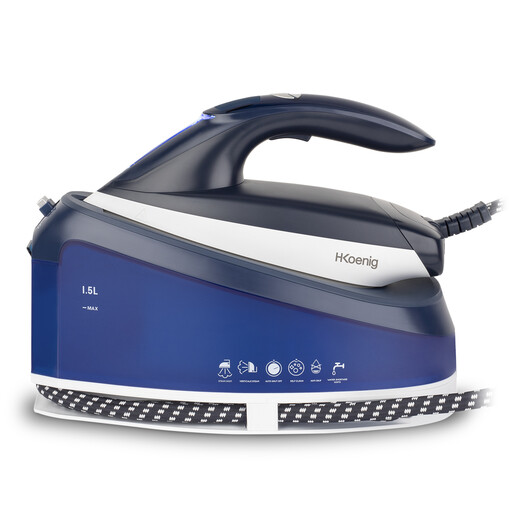 Image unavailable
Hkoenig V7, 8-bar steam appliance
The stated 8 bar pressure isn’t enough on its own to assess how well it removes creases from linen or thick cotton. For a long session, check the reservoir capacity and filling method, as well as the maintenance instructions.
View on Joybuy
Frequently asked questions
Do you always need a steam generator for large loads?
No. UFC-Que Choisir recommends steam generators for large quantities and difficult fabrics, but they take up more space than an iron. If your sessions are short or storage space is limited, compare a steam iron on the fabrics you usually iron too.
What does ‘unlimited run time’ mean for a steam generator?
On the models concerned, this means the reservoir can be refilled during a session. Check the chosen model’s manual for instructions on refilling, as well as the reservoir capacity and heat-up time.
Can you use tap water?
It depends on the model and its instructions. Philips says its appliances concerned are designed for tap water, but recommends using distilled or demineralised water, or a 50% mix, in hard-water areas. Check your appliance’s manual before filling the reservoir.
What descaling maintenance should you expect?
Choose a process you can follow regularly, whether it involves a collector, a rod or a built-in programme. According to Calor, limescale build-up can reduce steam output and damage a steam generator. Follow the method and schedule specified in the model’s manual.


