Households with large piles of laundry
You regularly iron lots of clothes, sheets or shirts in one session. A steam generator is worth comparing with your iron, provided its filling and storage arrangements suit your routine.


A steam generator is worth considering if you regularly iron large piles of laundry or challenging fabrics such as linen and heavyweight cotton. A steam iron is still a good choice if big ironing sessions are occasional, or if storage space and a quick start matter more. Either way, check how easy the specific model is to fill, maintain and store, rather than relying on its pressure rating alone.
You regularly iron lots of clothes, sheets or shirts in one session. A steam generator is worth comparing with your iron, provided its filling and storage arrangements suit your routine.
Linen, heavyweight cotton or certain mixed fabrics often end up in your laundry pile. Compare how well the appliance removes creases from these materials instead of relying solely on the advertised steam figures.
You want to tackle a lot of laundry, but also need an appliance that’s easy to take out, move and put away. The base’s dimensions, the appliance’s total weight and its heat-up time could all tip the decision towards an iron or a steam generator that suits your space.
To choose between an iron and a steam generator, start with the laundry you iron most often. Then consider whether the interruptions and storage space required by the appliance are manageable in your home.
Consider this: for long, frequent sessions, if the model you choose can actually be refilled while in use.
Bear in mind: the base takes up space, even if being able to refill it means fewer interruptions.
Consider this: if its water capacity suits the usual length of your ironing sessions.
Bear in mind: you may need to refill it or wait during a very large ironing session. Follow the procedure specified for your model.
Consider this: if big ironing sessions are occasional and you want an appliance that’s easy to take out and put away.
Bear in mind: holding the iron and stopping to refill it may become more of a drawback during a long session.
| Criterion | What to check | Who is this for? |
|---|---|---|
| Crease removal across a large pile | Look for tests on the fabrics you iron and check the tank’s capacity and how it can be refilled. | If linen, heavyweight cotton or a large pile of laundry needs too many passes, I mainly want to keep up a good ironing pace. Around 42% of consumers would make this their priority. |
| Storage space and getting started | Measure your storage space and check the model’s full dimensions, carrying weight and heat-up time. | When space is limited, I want to be able to take the appliance out and put it away without it becoming a chore. This would be the top priority for around 25% of consumers. |
| Maintenance and lifespan | Read the descaling instructions for the model and find out about spare parts and after-sales service. | For frequent sessions, I want maintenance I can keep up with, and a solution if a part needs replacing. Around 33% of consumers would prioritise this. |
According to UFC-Que Choisir, manufacturers’ advertised steam figures are not always comparable across brands. A high figure alone therefore doesn’t tell you how well the appliance will remove creases from your laundry.
As well as checking the advertised specifications, look at crease-removal tests across different fabrics and consider how easy the appliance is to handle.
A steam generator has a separate tank and iron, but the complete unit takes up more room to set up and store than a standard iron. Heat-up times also vary between models.
Before choosing, compare the appliance’s full dimensions with your ironing board and cupboard, then check how it locks away and how long it takes to get started.
UFC-Que Choisir looks at limescale build-up in its endurance tests of steam generators. Having a limescale collector doesn’t mean you can skip the care instructions for your appliance.
Check that the manual sets out maintenance steps you can follow, and find out whether the relevant parts are available.
The Express and Pro Express ranges include several steam generators worth comparing for big ironing sessions.
The CareStyle range includes steam generators to consider if size, handling and tank capacity are important to you.
Depending on the model, some PerfectCare steam generators combine a removable tank with ironing that requires no manual temperature setting.
Lift steam generators and systems with an active ironing board suit different ironing setups.
These steam generator models give you options to consider for long ironing sessions. Choose between a steam generator and an iron based on your laundry, the space available and the conditions of use for each model.
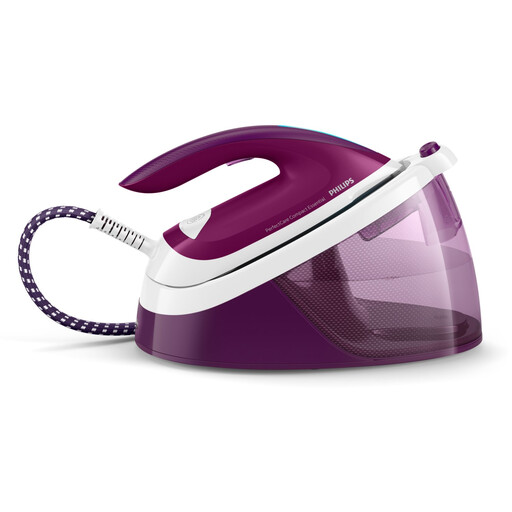 Image unavailable
For long sessions, consider whether its 1,3 L tank suits how often you’re willing to refill it. The title and specifications list GC6842/30, while the product description’s introduction mentions GC6840/20. Confirm the model number before relying on the advertised specifications.
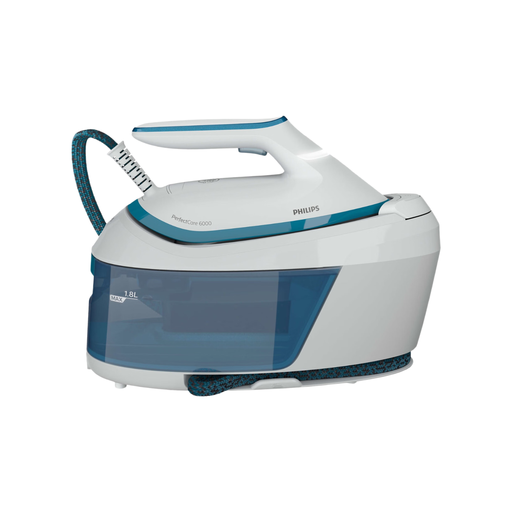 Image unavailable
If you’re considering this model for long sessions, compare its refilling requirements with the usual length of your ironing sessions. Also check its heat-up time and the care instructions for the PSG6022/20.
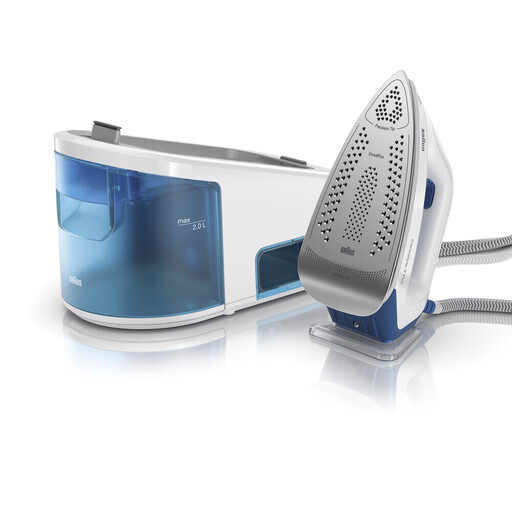 Image unavailable
For a large pile of laundry, consider whether the stated 2 L tank capacity suits your session. If you store the appliance in a small space, check its actual dimensions, heat-up time and the descaling instructions for the IS3157BL.
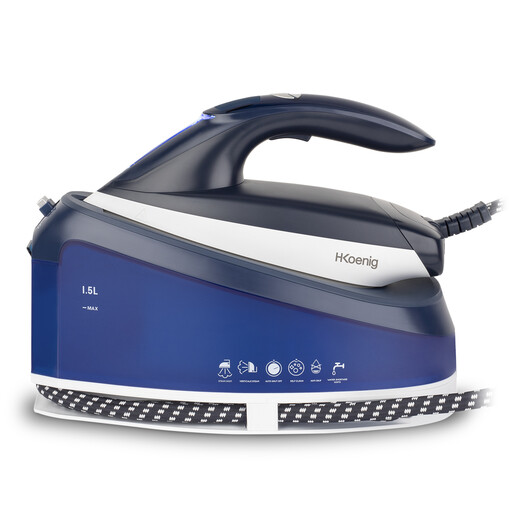 Image unavailable
If you’re choosing this steam generator for longer sessions, don’t rely on the 8 bars in its name alone: look for crease-removal tests on fabrics like yours. Also check its dimensions, heat-up time and maintenance instructions.
Consider a steam generator if you often iron large amounts of laundry or challenging fabrics such as linen and heavyweight cotton. For occasional sessions, an iron may be easier to take out and put away. Weigh up this trade-off against the space you have available.
No, these figures aren’t enough to compare how well each model removes creases. UFC-Que Choisir points out that manufacturers’ figures aren’t always based on comparable measurement methods, so it’s better to look at tests covering several types of fabric.
No. The DGCCRF reminds consumers that the CE marking isn’t a certification mark, so it can’t be used to compare the ironing performance of appliances. For this purpose, compare crease-removal results and practical conditions of use.
Take the electrical appliance to a suitable collection scheme rather than putting it in your ordinary household rubbish. When buying a new appliance, ask about having an old one of the same type taken away. Other take-back options depend, among other things, on the terms that apply at the collection point.