Households with large piles of laundry
If you often tackle sheets, shirts and thick fabrics in one ironing session, the volume makes a steam generator iron a particularly good option. UFC-Que Choisir recommends it for ironing large quantities.


If you regularly iron large piles of laundry, especially linen, thick cotton or fabrics that are difficult to smooth out, a steam generator iron is worth considering: UFC-Que Choisir considers it suitable for large quantities of laundry. For a few items at a time, or if you don’t have room for the base on your ironing board or in your storage space, a steam iron is easier to handle and quicker to set up. Before choosing a steam generator iron, also check how it’s filled and what’s involved in limescale removal.
If you often tackle sheets, shirts and thick fabrics in one ironing session, the volume makes a steam generator iron a particularly good option. UFC-Que Choisir recommends it for ironing large quantities.
If you have to take each appliance out and put it away again, consider how much room the base will take up on your ironing board and in your cupboard. A product described as compact won’t remove the need to check its dimensions.
If your water is hard and you iron often, choose a descaling routine you can keep up with. UFC-Que Choisir highlights the importance of this maintenance for both steam irons and steam generator irons.
Consider it: if one tank is usually enough for your ironing session.
Bear in mind: the filling process and, depending on the instructions, the time needed for the appliance to cool before you can continue.
Consider it: for long sessions, if the model explicitly allows you to refill it while in use.
Bear in mind: you’ll need space to set the base down and store it, as well as time for limescale maintenance.
Consider it: for a few items at a time, or if you don’t have space for a separate base.
Bear in mind: it’s less suited to regularly tackling large piles of difficult-to-iron fabrics.
| Factor | What to check | Who it matters to |
|---|---|---|
| Time and effort | Compare continuous steam output and results on your usual fabrics, rather than looking only at the advertised pressure. | When sheets and thick fabrics pile up, I want to get through them without making repeated passes or tiring my hand. Around 36% of consumers put this need first. |
| Keeping the session going | Check the tank capacity and whether the instructions allow you to refill it while the appliance is in use. | If I’m ironing for a long stretch, having to stop and refill the tank bothers me more than the tank’s size itself. This is the top priority for around 29% of consumers. |
| Storage and ease of handling | Measure the available space on your ironing board and shelf; check the dimensions of the base and the weight of the whole appliance. | I need to be able to set up the appliance and put it back in the cupboard easily after each session. For around 21% of consumers, ease of handling is the priority. |
| Limescale maintenance | Read the descaling instructions and check the model’s guidance on the type of water to use. | If I live in a hard water area, I want to know exactly what maintenance I’ll need to carry out to keep using the appliance. This is the main consideration for around 14% of consumers. |
Pressure, continuous steam output and crease removal don’t measure the same thing. A figure in bars isn’t enough to predict how well an appliance will perform on your laundry.
Check the continuous steam output and, where available, test results on the fabrics you iron. Distinguish between advertised figures and measurements taken during testing.
A steam generator iron has a separate tank, but you’ll need a stable place for the base while ironing and somewhere to store it afterwards.
Measure your ironing board and storage space, then check the dimensions, total weight, iron lock and cable storage for the model you’re considering.
A collector or automatic cycle doesn’t mean you can skip the recommended maintenance. UFC-Que Choisir notes that limescale build-up is a major cause of steam generator iron breakdowns.
Read the instructions before buying and choose a maintenance routine you can follow as often as required.
A steam generator iron is well suited to large quantities, but according to UFC-Que Choisir, it won’t necessarily make a noticeable difference on every fabric compared with a good steam iron.
If you mainly iron small batches of lightweight items, weigh up the benefits of a steam generator iron against the space it takes up and the time it needs to heat up.
The range includes compact steam generator irons as well as models designed for longer, more intensive sessions.
The PerfectCare range includes steam generator irons with different sizes, tank capacities and maintenance requirements.
The CareStyle range lets you compare different tank capacities and maintenance options, depending on the model.
These steam generator irons are worth considering if you iron often or for long periods. Before choosing, compare the exact variant, the space needed for the base and the maintenance requirements.
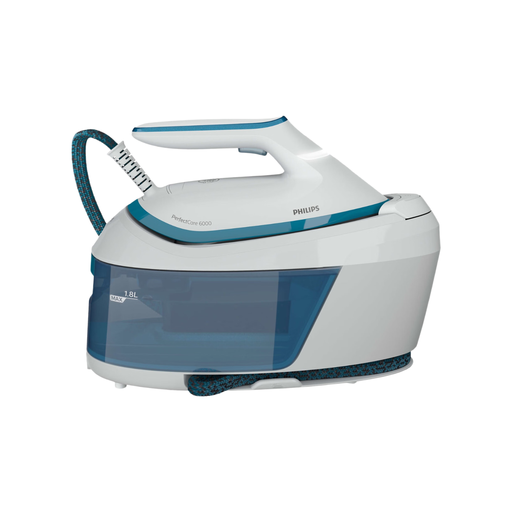 Image unavailable
If you have large piles of laundry, check this steam generator iron’s tank capacity and how it’s refilled before choosing this model. Also measure the space available for the base and read the maintenance instructions.
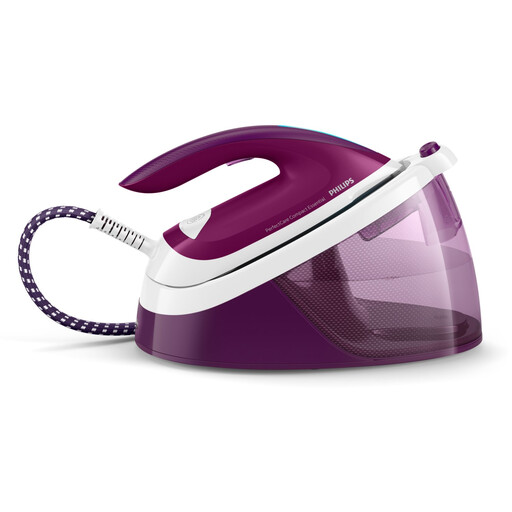 Image unavailable
For regular ironing sessions, compare the stated 1.3 l capacity with how long you usually iron for. Another model, GC6840/20, is also mentioned in the description. Before buying, confirm that the features you’ve checked apply to the GC6842/30.
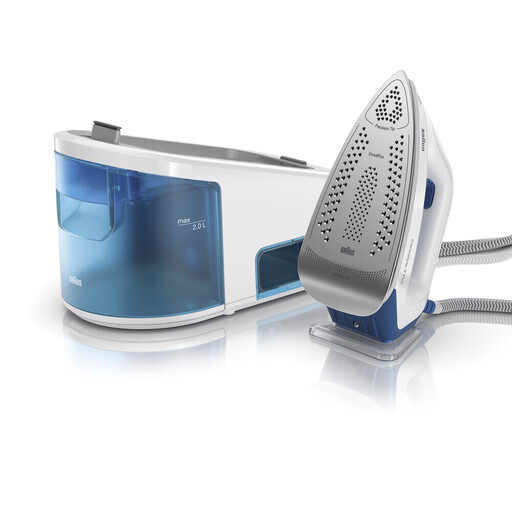 Image unavailable
If you’re ironing a large number of items in one session, the stated 2 l tank capacity is worth comparing with the filling method. The model is listed at 2,400 W; check the dimensions of the base and the limescale maintenance instructions for the IS3157BL, rather than assuming they’re the same as those for another CareStyle 3.
A steam generator iron is most useful when you regularly iron large quantities, according to UFC-Que Choisir. There’s no set number of items that applies to every household. Consider linen, thick cotton and other difficult-to-iron fabrics too, then weigh the benefits against the space the base will take up.
Not necessarily: follow the water guidance in your model’s instructions. UFC-Que Choisir says that most steam generator irons are designed for tap water and stresses the importance of regular descaling. Adjust your maintenance routine to how often you use the appliance and how hard your water is.
Check whether the model requires you to empty a collector, run a cleaning cycle, rinse the tank or use a consumable. The advertised system doesn’t replace following the instructions; also check the repair terms for the specific model you choose.
Take the appliance to a suitable electrical equipment collection point. The French ministry responsible for ecological transition lists collection points and recycling centres. If you’re buying a replacement of the same type, ask the retailer whether they can take your old appliance back.