Which households is it for?

Households with a regularly large pile of laundry

You regularly iron numerous shirts, sheets or clothes and want to reduce the time and effort required for each session. Que Choisir states that a steam generator is suitable for ironing large quantities.

People who work with thick or difficult-to-iron fabrics

You often deal with linen, heavyweight cotton or blended fabrics with pronounced creases. Your choice should also take into account the space needed to store a steam generator and the care label for each fabric.

Households with limited space or mainly touch-ups to do

You want an appliance that is quick to get out, easy to handle and compact, or you occasionally want to freshen up a garment on a hanger. In this situation, a standard iron or an additional garment steamer may make more sense than a bulky steam generator.

Buying priorities

Limited-capacity steam generator

Choose this if: you regularly iron a lot of laundry and are happy to plan your refills.

Bear in mind: the base is bulkier than an iron and the heating time varies by model.

Continuous-fill steam generator

Choose this if: being able to add water during a long session without waiting for the appliance to cool down is important.

Bear in mind: the same storage considerations apply, along with the maintenance specified for the exact model.

Standard steam iron

Choose this if: your volumes are moderate or getting it out quickly and storing it easily matter most.

Check: its capacity and performance on the fabrics you iron most often.

Garment steamer as an additional appliance

Choose this if: you mainly freshen up lightly creased clothes or garments on hangers.

Limitation: it may not replace an ironing appliance for a large pile of laundry.

Priority What to check Your needs
Reduce effort during long sessions Compare the tank capacity, the separation between the iron and the tank, and crease-removal tests on the relevant fabrics. Do not rely solely on the advertised steam output. I want to tackle a large pile without making repeated passes over stubborn creases or handling an unnecessarily heavy iron.
Match the appliance to the available space Measure the cupboard, storage area and space on the ironing board. Check the dimensions, start-up time and weight of the exact model. I prefer a solution that is easy to take out and put away between two short sessions. Que Choisir presents an iron as an option focused on cost and ease of use.
Plan for limescale maintenance Note the full reference, limescale protection system, any alerts and the manufacturer's procedure. Follow the cooling steps and use the required container whenever the instructions specify them. I want to maintain the appliance without using a generic method that may not be suitable for my model, particularly if the water is hard.
Protect your fabrics Check the care label, choose the appropriate setting and review the limits of the fabric programme. According to Que Choisir, synthetics often require a lower temperature than cotton or linen. My laundry includes cotton, synthetics and delicate items; I want to avoid using excessive heat on sensitive fibres.

Mistakes to avoid

  • Choosing a steam generator based solely on its advertised steam output or pressure

    Que Choisir points out that steam output alone does not identify a good appliance, and that manufacturers' pressing figures are not always comparable without a standardised measurement method.

    Also compare crease removal, weight, heating time, tank, dimensions and the maintenance requirements of the exact model.

  • Buying a bulky steam generator for occasional touch-ups

    A steam generator can help with large quantities of laundry, but it needs more storage space and may be less immediate to use than a standard iron.

    Measure the available space and consider how often you actually have ironing sessions before choosing. For a few touch-ups, compare a compact iron or an additional garment steamer first.

    Allow enough space for storage and for use on the ironing board.

  • Using a generic limescale procedure or working on a hot appliance

    Descaling steps vary between product ranges. For some Philips steam generators, the procedure specifically requires you to unplug the appliance and allow it to cool for two hours.

    Keep the exact reference, consult the manufacturer's instructions and follow only the method intended for your appliance. Do not carry out electrical repairs or descale the appliance contrary to the instructions.

    Failure to follow the instructions may result in leaks, limescale-related marks or reduced steam output.

  • Ironing without taking the care label and fabric into account

    Synthetics and delicate fibres require a lower temperature than cotton or linen; excessive heat can damage some fabrics.

    Read the care symbol, sort your laundry according to its heat sensitivity and use the recommended setting. Even an appliance with a safe-temperature setting is only suitable for fabrics that can be ironed.

Brand guide

Philips

The PerfectCare range includes steam generators, and the brand also offers garment steamers. It may appeal to shoppers who want to identify their appliance by model number and consult the relevant maintenance instructions.

  • Philips documents different descaling procedures for different product ranges and offers Calc Clean alerts on certain models.
  • Cooling steps and the accessories required vary by steam generator; they should not be generalised across the entire range.

Braun

The CareStyle steam generators and QuickStyle garment steamers are worth considering when ergonomics and storage are among your buying criteria for regular sessions.

  • Braun offers compact models in the CareStyle range and documents certain maintenance features for specific product ranges.
  • Advertised features, such as the format, tank or AutoClean, must be checked for the exact reference and do not automatically apply to every CareStyle model.

Calor

Calor offers steam generators and irons, with a portal providing manuals and spare parts by product reference. This may be important if access to documentation and genuine parts is a priority.

  • The brand provides manuals and a catalogue of parts and accessories for certain references.
  • Part compatibility, the maintenance procedure and availability must be checked model by model.

Joybuy products

These Joybuy options mainly cover steam generators for regular laundry sessions, along with a standard steam iron for households that prioritise compactness.
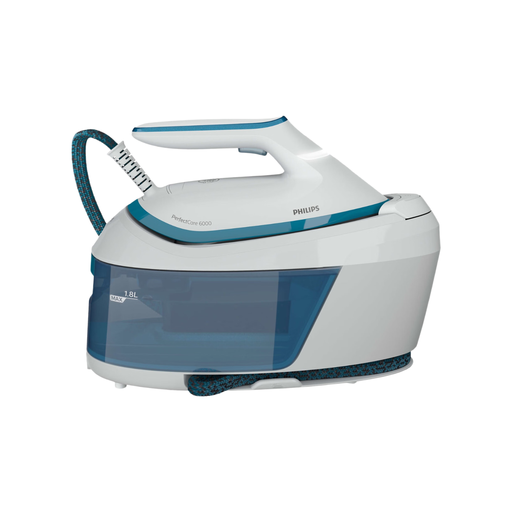
Philips PSG6022/20 PerfectCare 6000 Series, steam generator

Philips PSG6022/20 PerfectCare 6000 Series

For long sessions with a variety of ironable fabrics. The listed features include a removable 1.8 L tank, an advertised running time of over 1.5 hours, OptimalTEMP and Smart Calc-Clean with a collection container. Check the instructions for filling conditions and the complete descaling procedure.

Joybuy
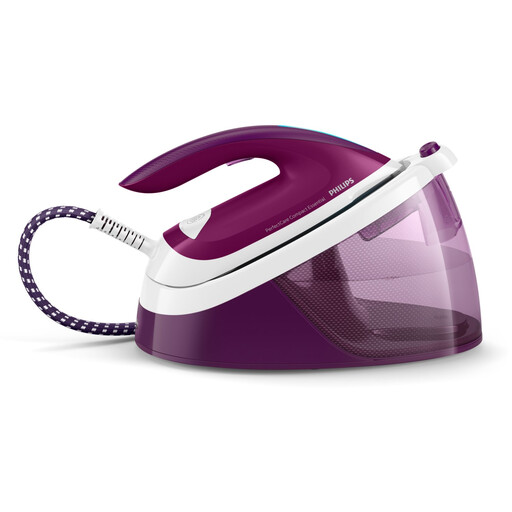
Philips GC6842/30 PerfectCare Compact, blue 1.3 L steam generator

Philips GC6842/30 PerfectCare Compact 1.3 L

A steam generator to consider if storage between sessions matters too. It features a removable 1.3 L tank, an advertised running time of over an hour, OptimalTEMP, Smart Calc-Clean, a transport lock and an advertised heating time of two minutes. Check the base dimensions and filling instructions in the manual.

Joybuy
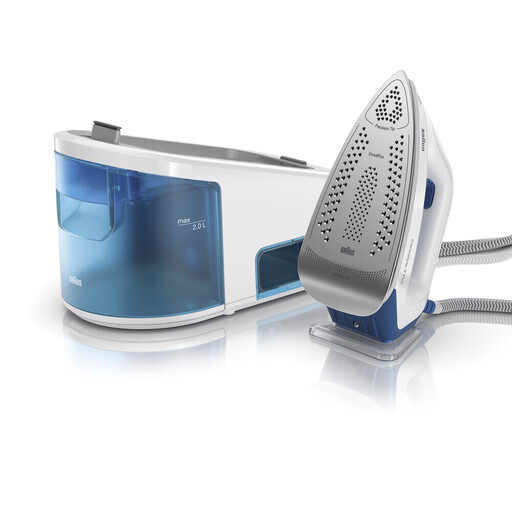
Braun CareStyle 3 IS3157BL, white and blue 2 L steam generator

Braun CareStyle 3 IS3157BL 2 L

For households wanting to minimise refills during a long session. Listed features include a 2 L tank, EloxalPlus soleplate, Steam Boost function and vertical steam; the advertised total weight is 3.6 kg. Consult the IS3157BL manual for limescale maintenance and any consumables required.

Joybuy
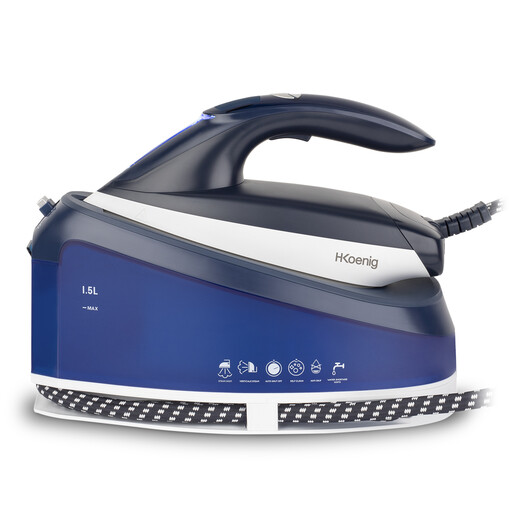
H.Koenig V7, 8-bar steam generator

H.Koenig V7 8-bar steam generator

For regular household sessions involving garments on hangers or curtains that need steaming. Listed features include a 1.5 L tank, ceramic soleplate, vertical steam and automatic shut-off. Check the heating time, exact dimensions and descaling instructions for the V7 model.

Joybuy
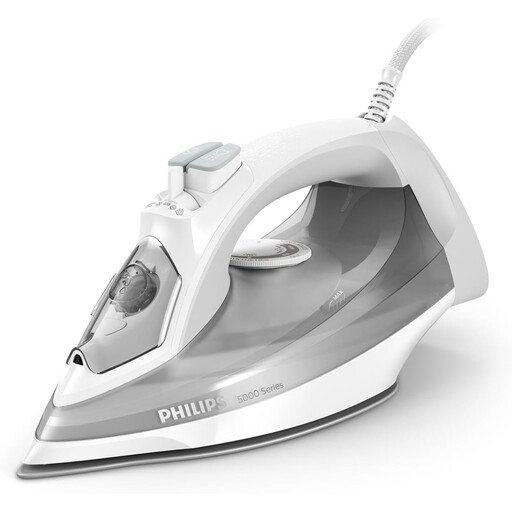
Philips DST5010/10 Series 5000, white 2400 W steam iron

Philips DST5010/10 Series 5000 2400 W

A standard steam iron for households where compactness and easy storage come first. It features a 320 ml tank, integrated Calc Clean system, drip-stop function, vertical steam and a stated weight of 1.255 kg. Its capacity means more frequent refills during a large pile of laundry; check the manual for limescale cleaning.

Joybuy

Frequently asked questions

How can you tell whether you need a steam generator or just a garment steamer for touch-ups?

A steam generator makes sense if you iron large quantities or regularly deal with linen, heavyweight cotton or certain blended fabrics. For a few lightly creased garments, a garment steamer can freshen up an item on a hanger, but it does not necessarily replace an ironing solution for a large pile of laundry.

Should you choose a continuous-fill steam generator?

Choose this configuration if being able to fill the tank during a long session without waiting is important to you. Also check the heating time, base size, tank type and descaling instructions for the exact model.

How often should you descale a steam generator?

Always follow the instructions for your model first. For the steam generators covered by its support guidance, Philips recommends descaling every one to two months and explains that the frequency depends in particular on water hardness; this guidance does not automatically apply to another brand or reference.

Can you descale a steam generator while it is still hot?

No, not according to the Philips Easy De-Calc procedure cited: after use, or when the appliance is hot, you must unplug it and allow it to cool for two hours before carrying out the operation. Safety and descaling instructions remain specific to the manufacturer and model.

How should you dispose of a broken ironing appliance in France?

ADEME recommends prioritising repair, donation or resale when electrical equipment is no longer being used. If that is not possible, find out about take-back options in shops or from the seller, as well as the appropriate collection scheme.