
Livraison le jour même ou le lendemain

Qualité garantie

Débloquez vos offres de bienvenue: Livraison GRATUITE | Jusqu'à -80 % | 30 jours d'essai gratuits à JoyPlus
Téléchargez l'application
A steam generator iron can significantly reduce the effort needed to tackle a large pile of laundry, including jeans, linen, thick shirts or household linens. But the figures highlighted on the packaging aren’t always enough to make the right choice. High pressure, high power or a large water tank can also bring drawbacks in terms of size, maintenance or safety.
Before you buy a steam generator iron, take a look at the following points.
A 2400 W steam generator iron generally heats up quickly and can produce a substantial amount of steam. However, the electrical power alone doesn’t tell you how much steam will actually be available during use. You should also compare the continuous steam output, expressed in grams per minute, as well as the steam boost rate.
A very powerful steam generator with limited steam output may not meet the needs of a household that regularly irons thick fabrics.
The high-pressure steam generator iron is often presented as a universal solution. Yet the maximum pressure in bars corresponds to the system’s theoretical capacity and doesn’t necessarily reflect the amount of steam delivered continuously through the soleplate.
To compare models effectively, look at these factors together:
Limescale can gradually reduce steam output and make the appliance less pleasant to use. A descaling system with an alert or collection tray simplifies maintenance, but it doesn’t mean you can ignore the manufacturer’s recommendations.
Some appliances accept tap water, while others require a specific type of water. Also check whether the tank is removable: this detail makes filling, emptying and storing much easier.
For everyday ironing, the continuous steam output is often more revealing than the pressure figure alone. An output of up to 120 or 150 g/min, combined with a powerful steam boost, can handle large piles of laundry. The steam boost function tackles stubborn creases, but it increases water consumption when used frequently.
Vertical steaming is handy for clothes on hangers, curtains or jackets. It doesn’t always replace flat ironing, but it lets you quickly freshen up a slightly creased garment.
A removable, transparent water tank lets you check the level without interrupting your session more than necessary. A 1.3-litre capacity is enough for everyday use, while a 1.8-litre tank offers greater autonomy for families or large amounts of laundry.
Also consider the total weight of the base, the length of the cord and whether the iron has a locking system. A compact model is easier to store, but a heavier base may take up more space on the ironing board.
A multi-layer, non-stick, scratch-resistant soleplate can improve glide. Philips’ OptimalTEMP technology removes the need for manual temperature adjustment on models that feature it. This function saves you from constantly changing settings between garments, but you should still follow the care labels on your clothes.
An Eco mode can reduce steam output on lightweight fabrics. It’s a useful feature if you often iron fine shirts, synthetic garments or items that crease easily.
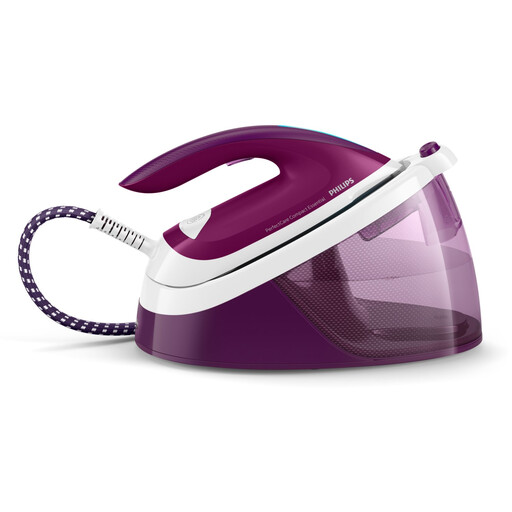
Why this choice suits this profile: its compact design, 2400 W power and removable 1.3-litre tank make it a great first steam generator iron for everyday laundry.
The Smart Calc-Clean system tells you when to descale and works with a collection tray, with no dedicated cartridges mentioned in the specifications.
Up to 120 g/min continuous steam, a steam boost of up to 360 g/min, a heat-up time of around 2 minutes and a vertical steaming function.
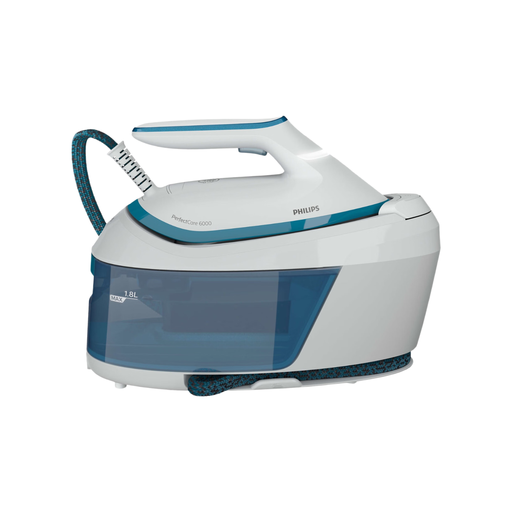
Why this choice suits this profile: this model is aimed at users who want greater autonomy and a high steam output for frequent use.
Its 1.8-litre capacity and Smart Calc-Clean tray address two often underestimated issues: frequent refills and descaling.
2400 W, pressure up to 6.5 bar, continuous steam output up to 150 g/min, steam boost up to 500 g and a SteamGlide Plus soleplate.
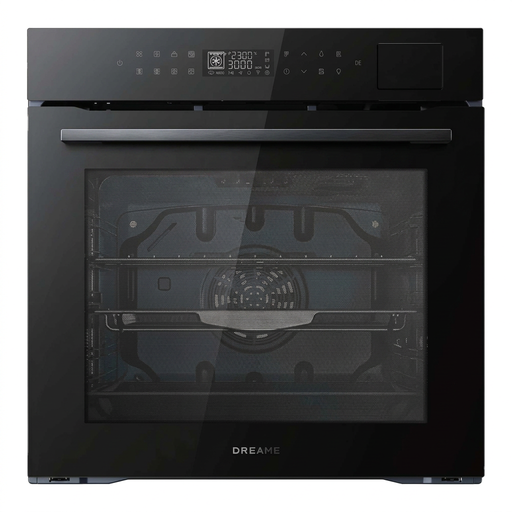
Why this choice suits this profile: this is a built-in appliance that combines a steam oven and an ironing system, designed for a specific renovation project rather than standard household use.
Its specifications state that a fixed electrical installation is required, the appliance does not come with a plug, and a qualified electrician must carry out the installation: these constraints should be checked before purchase.
81-litre capacity, total power of 3650 W, Wi-Fi and Bluetooth connectivity, plus a catalytic cleaning system.
We’ve put together a comprehensive, real-time list of products that meet these demanding selection criteria and European safety standards.
To keep your appliance in good condition and maintain its performance, a few simple habits are all you need:
The running cost depends mainly on the power, heat-up time, amount of steam produced and how often you use it. An Eco mode can reduce steam output on lightweight garments, while an appliance with a large tank cuts down on interruptions during ironing.
A steam iron has its own built-in water tank and is generally more compact. With a steam generator iron, the base that produces the steam is separate from the iron, which usually allows for a higher steam output and greater autonomy, at the cost of a larger footprint.
For occasional use or small amounts of laundry, 1.3 litres is usually enough. For a family, household linens or several ironing sessions a week, a 1.8-litre capacity reduces the number of refills. Whether the tank is removable matters just as much as its volume.
Use the recommended water, carry out the planned descaling cycles and avoid leaving water sitting in the tank for long periods. Descaling should follow the frequency stated in the manual, as this varies depending on water hardness and how intensively you use the appliance.