
Livraison le jour même ou le lendemain

Qualité garantie

Débloquez vos offres de bienvenue: Livraison GRATUITE | Jusqu'à -80 % | 30 jours d'essai gratuits à JoyPlus
Téléchargez l'application
A steam generator can significantly cut down the time you spend ironing. But a spec sheet doesn’t tell you everything. High pressure isn’t much use if the water tank is awkward to fill, the steam output lacks consistency, or the appliance takes up half your small home.
Before you buy, it’s worth avoiding three common pitfalls:
A 2400 W steam generator generally heats up quickly and offers enough power for shirts, jeans, sheets and thick fabrics. However, power shouldn’t be considered in isolation.
Measured in bars, pressure gives an indication of how well the steam can penetrate fibres. A high-pressure steam generator can make a real difference on heavy laundry, but the continuous steam output, expressed in grams per minute, deserves just as much attention. For regular use, 120 to 150 g/min provides a solid benchmark for comparing models. The shot of steam function, often between 360 and 500 g, is best for tackling a badly creased area or a stubborn fold.
A removable tank makes both filling and emptying easier. A capacity of 1.3 litres is enough for everyday sessions, while a model with 1.8 to 2 litres will be more comfortable handling large loads of laundry or a family’s needs.
Also remember to check:
A compact steam generator can prove more practical in a flat, even if its tank is slightly smaller.
The soleplate directly affects how smoothly the iron glides. A SteamGlide soleplate with a multi-layer coating is designed to make gliding and cleaning easier. The EloxalPlus soleplate, meanwhile, focuses on a durable surface and good manoeuvrability, according to the manufacturer’s specifications.
Vertical steaming is handy for jackets, curtains and clothes on hangers. It doesn’t always replace a proper session on the ironing board, but it lets you quickly freshen up an outfit or remove a few creases without setting everything up.
For maintenance, choose an anti-scale system that comes with a clearly explained procedure. A built-in collector or descaling tray can save you from buying extra consumables, as long as you follow the instructions in the manual. Do not add any perfume, vinegar or unapproved product to the tank.
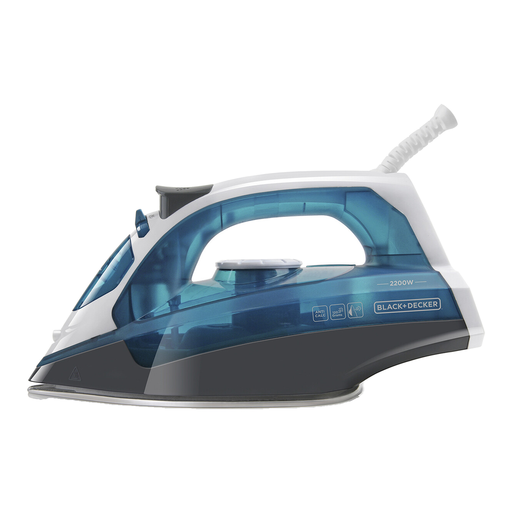
Why this choice suits this profile: this steam iron isn’t a steam generator as such, but it’s ideal for small loads of laundry and for those who want to keep both the footprint and the cost down.
The spec sheet clearly separates the 30 g/min continuous steam from the 120 g/min shot of steam, so you won’t confuse the two values. The appliance also includes anti-scale and anti-drip systems.
2200 W, stainless steel soleplate, vertical steaming and precision tip for collars and buttons.
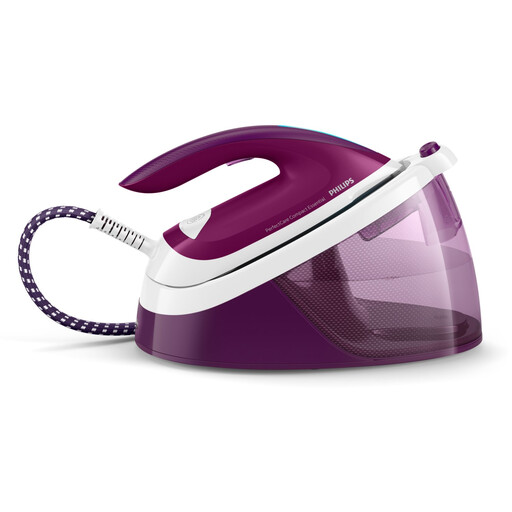
Why this choice suits this profile: this Philips steam generator combines a compact base with a removable 1.3-litre tank, well suited to regular sessions when every square centimetre counts.
The Smart Calc-Clean system tells you when to descale, while the iron lock makes carrying and storing it easier.
2400 W, maximum pressure stated at 6 bar, continuous steam up to 120 g/min, shot of steam up to 360 g/min and SteamGlide soleplate.
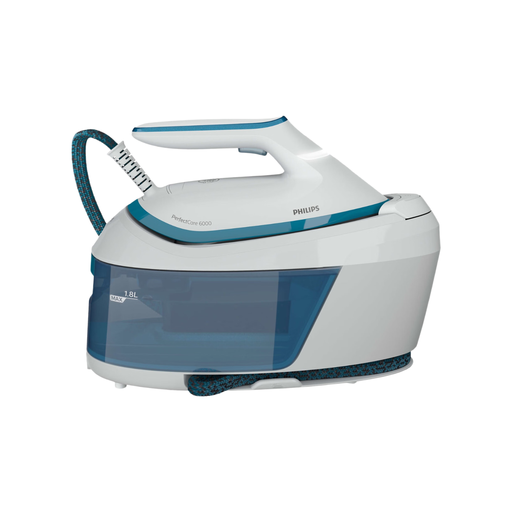
Why this choice suits this profile: with its 1.8-litre tank and steam output stated at up to 150 g/min, it’s built for long sessions and family-sized laundry baskets.
The removable, transparent tank is easy to fill, while the Smart Calc-Clean system provides a collection tray for maintenance.
2400 W, maximum pressure stated at 6.5 bar, shot of steam up to 500 g, SteamGlide Plus soleplate and auto shut-off.
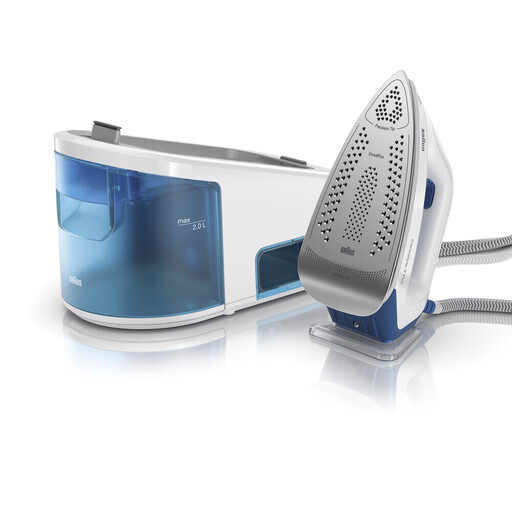
Why this choice suits this profile: its large tank and Steam Boost function are ideal for families, thick fabrics and those who work through basket after basket of laundry.
Its 2-litre capacity saves you from constant refills. The spec sheet states a pressure of 3 to 6.8 bar and distinguishes the steam dedicated to stubborn creases.
2400 W, 2-litre tank, vertical steaming, Steam Boost function and EloxalPlus soleplate.
Always follow the manufacturer’s recommendations first. Many models accept tap water, but in hard-water areas you may need to descale more frequently. Avoid scented water, vinegar and any additives not intended for this purpose, as they could damage the appliance.
It depends on its power, heating time and how long you use it. An Eco mode can reduce steam output for lighter fabrics. To keep consumption down, group your clothes together for ironing and avoid leaving the appliance on between tasks.
Its lifespan depends on how often you use it, the quality of your water and how well you stick to the descaling schedule. Empty the tank after each session if the manual recommends it, clean the soleplate using a compatible method, and store the appliance once it has cooled down.