
Livraison le jour même ou le lendemain

Qualité garantie

Débloquez vos offres de bienvenue: Livraison GRATUITE | Jusqu'à -80 % | 30 jours d'essai gratuits à JoyPlus
Téléchargez l'application
A steam cleaner for floors can make everyday cleaning of tiles, sealed wooden floors and other compatible hard surfaces much easier. But product specifications sometimes focus more on power or the number of accessories than on the appliance’s real limitations. You could end up with a model that’s too small for a large home, a tank that needs constant refilling or steam that’s unsuitable for certain floor coverings.
Before you splash out on a steam mop or a steam floor cleaner, it’s worth keeping three common pitfalls in mind.
Higher power can reduce heat-up time, but it’s not enough on its own to judge how well an appliance cleans. You should also look at the steam output, stated pressure, controls and the shape of the cleaning head. A 1 500 W appliance may be better suited to longer cleaning sessions, while a 1 050 to 1 200 W model will often be easier to handle for a quick clean.
A 200 to 400 ml tank will generally limit how long you can clean without stopping. That’s enough for a kitchen or bathroom, but much less convenient if you need to tackle several rooms in a row. By contrast, a 1.5 l tank gives you more cleaning time, but the appliance will be heavier and bulkier.
Steam isn’t recommended for unsealed floors, untreated wood, some heat-sensitive surfaces and, more generally, any materials for which the manufacturer advises against using moisture. With a steam cleaner for hard floors, always check that your flooring is sealed or suitable for steam cleaning. Each material has its own care requirements.
For occasional use, a short heat-up time can make a real difference to your daily routine. The ROUNY STEAMO X claims to heat up in around 25 seconds, compared with 60 seconds for the BISSELL SteamShot B2635J. The ASPIRON AS-CA019 takes around 5 minutes to reach operating temperature, but has a larger tank and a stated pressure of up to 4 bar.
Measured in bar, pressure indicates the force at which steam is produced. However, it isn’t enough on its own to compare two appliances: the shape of the head, steam output, type of dirt and accessory used all affect the results too.
A 250 to 400 ml tank keeps an appliance lightweight and makes it suitable for smaller areas. If you’re cleaning several rooms, a 1.5 l tank means fewer refills. Also check whether the tank is easy to fill and whether the appliance needs to cool down completely before you can do so.
Never add detergent, fragrance, vinegar or any other product to an appliance designed to run on plain water only. These liquids can damage the system or produce unwanted vapours.
A multifunction steam cleaner can tackle grout, windows, worktops, upholstery and even your car interior, provided it comes with the right attachments. The number of accessories isn’t everything: check what each one is actually for, where they’re stored and how easy they are to replace.
A 2-in-1 steam mop usually combines an upright floor-cleaning mode with a handheld steam cleaner function for higher surfaces. It’s handy in a flat, although the tank is often smaller than those found on cylinder models.
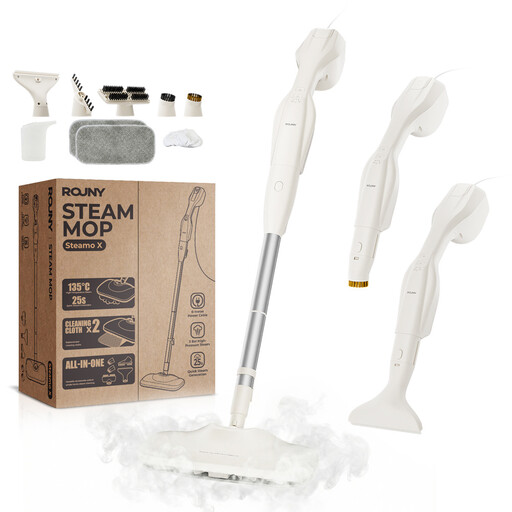
Why it suits this type of user: This model combines a steam mop and handheld cleaner, and claims to heat up in 25 seconds. It’s a good choice if you want one appliance for floors, windows and smaller kitchen surfaces.
The two steam settings mean you don’t have to choose the most powerful setting for every surface. The 6 m cable also means less need to keep unplugging and reconnecting it.
Claims to heat up in 25 seconds, stated pressure of 2.5 to 3 bar, five accessories and a 250 ml tank.
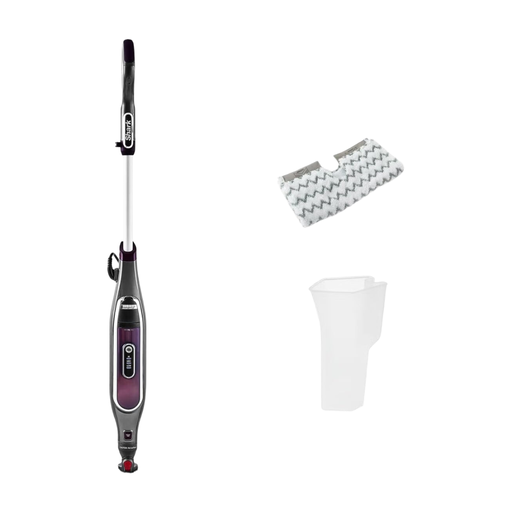
Why it suits this type of user: Designed for regular cleaning of sealed hard floors, this Shark steam mop is easy to manoeuvre and made for uninterrupted use in larger rooms.
The Klik n’ Flip head lets you use both sides of the pad without handling it directly. Its intelligent setting also means you don’t have to apply the same steam intensity to every floor.
1 200 W power, claims to heat up in 30 seconds, 6 m cable, 380 ml tank and two washable pads.
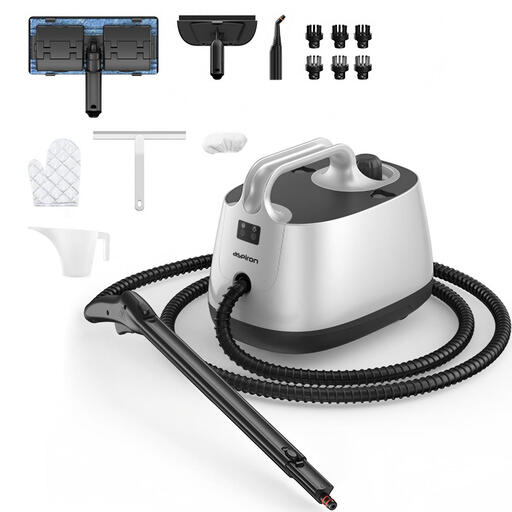
Why it suits this type of user: With a 1.5 l tank and 21 accessories, it’s designed for households looking to clean several rooms, grout, windows, bathrooms, kitchens and even car interiors.
The large tank means fewer interruptions during longer cleaning sessions. The wheels and flexible hose also save you from having to carry the appliance from one area to another.
Stated power of 1 500 W, pressure of up to 4 bar, stated temperature of up to 145 °C and 21 accessories.
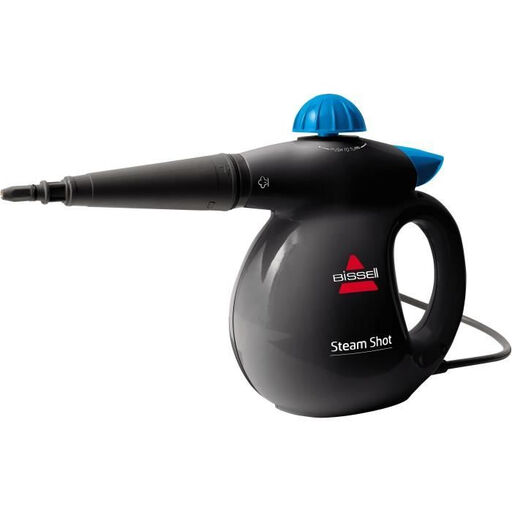
Why it suits this type of user: This handheld steam cleaner is particularly handy for grout, awkward corners, sinks, hobs and small surfaces where an upright steam mop would be impractical.
Its compact design means you don’t need to buy a bulky appliance just to tackle a few tricky spots. The attachments supplied are designed for corners, windows and flat surfaces.
Stated pressure of 4.5 bar, 0.36 l tank, 4.8 m cable and attachments for corners, windows and flat surfaces.
We’ve put together a comprehensive, regularly updated selection of products that meet these demanding criteria and comply with European safety regulations.
To estimate electricity use, a power rating of 1 200 W equates to around 1.2 kWh for one hour of continuous use. In practice, consumption depends on heat-up time, pauses and the tariff charged by your supplier.
Only if the flooring manufacturer allows it and both the joints and surface are sufficiently protected. Excessive steam can seep into the joints. Use the appropriate power setting and avoid holding the head in one place.
Its lifespan depends on how often you use it, how well you maintain the system, the quality of the water and whether you replace the pads or accessories when needed. Following the instructions, emptying the tank after each use and avoiding unauthorised liquids will all help keep the appliance in good condition.
For some types of dirt and compatible surfaces, hot water may be enough to loosen residue. But steam doesn’t replace every cleaning method and isn’t a universal solution. For thick grease or old stains, you may still need to pre-treat the area with a product that’s suitable for the material.