
Livraison le jour même ou le lendemain

Qualité garantie

Débloquez vos offres de bienvenue: Livraison GRATUITE | Jusqu'à -80 % | 30 jours d'essai gratuits à JoyPlus
Téléchargez l'application
A steam cleaner can make it easier to care for floors, kitchens, bathrooms, windows and even car interiors. However, some purchases disappoint from the very first use. The problem often lies in choosing a machine based solely on its power rating or the number of accessories included.
Here are the criteria to consider when comparing models, avoiding vague promises and choosing a machine that genuinely suits your habits.
A high wattage primarily indicates the energy consumption of the motor or heating element. On its own, it does not tell you the steam pressure, flow rate, suction power or quality of the result on a particular surface.
For a steam cleaner, look instead at:
A handheld steam cleaner rated at 1 000 to 1 050 W may be sufficient for occasional jobs. To remove stains from textiles and collect dirty water, however, it is better to choose a model with a suction function.
A 2-in-1 steam mop is practical for floors and certain vertical surfaces. However, it does not replace a spray-extraction cleaner for cleaning a sofa, rug or carpet.
For textiles, having a suction function and two separate tanks is a real advantage. A spray-extraction cleaner generally sprays water, brushes the surface and then collects the moisture containing dirt. A standard steam cleaner mainly releases steam and does not necessarily collect liquids.
Steam reaches a high temperature. Avoid directing it towards skin, animals, electrical sockets, electronic devices or materials that are sensitive to heat and moisture.
Before buying, also check:
Using clean water, waiting for the machine to cool down completely and storing the accessories properly will also help extend its service life.
A pressure of between 3 and 4.5 bars is common on portable machines. It helps loosen deposits on grout, hobs and washable surfaces. However, the result also depends on the nozzle used, the flow rate and the contact time.
Heat-up time has a direct impact on ease of use. A model ready in 25 seconds is suitable for small everyday tasks. A machine that heats up in 60 seconds remains perfectly suitable for regular use. A three-minute wait may also be worthwhile if the tank and accessories better match your needs.
A small tank makes the machine lighter, but reduces how long you can use it. As a guide:
A large tank generally makes the machine heavier and bulkier. You therefore need to find the right balance between run time and manoeuvrability.
A steam cleaner may come with a concentrated nozzle, a grout brush, a window squeegee, a flat head or a cloth bonnet. These accessories do not remove the need to check that the surface is suitable for heat and moisture.
Always test the machine on an inconspicuous area first. Certain parquet floors, plastics, painted finishes, delicate fabrics, leather and waxed surfaces may be sensitive to steam. For a rug or sofa, check the care label and choose a machine with suction when extracting water is necessary.
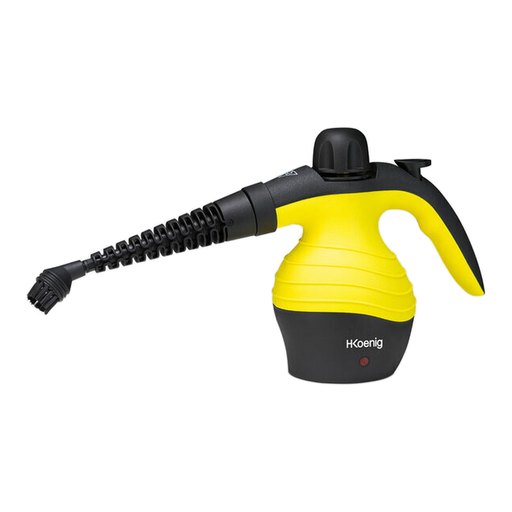
Why this choice suits this profile : Its compact design is well suited to small jobs in the kitchen, bathroom, around windows or in awkward corners.
The technical specifications detail the 4-bar pressure, 30 g/min flow rate and stated three-minute heat-up time, rather than focusing solely on power.
250 ml tank, child lock, 2 m cable and accessories for windows and various surfaces.
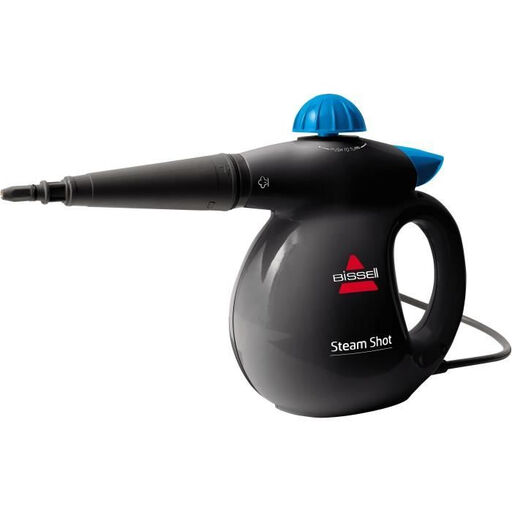
Why this choice suits this profile : It combines a stated pressure of 4.5 bars with several attachments for corners, windows, flat surfaces and kitchen areas.
The specification clearly states a 0.36 l tank, a 60-second heat-up time and a 4.8 m cable, allowing you to estimate the run time and reach before placing your order.
Steam indicator, concentrated nozzle, window squeegee, corner attachment and 220–240 V mains power supply.
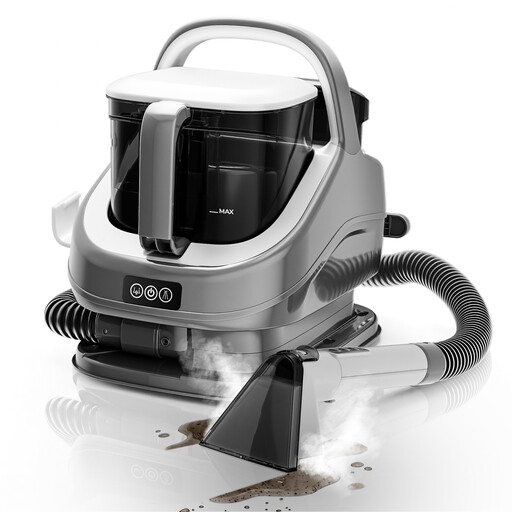
Why this choice suits this profile : Its design is intended for sofas, rugs, stairs, car seats and areas used by pets, with dirty-water collection.
This is not just a steam cleaner: the clean- and dirty-water tanks are separate, while the stated suction power reaches 13 kPa.
Three modes — cold water, hot water and steam —, a 1.4 l clean-water tank, a 1.2 l dirty-water tank, a 1.1 m hose and a 3 m cable.
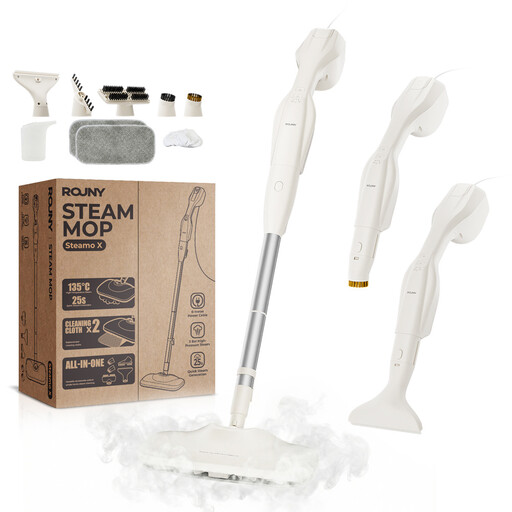
Why this choice suits this profile : Switching from mop mode to handheld mode lets you clean floors, windows, walls, corners and kitchen surfaces with one appliance.
Its two steam levels and stated heat-up time of around 25 seconds let you adapt the cleaning to light dirt as well as more stubborn deposits.
Stated pressure of 2.5 to 3 bars, 6 m cable, 250 ml tank and five accessories for different surfaces.
We have put together a complete, real-time selection of products that meet these demanding criteria and European safety standards.
To clean without chemicals using a steam appliance, use water only if recommended in the instructions. Detergents, essential oils and fragrances added to the tank can damage the components and invalidate the warranty.
When cleaning textiles, work in small areas and avoid soaking the fabric. With a spray-extraction cleaner, go over the area several times afterwards in suction mode to reduce residual moisture. Air the room and allow the sofa, rug or car seats to dry completely before using them again.
After each session, empty the tanks, rinse the removable parts and leave them to dry separately. This routine helps prevent unpleasant odours and the build-up of deposits in the pipes.
Yes, provided the textile manufacturer permits the use of heat and moisture. For significant stains, a textile cleaner with spray and suction will generally be more effective than a simple portable steam cleaner.
The cost depends on the machine’s power, how long it is used and the price of electricity. You also need to factor in water, maintenance and the possible replacement of certain accessories. A small tank heats up quickly, but may need to be refilled several times during the same session.
This depends on how often it is used, the quality of the water, whether the instructions are followed and the recommended descaling routine. Emptying the tank after every use, keeping the nozzles clear and storing the machine away from moisture will help preserve its performance.