
Livraison le jour même ou le lendemain

Qualité garantie

Débloquez vos offres de bienvenue: Livraison GRATUITE | Jusqu'à -80 % | 30 jours d'essai gratuits à JoyPlus
Téléchargez l'application
Deep cleaning without a single drop of chemicals: the promise of a steam cleaner is certainly appealing. But faced with a jungle of models, confusing technical specs, and marketing hype, choosing the right appliance often turns into a headache.
As product experts at Joybuy, our mission is to clear the path for you. Let's cut through the technical jargon and get straight to the point so you can make an informed decision that's perfectly suited to your needs. Here are the pitfalls to avoid and the criteria that truly matter.
Marketing loves big numbers, but they often hide disappointing performance. To avoid buyer's remorse, here are the points you need to be particularly vigilant about.
To find the perfect steam cleaner for you, focus on these three key criteria.
A steam cleaner's performance hinges on two key indicators:
The type of appliance should match your intended use.
If your main goal is to clean textiles (sofas, carpets, car seats), an injector-extractor model is simply a must-have. This appliance, often called a carpet and upholstery cleaner, sprays water (sometimes hot or as steam) and immediately vacuums it up along with the dirt. This dual action allows for deep cleaning of fibres and significantly reduces drying time.
Rather than an exhaustive list, here are appliances that cater to distinct user profiles, taking into account performance and practicality.
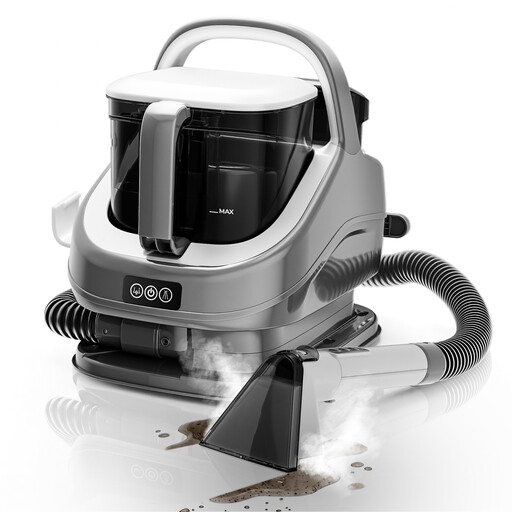
Its strong suit: Ideal for families with children or pets, this portable device is designed to act fast on stains. Its compact size and long cord make it perfect for cleaning car seats, sofas, or carpets after a small accident.
It doesn't claim to clean the whole house. It's a specialised tool that combines steam and suction (13 kPa), avoiding the useless accessory trap by focusing on its one mission: tackling stains on textiles.
Its 3 modes (cold water, hot water, steam) allow you to adapt the cleaning to the type of stain. The dual-tank system separates clean water from dirty water for perfectly hygienic cleaning.
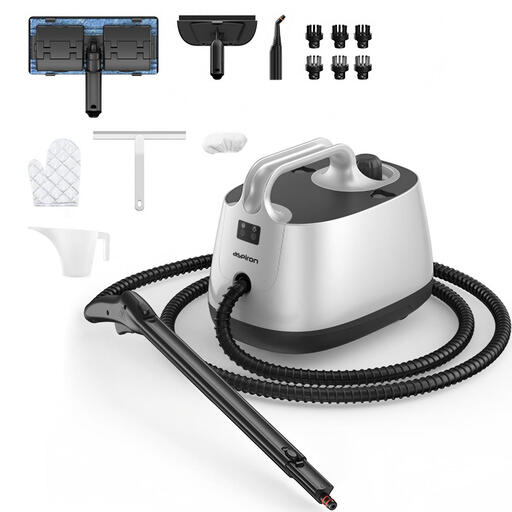
Its strong suit: For those who want one appliance to do it all. This canister cleaner is a true Swiss Army knife of cleaning, capable of tackling floors, bathrooms, windows, and even carpets.
It avoids the false runtime trap with its 1.5 L tank and the "power on paper" trap with its 4 bars of real pressure. Its 21 accessories are not just for show and ensure rock-solid versatility.
The high pressure (4 bar) and steam up to 145 °C (293°F) effectively dissolve grease and stubborn dirt. The child lock on the handle is a welcome safety feature.
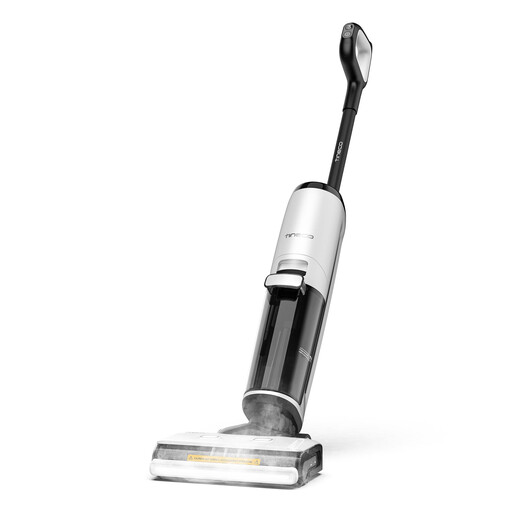
Its strong suit: For those looking for a practical and quick solution to keep their hard floors spotless daily. Its cordless mop format offers complete freedom of movement and is incredibly easy to use.
It doesn't try to do everything. It's a hard floor specialist that avoids the gimmicky "multi-function" trap by focusing on a single task, but perfecting it with useful features like self-cleaning and edge cleaning.
The absolute convenience of cordless, combined with a self-cleaning brush function that greatly simplifies maintenance. The motorised drive makes it easy to manoeuvre.
We have compiled a complete and updated list of products that meet these strict selection criteria and safety regulations.
A steam cleaner primarily uses high-temperature water vapour to lift dirt and disinfect. A carpet cleaner (or injector-extractor) injects a mixture of water and detergent into the fibres of a carpet or sofa, then vacuums it up to extract the dirt. Some hybrid models combine steam and extraction for a deep clean on fabrics.
No, caution is advised. Hot steam can damage certain surfaces. Avoid using it on unsealed or oiled hardwood floors, raw wood, and delicate fabrics like velvet or silk. When in doubt, always consult the manufacturer's recommendations for your surface and perform a test on a small, inconspicuous area.
To extend the life of your appliance, using demineralised water is highly recommended, especially if you live in an area with hard water. Tap water can cause limescale buildup, which will eventually clog the appliance's ducts, reducing its efficiency and potentially causing a breakdown.