
Livraison le jour même ou le lendemain

Qualité garantie

Débloquez vos offres de bienvenue: Livraison GRATUITE | Jusqu'à -80 % | 30 jours d'essai gratuits à JoyPlus
Téléchargez l'application
Between the brightly coloured sets, the promises of smooth writing and the bargain multi-packs, choosing your stationery supplies can quickly become a headache. A pen that feels great in the shop can bleed through your notebook, a pastel highlighter can soak through thin paper, and a pencil marketed as versatile can lack the precision needed for drawing.
For school pupils, university students, teachers, professionals or journaling enthusiasts, three common pitfalls keep cropping up:
The nib directly affects writing comfort and precision:
For drawing and lettering, brush pens offer a variable line width depending on how much pressure you apply. However, they require more skill to control than a pen with a rigid nib.
Highlighters and some creative felt tips commonly use water-based ink. It can work perfectly well on office paper, but how it performs depends on how porous the paper is. Left-handed people and those who write quickly are better off choosing a fast-drying ink to minimise smudging.
Erasable gel pens rely on thermosensitive ink: the friction from the eraser tip makes the mark disappear, but heat can also alter its appearance. They are therefore not recommended for official documents, thermal receipts or anything that needs to be permanent. It's best to keep them for notebooks, diaries, exercises and to-do lists.
For highlighting, also check for the words "transparent" and look at the intensity of the shade. A colour that is too strong can end up hiding the words instead of making them stand out.
Thanks to its hexagonal shape, an HB graphite pencil is less likely to roll off your desk. A non-slip grip can also improve comfort during long note-taking sessions. With a 0.5 mm mechanical pencil, check the availability of replacement leads and whether it has a built-in eraser.
Sets sold with a case or pencil case make storing your school and office supplies much easier. They also help prevent you from losing the colours you use less often. After use, always cap your felt tips and highlighters carefully, and store them away from heat and damp. For coloured pencils, a suitable sharpener helps preserve both the lead and the wood.

Why this choice suits this profile: Each pen holds four colours in a retractable format. A practical solution for lessons, lists and colour-coded notes, without having to carry lots of different pens.
The click mechanism means no lost caps, while the pack of three pens gives you a handy backup supply.
Four inks per pen, 0.7 mm ballpoint tip, rubberised grip and compact design.
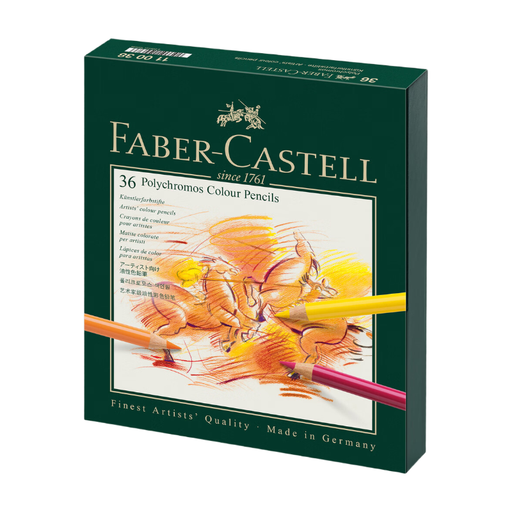
Why this choice suits this profile: Fans of detailed drawing will appreciate the 3.8 mm oil-based leads and the well-organised box, suitable for studio work or home use.
The description clearly states the composition and lead diameter, along with the layering and blending possibilities, rather than just promising vibrant colours.
36 shades, 3.8 mm lead, SV bonding process and rigid storage case.

Why this choice suits this profile: This pack is designed for frequent note-taking, homework and diaries where corrections are a regular occurrence.
The fine tip and built-in eraser mean you don't need to reach for correction fluid at every mistake, while keeping the limitations of thermosensitive ink in mind.
12 blue pens, 0.5 mm needle-point tip and integrated eraser end.
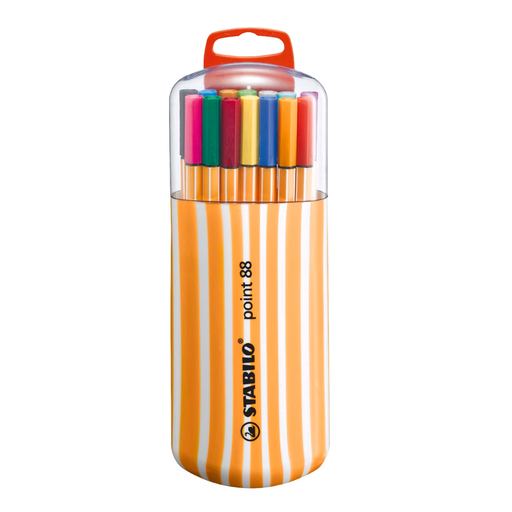
Why this choice suits this profile: Fans of annotations, drawing or bullet journaling get a fine tip and a varied colour palette to work with.
The stated 0.4 mm width clearly distinguishes this set from broad markers, while the rigid case protects the tips and helps prevent losses.
20 colours, metal-sheathed fibre tip of 0.4 mm and reusable box.
We've put together a comprehensive, real-time selection of products that meet these exacting criteria, while also complying with European safety regulations.
A pack of black or blue pens will cover your everyday needs. A few extra colours are then enough to organise your notes. Multi-coloured sets are worthwhile if you genuinely use a colour-coding system. For graphite, a pack of 12 HB pencils makes a handy reserve to keep at home, in the classroom or at the office.
Always test the ink on a similar page before highlighting an important document. Press lightly and choose tips that let you control the line width. The thin pages of a diary or notebook don't behave the same way as a thick sheet of drawing paper.
A fine-liner deposits coloured ink, making it suitable for outlines and annotations. A precision pen is generally designed for regular, detailed writing. A 0.5 mm mechanical pencil lets you replace the lead while keeping a consistent line width, which makes it ideal for diagrams, exercises and technical drawing. The right choice therefore depends on the surface you're using, whether you need the mark to be permanent, and whether you need to be able to correct mistakes.