
Livraison le jour même ou le lendemain

Qualité garantie

Débloquez vos offres de bienvenue: Livraison GRATUITE | Jusqu'à -80 % | 30 jours d'essai gratuits à JoyPlus
Téléchargez l'application
Buying stationery supplies seems simple… until you start comparing sizes, paper weights, binding types and the actual contents of each product. A notepad that’s too thin will warp, a poorly chosen spiral notebook quickly becomes uncomfortable, and drawing paper that’s unsuitable for your technique can be a real let-down.
To avoid unnecessary purchases, it’s better to focus on the concrete features rather than the marketing claims. Here are the criteria to consider when choosing school supplies, office equipment, drawing materials or organisational accessories that are genuinely suited to your needs.
A product described as “A4” can offer a different writing surface depending on the width of the margins, the type of binding or the perforation system. The A4 size measures approximately 21 × 29.7 cm, while A4+ gives you more room at the edges for annotations, filing and detachable sheets.
Also check the actual number of sheets included. Some notebooks state a page count that refers to both sides of each sheet. For regular note-taking, an A4+ notepad with micro-perforated sheets makes it easy to tear out and file pages.
Paper weight refers to the weight of a sheet, expressed in grams per square metre. It’s a good indicator of how the paper will hold up, but it isn’t enough to predict how it will behave with every tool.
A 120 gsm drawing paper is therefore not comparable to a proper watercolour paper. With a lot of water, a lighter sheet may buckle, even if it feels thick at first glance.
A multipack of notebooks or pens can lower the price per unit, provided the size, ruling and number of sheets actually match your needs. For a student, teacher or professional, three A4+ pads can be perfectly justified. For occasional use, a bulky pack is more likely to gather dust.
Also think about the binding. Staples work well for pads where you tear out sheets easily, while an A4 spiral notebook is handy when you need to open it flat or fold the pages right back.
The paper surface directly affects writing comfort and the look of your drawings. A 5 × 5 violet grid makes it easy to structure tables, diagrams or calculations. Seyès ruling remains the closest to French school handwriting habits.
For drawing, distinguish between smooth, slightly textured and heavily textured surfaces. A very fine grain can work well with pencil, pastel or charcoal, while a paper with reinforced sizing will handle washes better.
A rigid cardboard back lets you write without a table, which can be handy on the go, in the classroom or during a meeting. A side binding makes it easy to tear out sheets, while a spiral binding allows the notebook to open completely flat.
For notebooks that will be carried in a bag, check the sturdiness of the cover and how much space the binding takes up. A metal or plastic spiral generally takes up more room than a stapled pad, but it offers more flexible handling.
Useful accessories aren’t limited to notebooks. A 4-colour ballpoint pen lets you colour-code information without carrying several pens. When travelling, a travel pill box should be chosen primarily for the number of compartments, its size and how easy it is to identify the contents.
A medicine organiser obviously doesn’t replace the advice of a healthcare professional. To minimise mistakes, keep medicines in their original packaging when necessary, and regularly check the contents and the closure of the box.
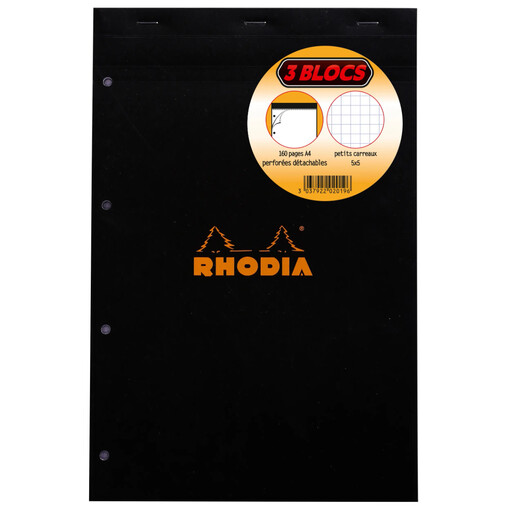
Why this choice suits this profile: This pack of three A4+ pads is ideal for students, schoolchildren and anyone who regularly takes notes in class or at the office.
The number of sheets per pad and the 5 × 5 grid are clearly stated, so you’re not choosing a pack based on looks alone.
Clairefontaine vellum paper at 80 gsm, micro-perforated sheets and a rigid cardboard back. The manufacturer also mentions PEFC certification.
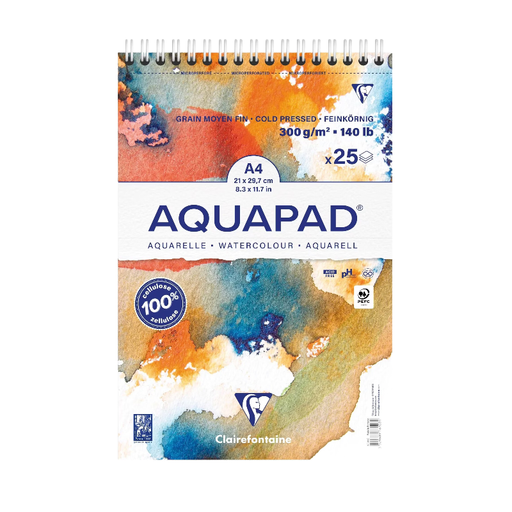
Why this choice suits this profile: This pad is aimed at beginner artists and hobbyists who want to work with watercolour, gouache or liquid ink on a more resistant surface.
The 300 gsm weight and double sizing are clearly specified, unlike all-purpose papers that aren’t designed for washes.
Natural white cellulose paper, medium-fine grain, acid-free composition and vegan certification as stated by the manufacturer.
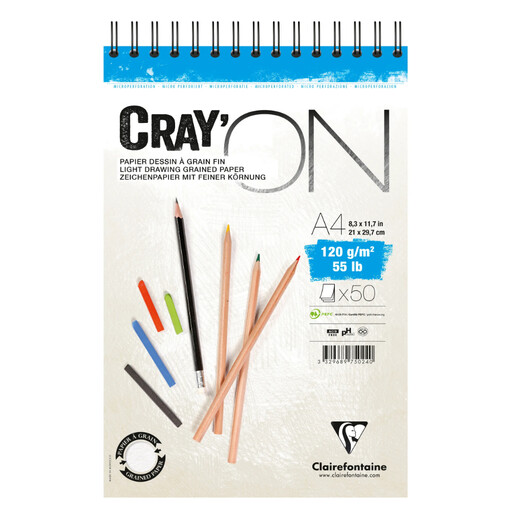
Why this choice suits this profile: This 120 gsm drawing paper is ideal for those who switch between pencil, charcoal, pastel, coloured pencils and repeated sketching.
This paper is clearly intended for dry techniques, and its weight helps prevent tearing during corrections or erasing.
Two sides – one slightly textured and one smooth – extra-white acid-free paper and PEFC certification stated.
To organise your notes by colour, the M&G 4-colour ballpoint pen brings together black, blue, red and green inks in a retractable format. Its 0.7 mm tip and non-slip grip make it suitable for everyday writing, as long as you check the availability of refills.
Those who mainly draw with pencil or felt-tip pen might also consider a blank A4 spiral notebook like the Clairefontaine Zap Book R.I. A4. Its 160 recycled sheets at 80 gsm, spiral binding and flat-opening design work well for both sketching and long-term note-taking.
For a short trip, a compact four-compartment travel pill box slips easily into a bag. For several days, a GAONLY multi-compartment organiser offers greater capacity. In both cases, check the closure and the identification of the contents before you set off.
We’ve put together a comprehensive, real-time updated list of products that fully meet these strict selection criteria as well as European safety regulations.
80 gsm is generally fine for pen notes, printing and everyday exercises. For drawing, frequent corrections or dry techniques, a 120 gsm paper offers better durability. For watercolour, go for a paper of around 300 gsm designed for wet media.
Yes, especially if you often write on a small surface or like to open your notebook completely flat. Before buying, though, check which side the spiral is on, the number of sheets and how much space it will take up in your bag.
Store notebooks and paper in a dry place, away from damp and direct light. Close pens after use, avoid folding drawing pads, and regularly check the mechanisms of storage accessories. These simple habits help prevent warping and extend the life of your products.