
Livraison le jour même ou le lendemain

Qualité garantie

Débloquez vos offres de bienvenue: Livraison GRATUITE | Jusqu'à -80 % | 30 jours d'essai gratuits à JoyPlus
Téléchargez l'application
Buying stationery supplies seems simple… until pages become crumpled, ink bleeds through and a pencil breaks the first time you sharpen it. At school, in the office, for drawing or journalling, price alone is not enough to determine whether an item is genuinely suitable. The format, paper, nib and durability all have a direct impact on ease of use.
Here are the criteria to consider to avoid impractical purchases, along with a selection of items suited to several types of user in France.
A large multipack may seem economical, but a box of pens with a nib that does not suit your handwriting is likely to end up gathering dust. For everyday notes, a 0.5 or 0.7 mm gel pen can meet different needs. A fine nib is ideal for compact annotations, while a 0.7 mm nib produces a bolder, more visible line.
For children, students or shared offices, packs of 10 or 12 are still practical: they reduce the risk of running out and make it easier to allocate colours between subjects or projects.
The cover catches the eye, but it is the paper that determines the writing feel and how visible the ink is on the reverse. A higher paper weight may reduce show-through from certain inks, without necessarily being suitable enough for felt-tip pens. The ruling also deserves some attention: Seyès ruling for many French school notebooks, classic lines for a note book, or blank pages for drawing and creative journalling.
Descriptions such as ‘quick-drying’, ‘durable’ or ‘multifunctional’ do not mean much without concrete specifications to support them. Instead, check for a retractable mechanism, the type of nib, the cover material, the number of pages and the accessories included. A precise product specification is better than a vague advertising promise.
For lessons and homework, a 17 × 22 cm notebook fits easily into a schoolbag or satchel. The 24 × 32 cm format provides more room for larger exercises, diagrams and bulky documents. Versatile A5 notebooks are suitable for meetings, administrative work and personal writing, while A6 slips easily into a pocket or small bag.
The binding is also important. Spiral binding makes one-handed writing easier and allows the notebook to open completely flat. Stapled binding is lightweight, but the pages need to be turned without pulling at the edges. For a notebook designed to last, a hard cover with an elastic closure and bookmark offers extra protection.
Gel pens provide smooth writing, but their drying time and appearance vary depending on the paper. Left-handed writers should choose ink advertised as quick-drying, while also checking how it performs on their usual writing surface.
A 0.5 mm mechanical pencil produces fine, consistent lines that are ideal for tables, plans and annotations. Just remember to keep compatible replacement leads to hand. HB graphite pencils remain a reliable choice for writing, exercises and light sketches. Their hexagonal shape also stops them rolling off the desk.
For colouring, consider the number of shades, the texture of the lead and the types of paper the pencils are suitable for. Coloured pencils with soft leads make it easier to create solid areas and layer colours, while firmer leads allow you to work on details with precision. Brush pens are particularly suitable for lettering, notebook headings, illustrations and journalling. However, their flexible nib takes a little practice to maintain a consistent line width.
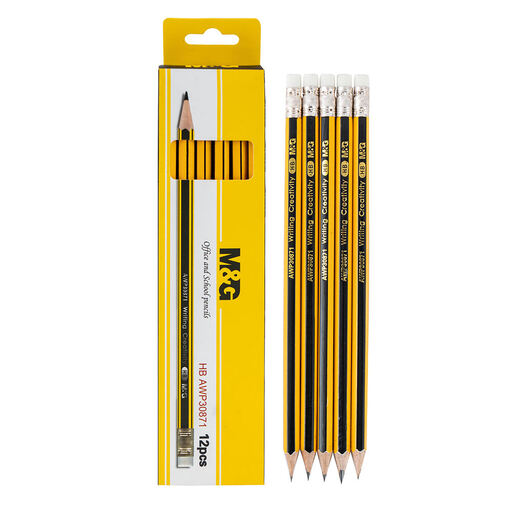
Why this choice suits this profile : This pack of 12 pre-sharpened HB graphite pencils is suitable for homework, drafts and first drawings, both at home and in the classroom.
The quantity avoids the need to buy several different products for everyday use, while the HB hardness remains versatile enough for a range of tasks.
Hexagonal barrel that will not roll away, built-in eraser and pre-sharpened HB leads.
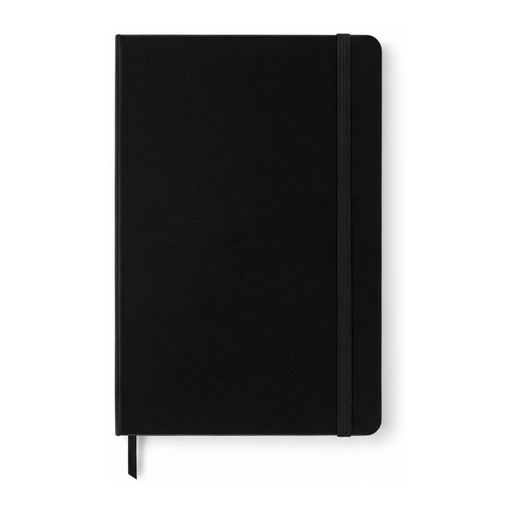
Why this choice suits this profile : This notebook is designed for anyone who wants to bring notes, sketches, lists and ideas together in a structured format created for everyday use.
The blank pages mean the notebook is not limited to a single note-taking method or a particular ruling.
Hard cover, elastic closure, bookmark, inner pocket and 180° lay-flat opening.
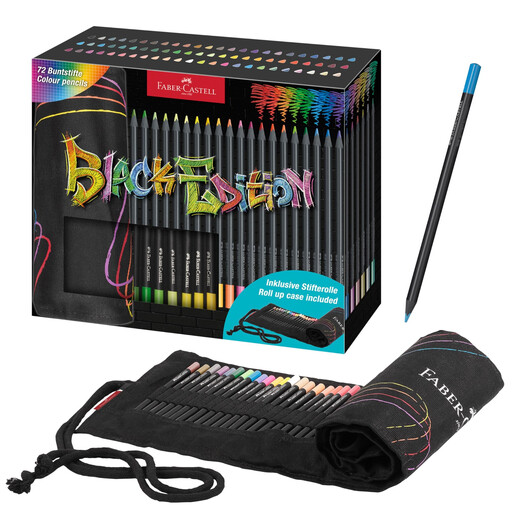
Why this choice suits this profile : Drawing enthusiasts have 72 colours for colouring, shading and creative projects on light, coloured or dark paper.
The included roll keeps things tidy and protects the pencils, unlike boxes that are difficult to transport or sort through.
72 SuperSoft pencils, including 6 neon shades and 6 metallic shades, with ergonomic triangular barrels.
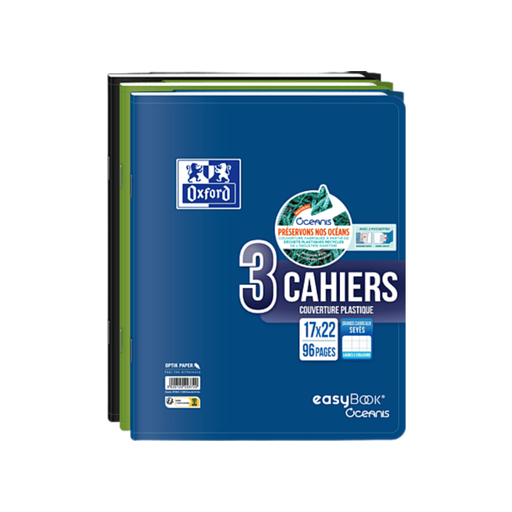
Why this choice suits this profile : This pack lets you organise school subjects while keeping a 17 × 22 cm format that is easy to store in a schoolbag.
The Seyès ruling is clearly indicated, and the 96 pages in each notebook help avoid choosing ruling that is unsuitable for French school exercises.
Three 96-page stapled notebooks, each measuring 17 × 22 cm, with French Seyès ruling.
We have brought together a complete selection, updated in real time, of products that meet these demanding criteria as well as European safety regulations.
For writing with a pen, paper weighing 80 to 100 g/m² is generally suitable. If you use brush pens or markers, check how well it resists ink bleed and always test a page before starting your project. Paper weight alone does not guarantee that there will be no show-through.
It all depends on how often they are used, storage conditions and the quality of the closure. Store pens with the tip retracted or the cap closed, away from heat. Graphite and coloured pencils can be kept for a very long time if they are sharpened with a suitable sharpener and stored in a pencil case or roll.
A functional basic set includes notebooks or note books, black and coloured pens, HB graphite pencils, a 0.5 mm mechanical pencil, an eraser and a filing solution. Add drawing materials or brush pens only if your tasks require diagrams, colouring or journalling.