
Livraison le jour même ou le lendemain

Qualité garantie

Débloquez vos offres de bienvenue: Livraison GRATUITE | Jusqu'à -80 % | 30 jours d'essai gratuits à JoyPlus
Téléchargez l'application
Whether you’re preparing for the new school year, organising your work notes or starting a journaling notebook, choosing the right stationery supplies and gel pens deserves more than just a quick glance at the price. A nib that’s too thick, ink that dries poorly or a notebook that’s not quite right can quickly turn a purchase into a disappointment.
Here are the criteria to check before you order, along with a selection of products suited to different uses in the UK.
A pen described as ‘fine’ doesn’t always deliver a consistent line. The line width, the type of ball and the quality of the ink flow all directly affect writing comfort. 0.5 mm gel pens are generally well suited to annotations, lists and small spaces. However, you should also consider the shape of the nib and how the pen feels in your hand.
Drying speed depends on the paper, the amount of ink deposited and your hand position. Left-handed writers can be particularly prone to smudging while writing. An ink advertised as ‘quick-drying’ should therefore be seen as a feature highlighted by the manufacturer, not as a guarantee that works on every type of paper.
A notebook intended for homework doesn’t meet the same needs as a pocket-sized journal. For school, 24 x 32 cm formats, large squared notebooks and Seyès ruled notebooks are practical and match French school habits. For daily commutes, a compact hardcover notebook or a binding that opens completely flat can be much more pleasant.
Fine-point pens and black gel ink pens are versatile for classes, meetings and everyday documents. For corrections, erasable gel pens typically use thermosensitive ink that disappears with friction. However, this feature can be problematic on official documents or writing exposed to high temperatures.
A soft grip can make long writing sessions more comfortable. A triangular barrel helps some users position their fingers better, but comfort remains very subjective. A retractable model reduces the risk of stains in a pencil case, while a capped pen protects the nib better when stored for long periods.
In the library, during class or in a meeting, a silent mechanism can also avoid repeated clicking. If you use the same model every day, remember to check that refills are readily available.
Paper weight alone isn’t enough to judge a notebook’s quality. Also look at the paper texture, how much the ink shows through on the reverse side, and the sturdiness of the cover.
For journaling, a hardcover notebook that opens flat is particularly handy when writing on both pages. Those who enjoy decorating can pair it with pastel brush pens or metallic-coloured pens.
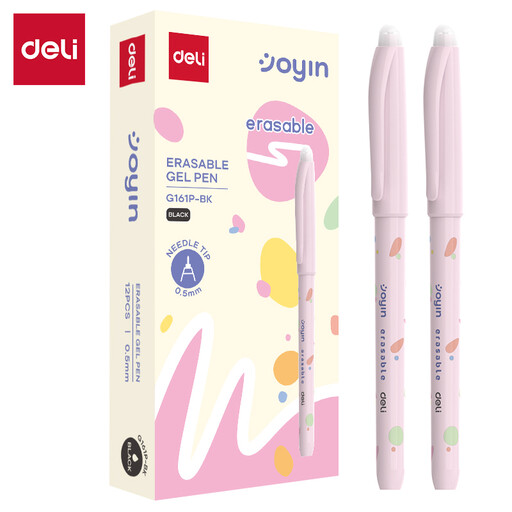
Why this choice suits this profile: With its 12 black pens, this pack is ideal for students and schoolchildren who want to have several instruments on hand for lessons, exercises and corrections.
The 0.5 mm nib avoids lines that are too thick, while the erasable function lets you correct notes that aren’t final.
Needle-point nib of 0.5 mm and pack of 12 pieces. Check the ink’s compatibility with your documents before any permanent use.
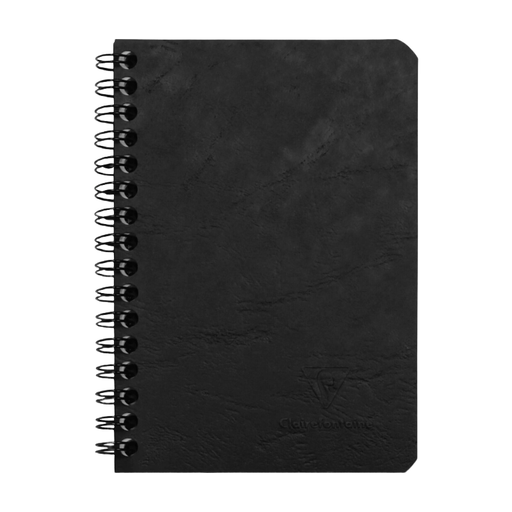
Why this choice suits this profile: This compact notebook is aimed at those who want a hard cover, a flat-opening design and paper that works well for both writing and sketching.
The binding, which opens 180 degrees, means you don’t have to hold or force the cover while writing.
100 pages, 90 gsm Vélin Velouté paper, 5 x 5 grid and manufacture stated in France.
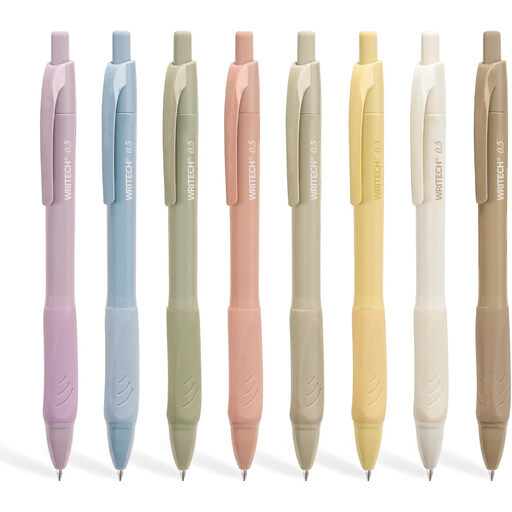
Why this choice suits this profile: Professionals, teachers and journaling enthusiasts will appreciate this pack of retractable pens, designed for repeated note-taking and fine details.
The triangular grip and retractable mechanism reduce fatigue and stains during intensive use.
Fine 0.5 mm nib, black ink and ergonomic barrel with soft grip. The manufacturer states the ink is quick-drying.
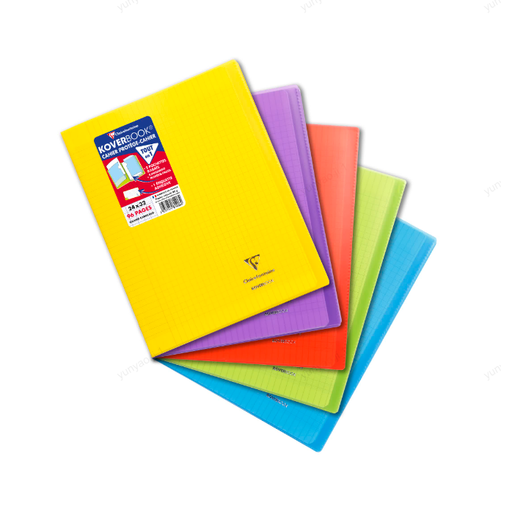
Why this choice suits this profile: This multi-pack is ideal for families who need to replace several notebooks for school, the office or personal activities.
The stated size, 96 pages and storage flaps mean you won’t end up with a notebook that’s too small or need to buy a separate cover.
90 gsm Vélin Velouté paper, transparent polypropylene cover, 360-degree opening and two flaps with pockets.
For creative projects, the WRITECH pastel brush pens feature a soft brush nib and water-based ink in 12 pastel shades. They’re suitable for lettering and sketching, with effects that vary depending on the pressure you apply.
If you write on dark paper, the Ohuhu white, gold and silver pens with a 0.8 mm nib could be of interest. For a school notebook, instead compare the ruling — Seyès, large squares — and the cover’s durability. The Mimesys pastel or Oxford Color Life notebooks in 24 x 32 cm are also alternatives worth considering.
We’ve put together a comprehensive list, updated in real time, of products that meet these demanding selection criteria and European safety regulations.
Yes, they can work well for homework, annotations and exercises that require a fine line. For young children, however, check the grip and whether there are any small parts. The notebook’s ruling should also match the school year level.
A standard gel pen is designed for permanent writing on the surface. An erasable gel pen uses thermosensitive ink that can disappear with friction. It’s therefore best to avoid this ink for a document that needs to be kept long-term, unless you’ve checked it first.
Close capped pens after each use and retract click models. Store them away from heat and moisture, preferably horizontally when the manufacturer recommends it. As for notebooks, keep them in a dry place to preserve the paper and cover.