
Livraison le jour même ou le lendemain

Qualité garantie

Débloquez vos offres de bienvenue: Livraison GRATUITE | Jusqu'à -80 % | 30 jours d'essai gratuits à JoyPlus
Téléchargez l'application
Buying stationery supplies seems simple until product descriptions are competing with promises about comfort, colours and durability. A notebook that is too small, a pen that dries out within a few days or a notebook poorly suited to French-style handwriting can quickly end up at the back of a drawer. Pupils, students, teachers, professionals and drawing enthusiasts do not all have the same needs.
Here are the criteria to consider before making your choice, along with a selection of products suited to different uses.
An attractive cover or a selection of colours may catch your eye, but it tells you nothing about the paper weight, the strength of the binding or how easy the ruling is to read. For everyday use, start by checking the format, number of sheets and type of paper.
An A7 notebook is handy for quick lists, but leaves little room for a lesson or meeting notes. Conversely, a large notebook can quickly become cumbersome in a bag or on a small desk. The right format depends on how you intend to use it: carrying it around, taking notes, drawing, organising or writing for extended periods.
Statements such as ‘no smudging’, ‘quick-drying’ or ‘intense colours’ describe advertised features, not a guarantee that applies in every situation. Results vary depending on the paper, the pressure applied and the drying time. Check the available technical information and prioritise detailed product descriptions.
The ruling matters just as much as the notebook’s size. Seyès exercise books make structured school handwriting easier, while lined pages are suitable for general notes. Graph paper is useful for organising tables, diagrams and lists.
Measured in g/m², paper weight gives an indication of the paper’s thickness, although it is not enough to predict how every type of ink will behave. 100 g/m² paper is generally sturdier than standard office paper and may be suitable for regular writing or certain gel pens. For felt-tip pens, markers and wet techniques, always check the risk of show-through or bleed-through.
A spiral binding often allows you to lay the notebook flat and turn the pages easily. A hard cover offers better protection for the contents in a bag, while a soft cover keeps the overall weight down. For a notebook you carry every day, an elastic closure, a bookmark and a pen loop help prevent dog-eared pages and misplaced accessories.
These criteria also apply to other school supplies and office stationery: choose durability and capacity according to how often an item will be used, rather than relying solely on its appearance.
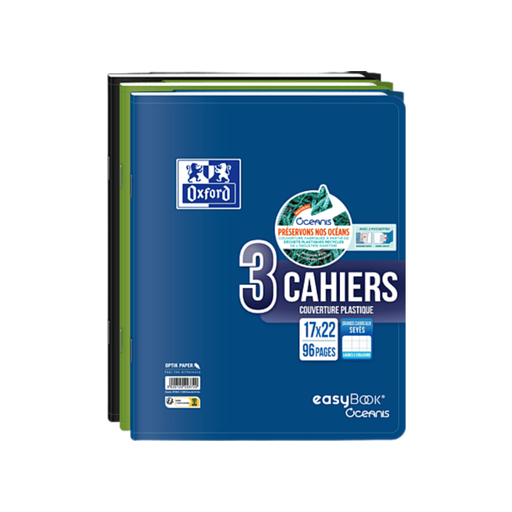
Why this choice suits this profile : The 17 × 22 cm format and Seyès ruling meet the everyday needs of secondary school, homework and guided handwriting.
The dimensions, ruling and quantity are clearly stated, reducing the risk of buying a decorative notebook that is unsuitable for lessons.
Pack of 3 exercise books, 96 pages per book, Seyès ruling and stapled binding.
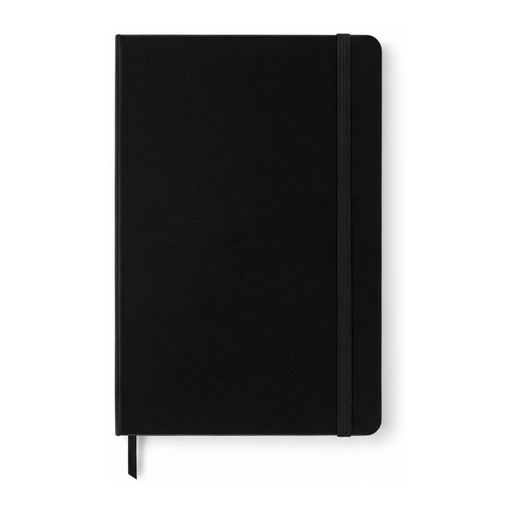
Why this choice suits this profile : Its hard cover, blank pages and lay-flat opening make it equally suitable for writing, sketching and creative journaling.
The description specifies a hard cover, 70 g/m² acid-free ivory paper, a bookmark and an inner pocket.
Blank pages, elastic closure, binding designed to open to 180° and paper sourced from FSC-certified forests, according to the product description.
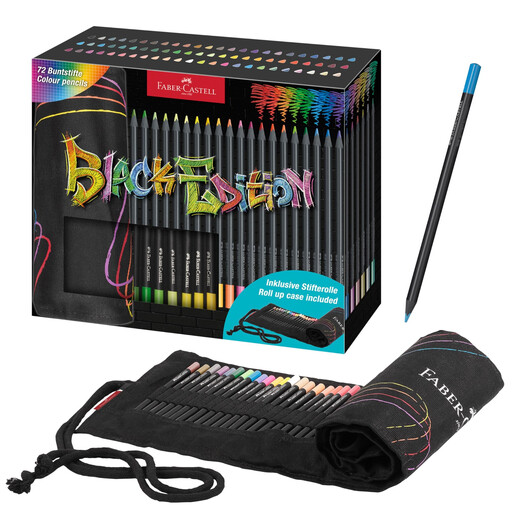
Why this choice suits this profile : Drawing enthusiasts get an extensive selection and a roll for easily carrying and organising their materials.
The number of shades, including six neon and six metallic tones, is clearly detailed rather than being reduced to a vague promise of variety.
72 pencils, advertised SuperSoft leads, triangular shape and storage roll included.

Why this choice suits this profile : Students, teachers and professionals can quickly distinguish between different types of information without carrying several pens.
Each pen contains four inks and uses a push-button mechanism, making the multicolour function tangible and easy to verify.
0.7 mm tip, four colours per pen, rubber grip and transparent barrel so you can monitor the ink level.
We have put together a complete, real-time updated list of products that meet these demanding selection criteria and European safety regulations.
Depending on your activities, add the accessories you will genuinely use over time:
For HB pencils, a hexagonal barrel stops the pencil from rolling off the table. With a mechanical pencil, check the compatible lead diameter and the availability of refills. As for highlighters, close the cap immediately after use to prevent the tip from drying out.
The 17 × 22 cm format with Seyès ruling is very common for schoolwork. A4 offers more space, but it also takes up more room in a bag. A5 is suitable for personal notes, revision cards and office work.
Their lifespan depends on how often they are used, the ink formulation and storage conditions. Keep the caps closed, avoid heat and protect them from direct sunlight. A pen whose ink skips, dries out or changes appearance should be replaced rather than forced.
Choose paper with a clearly stated paper weight and always test the pen on a page at the back of the notebook before writing. Liquid inks and some markers are more likely to bleed through paper than a pencil or ballpoint pen. For creative journaling, place a divider or protective sheet between two pages.