
Livraison le jour même ou le lendemain

Qualité garantie

Débloquez vos offres de bienvenue: Livraison GRATUITE | Jusqu'à -80 % | 30 jours d'essai gratuits à JoyPlus
Téléchargez l'application
With colours advertised as “intense”, inks reputed to be “indelible” and extensive sets to choose from, selecting the right stationery pens and highlighters can quickly become a headache. Students, parents, teachers, professionals and bullet journal enthusiasts all have different expectations.
The perfect highlighter for revision may not be suitable for lettering. Conversely, a decorative pen may feel very pleasant to use in a notebook, but be far less practical for taking notes over several hours. Here are the criteria to consider to avoid disappointing purchases and choose stationery that is genuinely suited to the way you plan to use it.
A large set is bound to catch the eye, but not all its shades will necessarily be useful to you. For revision, a few clearly distinct colours may be more than enough. In creative stationery, drawing or scrapbooking, however, a broader palette can really come into its own.
Also check the exact contents of the set: some products combine fluorescent, pastel, metallic or neutral shades. This information helps you avoid duplicates and choose an assortment that suits your habits.
A chisel tip generally allows you to create either a fine or broad line, while a fine tip is better suited to outlines and annotations. A 0.4 mm fineliner will not produce the same results as a brush-tip marker.
For drawing and lettering, therefore, examine the tip before focusing on the product’s appearance. A dual-tip model combining a fineliner and brush tip can reduce the number of tools you need to carry. However, it requires careful storage to prevent either tip from drying out.
The claim “smudge-free” does not guarantee the same result on every surface. Thin paper, glossy notebooks and black paper do not react to ink in the same way. Water-based inks can bleed through certain papers, especially after several passes.
For everyday use, choose ink that dries reasonably quickly, a reliable cap or a retractable mechanism. Erasable pens should also be used on the paper recommended by the manufacturer: erasing may leave a mark or damage the surface.
Water-based ink is generally suitable for standard paper and produces fewer strong odours. For metallic markers, pay particular attention to opacity and contrast on dark surfaces. Acrylic inks can be used on different surfaces, but they require more thorough preparation and cleaning.
Marketing claims are not a universal guarantee: always test compatibility with your paper, notebook or creative surface.
A triangular barrel, non-slip grip area or finger grooves can make a real difference during a long session. For a child, choose a model suited to their dominant hand. The STABILO EASYoriginal shown below is designed for right-handed users.
Also consider how long the product can be used: a refillable product or one supplied with replacement tips can help avoid repeated purchases. Whatever the model, replace the caps after use and store felt-tip pens away from heat and sunlight.
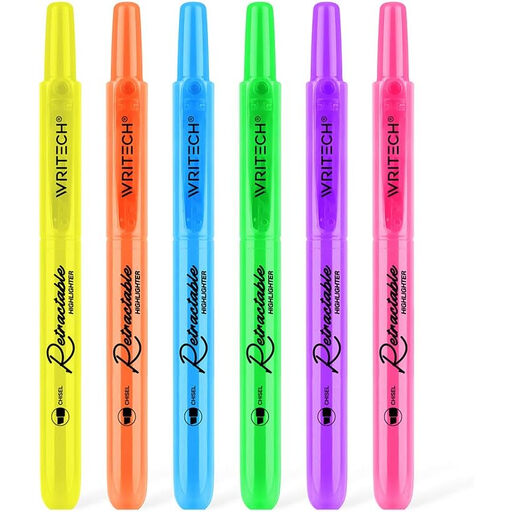
Why this choice suits this profile : The click-to-use design means you won’t lose a cap at the bottom of your bag, and is equally suitable for students, schoolchildren and beginners who want to organise their notes by colour.
The retractable mechanism limits the tip’s exposure and reduces the risk of marks inside your pencil case. The chisel tip produces lines from 1 to 4 mm, depending on the pressure applied.
Six assorted colours, one-handed use and recommended storage with the tip retracted.
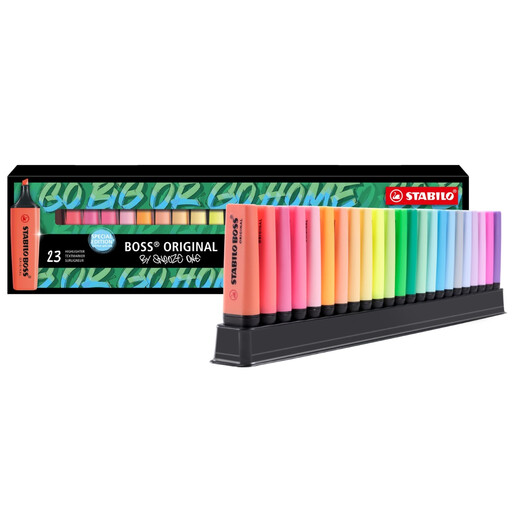
Why this choice suits this profile : Those looking to equip a permanent workspace get 9 fluorescent shades and 14 pastel tones in one set.
The chisel tip offers two line widths, and the fluorescent highlighters are advertised as refillable with STABILO BOSS refills.
23-piece set, water-based ink, 2 mm/5 mm tip and advertised anti-dry technology for up to 4 hours without a cap.
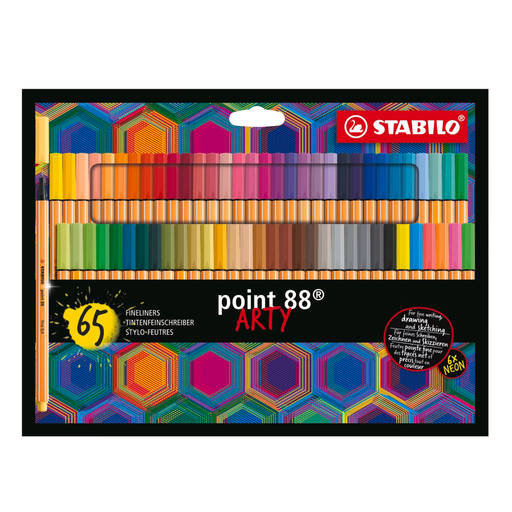
Why this choice suits this profile : Fans of mandalas, precise drawing, bullet journalling and lettering have a broad enough palette to distinguish even the finest details.
The metal-clad 0.4 mm tip is designed for outlines and fine lines. However, the cap should be replaced after every use.
65 colours, including 6 fluorescent shades, a 0.4 mm tip and ISCC PLUS-certified bio-based plastic according to the product information.
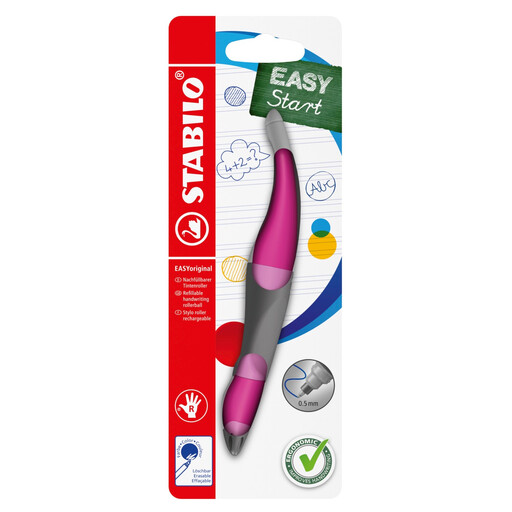
Why this choice suits this profile : Its non-slip grip area and pre-formed grooves help position the fingers correctly during writing practice.
This product is specifically designed for right-handed users, and its blue ink can be erased with a standard eraser. Check the dominant hand before buying.
Advertised 0.5 mm line, replaceable refill and a dedicated space for writing the user’s name.
We have brought together a complete, real-time updated selection of products that meet these demanding criteria, as well as European safety requirements.
It all depends on the ink, how airtight the cap is and how often it is used. Replace the cap immediately after use and avoid leaving it in a car in direct sunlight or near a radiator. Even products with anti-dry technology must be properly protected between uses.
A fine-tip gel pen, such as certain 0.5 mm multicoloured gel pens, can be useful for organising notes by colour and adding annotations. For everyday professional use, an ergonomic ballpoint pen often provides a more understated writing experience and dries quickly. In all cases, test the ink on the paper used in class or at work.
No. They are better suited to exercises, drafts, diaries and personal notes. Erasable ink should not be used for a document intended to be kept permanently. For creative projects, also choose metallic markers and dual-tip felt pens according to the surface and the safety instructions shown on the packaging.