
Livraison le jour même ou le lendemain

Qualité garantie

Débloquez vos offres de bienvenue: Livraison GRATUITE | Jusqu'à -80 % | 30 jours d'essai gratuits à JoyPlus
Téléchargez l'application
Buying stationery online should be a simple pleasure. Yet, who hasn't felt that sting of disappointment? A notebook whose pages drink ink, a supposedly smooth pen that scratches the paper, or art supplies whose colours fade in a few months... These letdowns, often the result of slick marketing, are avoidable. Before you splurge, let's review the three most common traps so you can finally invest in supplies that live up to your expectations.
To bypass the marketing hype, trust the specs, not the slogans. Here are the three technical indicators you should always verify.
Paper weight, or grammage, is the weight of the paper per square metre. It's the most reliable indicator for judging its thickness and opacity.
Writing comfort and finish depend on this duo.
For any drawing supplies you want to last, look out for two key terms:
Instead of an endless list, here are a few gems that check all the boxes on our criteria, each tailored to a specific need.

The Lowdown: Its A6 format fits anywhere. The rigid PU hardcover effortlessly handles the nomadic life in a bag. Perfect for taking notes in meetings, in class, or for jotting down ideas on the fly.
With its 100 gsm paper, it solves the problem of ink bleed-through. You can use your fine-tip gel pen without fear of the ink soaking through the page.
Its thoughtful extras (bookmark, elastic band, pen loop) make it an all-in-one notebook, ready to use right out of the box.
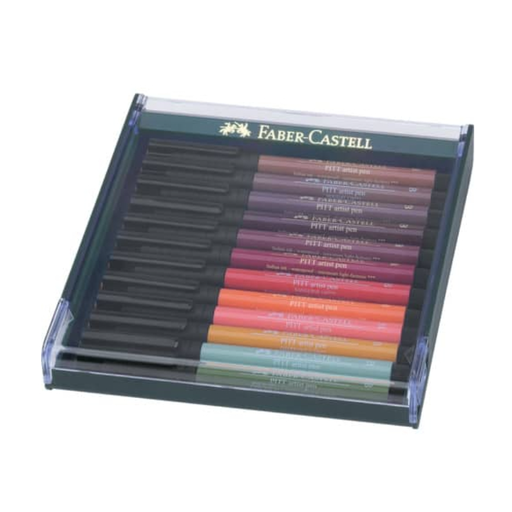
The Lowdown: An ultra-versatile set. Its flexible brush tip allows you to vary your line width at will, making it equally at home in a bullet journal as it is for illustration or starting out in calligraphy. A true creative Swiss Army knife.
It shatters the "faux-pro" mirage. Its pigmented India ink is water-resistant and lightfast. These technical specifications, guaranteed by a benchmark brand, make it an archival-quality product, period.
The brush tip holds its shape, ensuring perfect consistency. The acid-free, pH-neutral ink is kind to paper (no *bleeding* on most paper weights), for maximum user comfort.
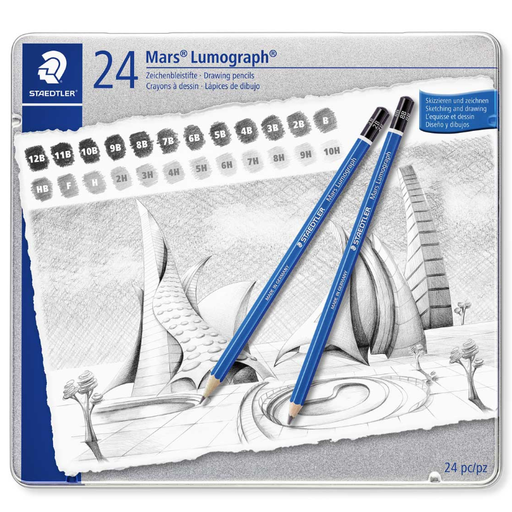
The Lowdown: For anyone who takes drawing seriously, this set is THE gold standard. It covers the entire hardness spectrum, from 12B (soft and deep) to 10H (hard and precise), for total control over your linework.
This is an industry standard, not a cheap imitation. The lead is bonded along the entire length of the wood casing, giving it unbeatable break-resistance. No more leads snapping at the first turn of the sharpener—the number one flaw of low-end pencils.
The range of 24 hardness grades offers absolute control over shading, textures, and details. It's a long-term investment for any artist, designer, or architect.
We have curated a complete range of products that strictly adhere to our quality criteria and current regulations.
For a bullet journal, aim for 100 gsm paper as a baseline. It's the sweet spot for minimising ghosting (ink visible on the reverse side) and bleeding (ink transfer) with most pens, including brush pens and gel pens. If you plan to add a touch of watercolour or other wet media, upgrade to 120 gsm or more for peace of mind.
Absolutely. A fine-tip gel pen (0.5 mm, for example) is excellent for rapid note-taking. It combines a perfect glide with exceptionally crisp lines. Pro tip: opt for a quick-drying ink for total comfort—a non-negotiable feature for left-handers!
This is THE key difference, determining the lifespan of your writing and drawings.