
Livraison le jour même ou le lendemain

Qualité garantie

Débloquez vos offres de bienvenue: Livraison GRATUITE | Jusqu'à -80 % | 30 jours d'essai gratuits à JoyPlus
Téléchargez l'application
Buying your stationery online promises a near-infinite selection delivered right to your doorstep. But be warned: a great deal can quickly turn into a nightmare. Think paper that buckles at the first brushstroke, a notebook where ink bleeds through to the other side, or photos with washed-out colours. These disappointments are often the result of clever marketing or obscure technical specifications.
As product selection experts, our mission is to demystify this world for you and guide you toward truly smart choices. Follow our guide to avoid the most common traps and find the perfect item, whether it's for back-to-school, the office, or your creative projects.
With an overwhelming number of options available, it's easy to make a mistake. Here are the three classic pitfalls to know so you don't throw your money away.
To ensure you get it right, rely on objective technical criteria. They are the true guarantors of a product's quality—far more than any marketing promises.
Paper weight, measured in grams per square metre (gsm), is the most reliable indicator of its thickness and durability.
The page layout is just as important as the paper itself.
The raw material has a direct impact on the paper's colour, longevity, and environmental footprint. Most high-quality papers are made from virgin pulp, offering optimal whiteness and stability. Recycled papers are an eco-friendly option, but their quality can vary. For a responsible purchase, look for labels like PEFC or FSC, which guarantee that the wood comes from sustainably managed forests.
To put these criteria into practice, here is our selection of tried-and-tested products suited for different needs.
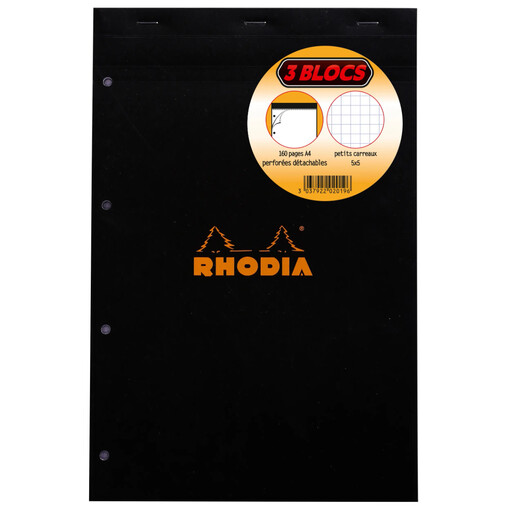
Editor's Pick: This pack of Rhodia pads is a timeless classic for intensive note-taking. The 5x5 grid ruling is ideal for science classes, technical diagrams, or project planning. The A4+ format with detachable sheets is perfect for organising your notes.
No more low-grade paper that soaks up ink! Its premium 80 gsm Clairefontaine vellum paper ensures a perfectly smooth glide and excellent opacity, preventing ink from bleeding through.
Unbeatable value for a three-pack. The paper quality, combined with the rigid cardboard backing, makes it a reliable companion for the entire year.
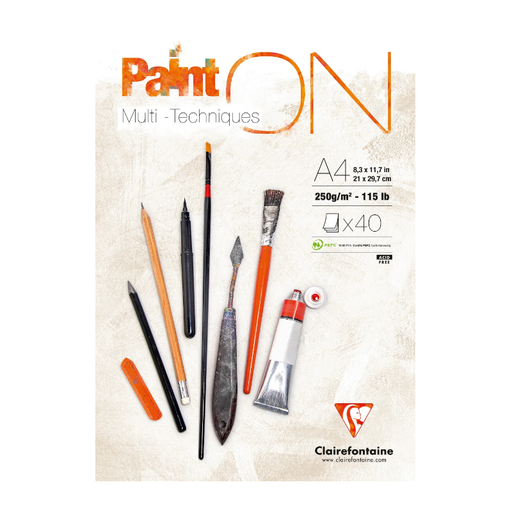
Editor's Pick: For creatives who love to switch between techniques, this Paint'ON pad is a sure thing. It's designed to handle a multitude of media without compromising on quality, from simple sketches to paintings.
It puts an end to the false promise of "multi-media" paper. With its robust 250 gsm weight, it handles both dry and wet media (ink, gouache, acrylic) without issue, absorbing moisture without buckling.
Its rock-solid versatility. Its very light tooth is ideal for precision drawing, while its durability allows for corrections (erasing, scraping), making it a prime ally for ambitious projects.
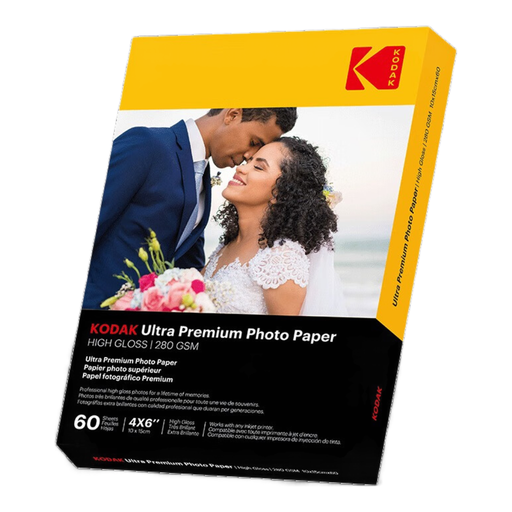
Editor's Pick: Perfect for immortalising your holiday or family photos with a professional-grade finish. The 10x15 cm format is the standard for albums and frames. And with Kodak, you're in trusted hands.
It eliminates the risk of incompatibility. Designed for all inkjet printers, using it is a breeze. Its high weight of 280 gsm and instant-dry properties prevent smudges and provide the feel of a true photo print.
Its ultra-glossy finish makes colours and contrasts pop. The result: vibrant photos that won't fade over time.
Explore our complete selection of products that meet our quality criteria and the most demanding standards.
The choice depends entirely on your medium:
Absolutely not, and this is a critical point to watch out for. Almost all consumer-grade photo paper is designed for inkjet printers. Attempting to use it in a laser printer risks seriously damaging your machine. The rule of thumb: always check for compatibility on the packaging before you buy.
For the back-to-school season, efficiency is key. Stick to the school's supply list and rely on trusted names like Clairefontaine notebooks or Rhodia pads, whose quality never disappoints. Buying in bundles is often a smart way to save money and stock up. For binders and folders, look for thick cardstock (at least 350 gsm) to ensure they survive the backpack test.