
Livraison le jour même ou le lendemain

Qualité garantie

Débloquez vos offres de bienvenue: Livraison GRATUITE | Jusqu'à -80 % | 30 jours d'essai gratuits à JoyPlus
Téléchargez l'application
Want to decorate a window, keep your privacy or reduce glare without permanently altering your home? A film for windows without glue can be the perfect answer – as long as you check its material, dimensions and application method.
The term "without glue" usually refers to a static window film. It sticks by electrostatic effect onto a dampened surface, then can be repositioned or removed without leaving any residue. This is a particularly handy solution for tenants, bathroom windows and glass doors you want to decorate temporarily.
Some products are marketed as removable when they actually have an adhesive layer. Removing them can leave marks and require a tedious clean-up. For a temporary installation, look clearly for the terms static cling, no adhesive, repositionable and removal without residue.
A roll of 60 × 305 cm may not be enough to cover a large patio door. Measure the width and height of each surface, then allow a few extra centimetres on each side for trimming. The key indicator isn't just the roll length – it's the surface area covered.
A repositionable stained-glass or textured film often lets light through while blurring outlines. It doesn't necessarily replace a blind or thick curtain. For a bathroom or a window facing directly onto the street, decide what you need: simple visual privacy, soft light or true blackout.
Textured PVC is very common in decorative window films. Its surface diffuses light, reduces some glare and is easy to clean with a damp cloth. Application is generally intended for smooth, clean, undamaged glass.
Avoid frosted, heavily textured or poorly sealed glazing without first checking the film's compatibility. On a PVC window, the film goes on the smooth glass part – never directly onto the frame or a porous surface.
Before ordering, carefully take your measurements in centimetres:
The Murgall Prism Diamonds film measures approximately 60 × 305 cm and covers around 1.83 m². The Murgall Solid Color Laser film measures approximately 60 × 508 cm and covers around 3.05 m². With its longer format, the latter is better suited to large windows, sliding doors or several panes in the same room.
The application involves cleaning the glass, spraying it with water, then positioning the film before pushing water and air from the centre out to the edges. A window film application tool, such as a soft squeegee, makes removing bubbles much easier. A well-held blade then lets you trim the excess neatly.
Work gradually and avoid pulling hard on the film. Starting with a small area lets you check the adhesion and finish before covering the whole window.
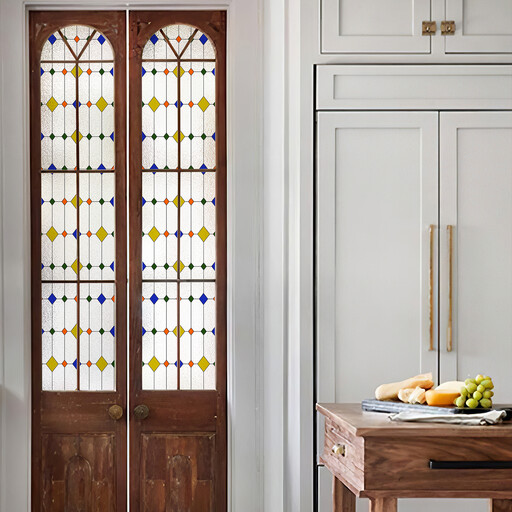
Why this choice suits this profile: With around 1.83 m² of coverage, this roll lets you start with a bathroom window, a glazed cupboard door or a fanlight, without investing in a format designed for a large area.
The static water application avoids permanent adhesive and lets you easily adjust the position during installation.
Textured PVC, prismatic pattern with colourful accents, diffused light and easy care with a damp cloth.
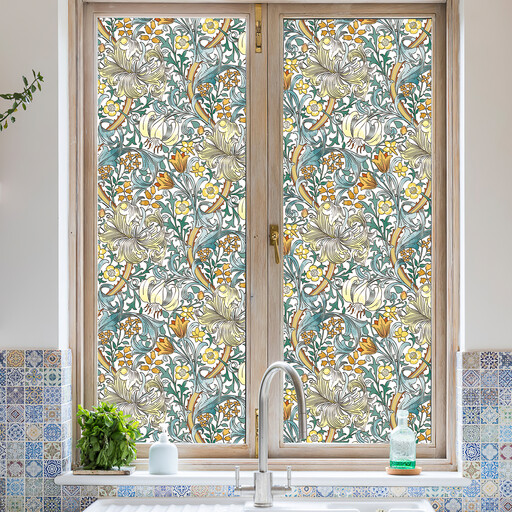
Why this choice suits this profile: Its floral pattern inspired by the Morris world gives character to living room windows, an internal glazed door or a fitted kitchen.
The pattern and texture are clearly shown before purchase, so you can tell the difference between a window decoration and a fully blackout film.
Textured PVC, golden floral details, repositionable application and easy-to-wipe surface.
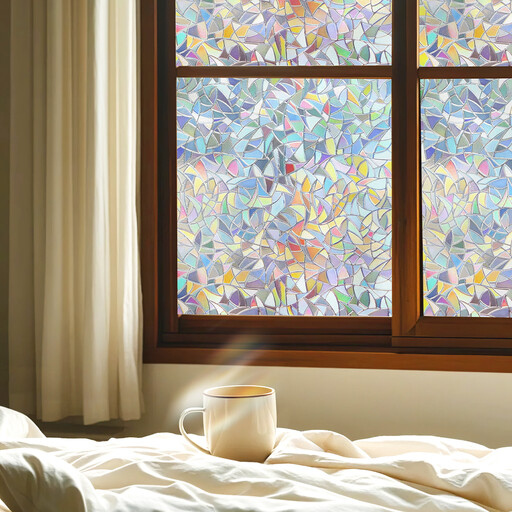
Why this choice suits this profile: At 5.08 m in length, this roll targets large glazed areas, sliding doors and several windows in the same room.
The covered surface area is stated, which reduces the risk of running out of material on a large project.
Iridescent finish, textured PVC, diffused light and cleaning with a soft damp cloth.
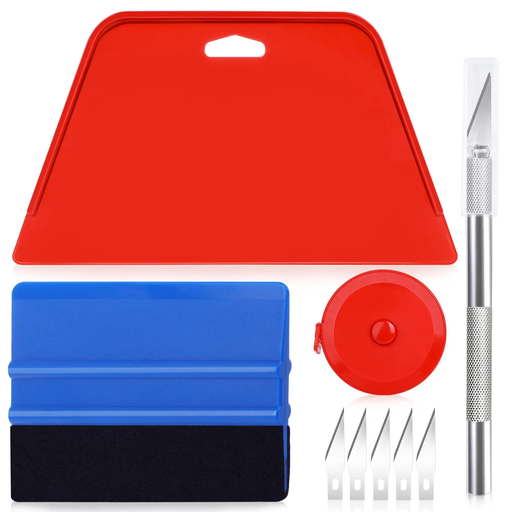
Why this choice suits this profile: The kit includes squeegees, a locking craft knife, four spare blades and a 1.5 m tape measure for preparing several projects.
It stops you applying the film with a rigid card or makeshift tool, which could scratch or crease the surface.
Two squeegees of different hardness, built-in measure and replaceable blades for clean cuts along the edges.
We've put together a comprehensive, real-time updated list of products that fully meet these strict selection criteria and European safety regulations.
For care, simply use a soft, damp cloth. Avoid abrasive products and blades applied directly to the film. These products are designed for decorative use – they do not replace a security film or impact protection. Also keep them away from flames and significant heat sources.
Application is done on a clean, dampened window. Simply place the film onto the wet surface, then smooth it with a squeegee to remove bubbles. This method generally lets you reposition the film during installation, unlike a permanent adhesive.
It all depends on the pattern, texture and opacity level. A textured or stained-glass decorative film often diffuses light and blurs shapes without plunging the room into darkness. If you need significant blackout, check the product's opacity details rather than relying solely on photos.
Its lifespan depends on light exposure, humidity, the quality of the application and the condition of the glass. An indoor installation on smooth, perfectly cleaned glass promotes good adhesion over time. Check the edges from time to time and remove the film if it starts to peel or if moisture builds up behind it.