
Livraison le jour même ou le lendemain

Qualité garantie

Débloquez vos offres de bienvenue: Livraison GRATUITE | Jusqu'à -80 % | 30 jours d'essai gratuits à JoyPlus
Téléchargez l'application
A stapler seems simple to choose… until sheets of paper fold, staples jam or the tool lacks the power to attach fabric to a piece of wood. To avoid an unnecessary purchase, the key is to match the mechanism, consumables and capacity to how you will actually use it.
Not all models sold online are designed for the same tasks. An office stapler is used to join documents, while a manual stapler, wall stapler or staple gun is designed for fastening different materials. Here are the criteria to consider before placing your order.
An office stapler is designed to punch through sheets of paper. It does not have enough power for wood, thick cardboard, fabric or upholstery. By contrast, a manual staple gun can apply enough pressure to attach canvas to a wooden frame, but it will be impractical for joining a multi-page document.
So start by checking the stated purpose: documents, fabric, furniture, decoration or light joinery.
A pack of 800 or 3,000 staples may seem appealing, but compatibility comes before quantity. A stapler for wood and fabric may accept specific sizes, such as type 53 staples, whereas an office model generally uses standard 26/6 staples.
Before buying, check:
A lightweight manual stapler is sufficient for small jobs, but it may require much more effort when used on a dense material. A handle that is too stiff also increases the risk of positioning the tool incorrectly and becoming tired quickly.
For upholstery, decorating or refurbishing furniture, choose an ergonomic handle, adjustable force and a magazine that is easy to open. For paper, a non-slip base and smooth mechanism will generally be more useful than high power.
For schoolwork, administrative tasks or working from home, an office stapler rated for 20 to 30 sheets of 80 g/m² will be suitable for most everyday documents. This figure is nevertheless a usage limit: exceeding it may cause a jam or result in a poorly formed staple.
Metal desktop models offer good stability. A small half-strip stapler is easier to store in a drawer or slip into a bag.
Metal provides rigidity, while plastic helps reduce weight and price. A model combining metal and plastic can be perfectly suitable for everyday office use, provided its base remains stable.
For DIY, a metal stapler or a staple gun with a reinforced body is worth choosing if you expect to use it regularly. Also look at the shape of the handle, the loading system and whether a jammed staple can be removed without taking the tool apart.
The staple length must match the thickness of the material. Staples that are too long may go right through the material; staples that are too short will not hold fabric or canvas securely.
For a stapler for wood and fabric, 6, 8 or 10 mm type 53 staples are commonly used for light jobs. However, a manual stapler is not suitable for every type of hardwood. Follow the manufacturer’s recommendations and always secure the workpiece before you begin.
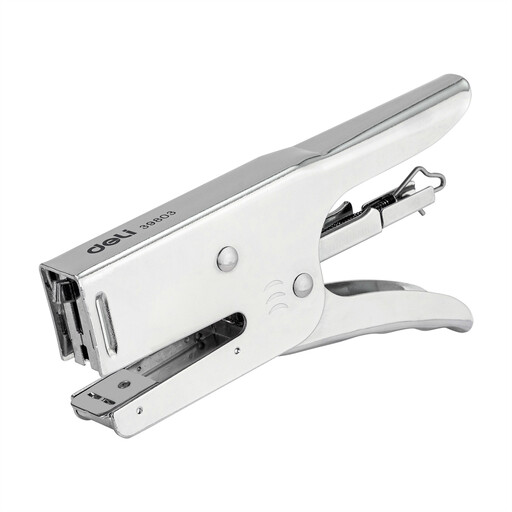
Why this choice suits this profile : This model is suitable for everyday documents, homework and general filing, with a stated capacity of around 20 to 30 sheets of 80 g/m².
Its product description clearly states that it is intended for office use and specifies its indicative capacity, reducing the risk of using it on materials that are too thick.
Metal construction and plastic base, desktop format and loading with standard staples.
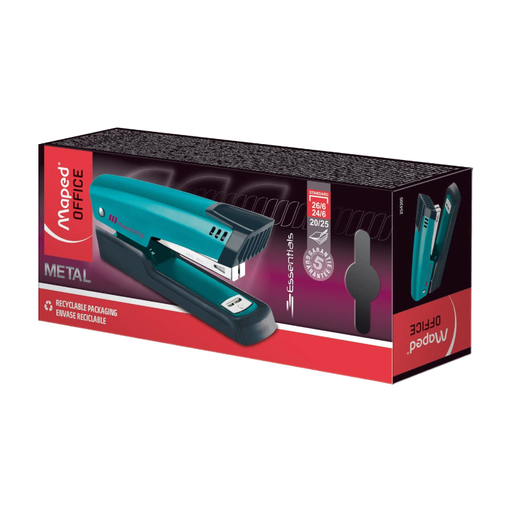
Why this choice suits this profile : Its decorative casing and half-strip format fit easily on a desk where accessories need to remain practical to store.
Compatibility with standard 26/6 staples is explicitly stated, helping you avoid buying unsuitable consumables.
Metal body, non-slip base, spring mechanism and decorative storage box.
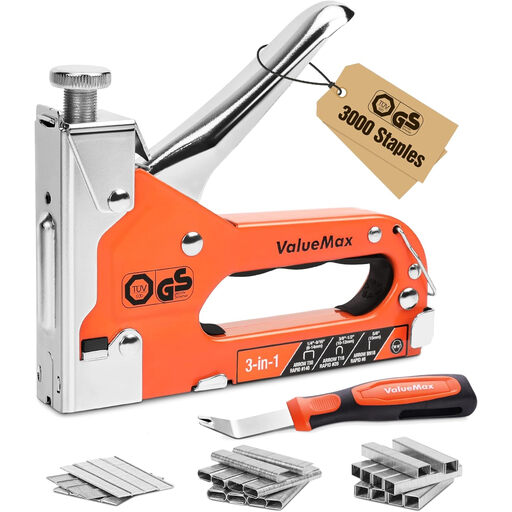
Why this choice suits this profile : This manual staple gun is suitable for upholstery, decorating, furniture repairs and light joinery.
The stated compatibility covers types 140, 28 and 8, with force adjustment to set the driving depth according to the material.
Alloy steel body, hinged magazine, 3,000 staples included and manual handle.
We have brought together a complete, real-time updated selection of products that meet these demanding criteria while complying with European safety regulations.
To extend the life of a stapler or staple gun:
For removing staples, use a staple remover with paper. On wood, fabric or furniture, end-cutting pliers and a nail puller will often be more effective. The 3-piece ValueMax set includes end-cutting pliers and two V-tip nail pullers.
An office stapler rated for 20 to 30 sheets of 80 g/m² is suitable for everyday documents. Check which standard staple type it accepts and avoid exceeding the stated capacity.
A manual staple gun compatible with type 53 staples is suitable for small upholstery, decorating and fastening jobs on softwood. The staple length must be appropriate for the thickness of the fabric and material.
Use compatible staples, insert the strip the right way round and never force a jammed handle. If the problem persists, empty the magazine, open the mechanism according to the manufacturer’s instructions, then carefully remove the deformed staple.