Regular home bakers
You often make bread, brioche or other yeast doughs. Compare each mixer's stated dough capacity with the size of your usual batches, rather than choosing based on bowl size alone.


If you often knead, mix and whisk, start by looking at a stand mixer equipped for all three tasks. Then compare its stated dough capacity with the size of your usual batches, and consider how much room it will take up in your kitchen. A model with extra attachments or a food processor is worth a closer look if chopping, grating or blending matters just as much to you. A specialist dough mixer, meanwhile, is better suited to very frequent batches of firm dough.
According to Que Choisir, a stand mixer is most worthwhile if you often bake bread, brioche or other treats, or make them in large quantities. What you make most often will help you decide whether to prioritise kneading, a range of baking tasks or extra food-preparation functions.
You often make bread, brioche or other yeast doughs. Compare each mixer's stated dough capacity with the size of your usual batches, rather than choosing based on bowl size alone.
You switch between yeast doughs, cakes, whipped cream and whisked egg whites. Check that the whisk, beater and dough hook you need are included in the configuration you choose.
You'd also like to chop, grate, slice or blend without filling your kitchen with appliances. A food processor can combine these tasks, but make sure the bowl and attachments, and the space needed to store them, will fit.
Consider it: if kneading, mixing and whisking make up most of your regular baking.
Bear in mind: chopping or blending functions may not be included.
Consider it: if you often bake bread and other treats, and will also make good use of a blender or mincer.
Bear in mind: attachments take up space, and whether they’re included depends on the version you buy.
Consider it: if kneading is just one of your regular tasks, alongside chopping, grating, slicing and blending.
Bear in mind: versatility doesn’t guarantee it’s suitable for kneading, so check for a dough tool and the stated dough capacity.
Consider it: for very frequent baking, mainly involving firm doughs such as some bread or pizza doughs.
Bear in mind: it’s designed for kneading, so make sure its size and installation requirements suit your kitchen.
If you regularly bake bread, brioche or other treats, start with what you make most often. Then check the stated capacity for that preparation and the space the appliance will need.
| What matters to you | What to check | Who this matters to |
|---|---|---|
| Regular kneading | Whether a suitable dough hook is included; the stated maximum dough or flour quantity, depending on your batches. | I often make bread or brioche and don’t want to choose a machine that’s unsuitable for my usual quantities. Regular kneading would be the main concern for around 42 % of consumers. |
| Varied baking | Whether a whisk, beater and dough hook are included; the stated capacities for the different things you make. | I switch between yeast doughs, cakes and whisked mixtures, and want one appliance to handle them all. This baking versatility would be a priority for around 33 % of consumers. |
| Space and versatility | The mixer's dimensions and how its attachments can be stored; which food-preparation functions are actually included. | My kitchen is short on space, and I’d also like to chop, grate or blend without collecting lots of appliances. Space and these extra functions would come first for around 25 % of consumers. |
Neither the stated power nor the bowl capacity tells you on its own how much bread dough a mixer can handle. Kenwood’s product information, for example, gives separate capacities for dough and flour.
Compare the limit for the preparation you’ll be making and the size of your batches. Don’t assume it’s the same as another model’s.
A blender, mincer or vegetable slicer is only useful if you’ll use it and have somewhere accessible to keep it.
List the attachments you’ll genuinely use, then decide where to store the mixer, its bowl and each extra component.
Que Choisir points out that an appliance with lots of functions won’t necessarily excel at all of them. A food processor may be able to knead, but whether it suits your doughs and baking routine depends on the model.
If bread and brioche are what you make most, check the dough tool and stated dough capacity first.
For goods sold by a business to a consumer in France, the legal guarantee of conformity is mandatory, as France’s Ministry of the Economy explains. Any commercial warranty offered on top of it does not replace it.
Keep your proof of purchase and read the terms of any commercial warranty separately.
These ranges show the different configurations available. The capacities, attachments and compatibility mentioned apply to specific models, not every appliance from the same brand.
The range includes stand mixers in various sizes and configurations, some of which can be fitted with food-preparation attachments.
Depending on the kit, the brand offers stand mixers on their own or supplied with food-preparation attachments.
The brand’s stand mixers use dedicated attachments for whisking, mixing and kneading.
Depending on the model, the brand’s food processors combine kneading with tasks such as grating, slicing and blending.
These models are worth a look if you mainly want to knead, mix and whisk. One of them also offers extra food-preparation functions. If you bake regularly, always compare the stated dough capacity and the space the appliance takes up with your needs.
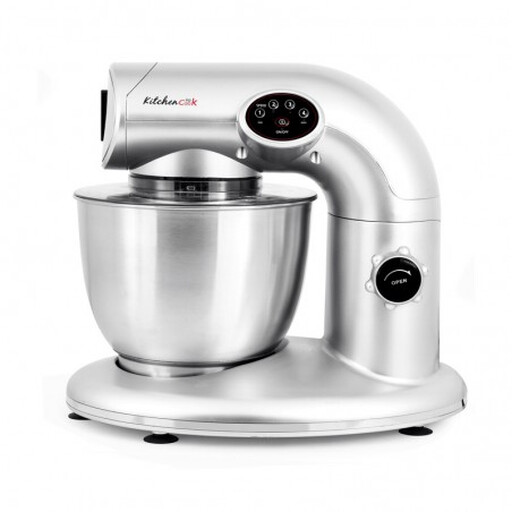 Image unavailable
Worth considering if kneading is part of your regular baking. Before choosing it for heavy doughs, check the stated capacity, recommended kneading time and the space needed around the mixer.
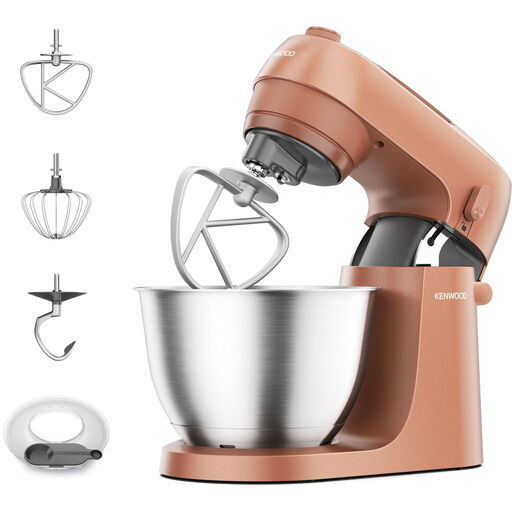 Image unavailable
Worth a look if you switch between kneading and baking while keeping an eye on how much space the mixer takes up. Check that the included attachments and stated dough capacity suit the recipes you usually make.
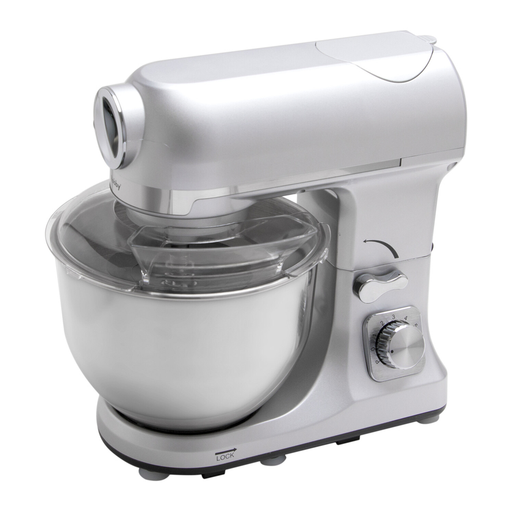 Image unavailable
Worth considering if you’ll also use the 1,5 L glass blender and meat mincer. The bowl capacity is stated as 5 L; check the dough capacity separately, and make sure you have space to store and clean the attachments.
 Image unavailable
This model comes with a dough hook, beater and whisk for switching between yeast doughs and other baking. It has a 6 L SUS304 stainless steel bowl, six speeds and a tilting head. Check the stated dough capacity and make sure you have enough room to set it up.
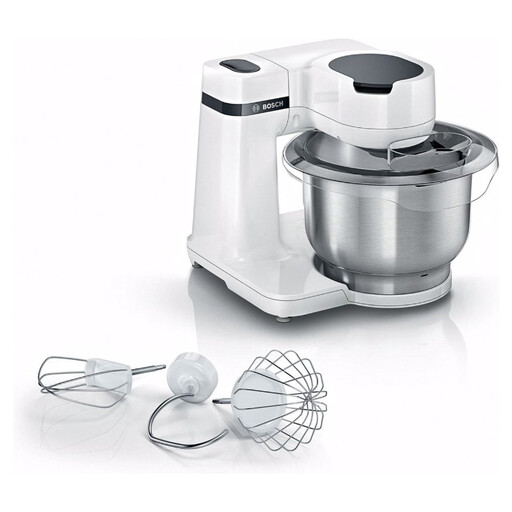 Image unavailable
Worth a look for regular baking in quantities suited to your household. This model is listed with a 3,8 L bowl and 700 W of power. Before buying, check the attachments included in this configuration, the stated dough capacity and its dimensions.
Not necessarily. According to Que Choisir, this appliance is most worthwhile if you often bake, or make bread or brioche in large quantities. If you only use it occasionally and in small amounts, first consider whether the tools you already own will do the job.
No: bowl capacity and the maximum dough quantity are two different things. For some models, Kenwood publishes separate limits for dough and flour. Compare the figure that matches your recipe for the model you’re considering.
Some food processors can knead bread dough, including models presented by Magimix. If bread is what you make most often, check the dough tool and stated capacity for the specific model before comparing it with a stand mixer.
Only consider one if you bake very frequently, mainly make firm doughs and have a need for a specialist appliance. Sammic presents its spiral mixers as professional equipment, so check their installation requirements and suitability for your quantities before buying one for home use.
The legal guarantee of conformity applies to goods sold by a business to a consumer in France, including new, second-hand and refurbished goods, according to France’s Ministry of the Economy. You have two years from the date the goods are delivered to exercise this right. Keep your proof of purchase and a description of the offer.