
Livraison le jour même ou le lendemain

Qualité garantie

Débloquez vos offres de bienvenue: Livraison GRATUITE | Jusqu'à -80 % | 30 jours d'essai gratuits à JoyPlus
Téléchargez l'application
Spending hours sitting down, whether you're working from home or in the office, often takes its toll: muscle tension, energy slumps, and more. To break up this sedentary routine, the standing desk has emerged as an excellent solution. By allowing you to easily alternate between postures, it's your ally for better comfort and renewed focus.
But with an overwhelming number of options on the market, it's easy to get lost. This guide is designed to bring you clarity and help you choose the perfect ergonomic desk for your needs and your space—all without the unnecessary marketing jargon.
Before you commit, a few key criteria need to be considered. They will help you define the sit-stand workstation that will integrate seamlessly into your daily routine.
The heart of the system is, of course, its adjustment mechanism. An electric height-adjustable desk offers unparalleled ease of use: at the touch of a button, you can switch from sitting to standing.
To take it a step further, some models include a memory function. This option allows you to pre-save your ideal heights (one for sitting and another for standing, for example). It's a real time-saver in your daily routine and encourages you to change postures more often.
The size of the desktop is obviously a crucial factor. Before you decide, take out your measuring tape and measure your available space. Also, think about all the equipment you plan to put on it: one or two monitors? A laptop? Paperwork?
A 160x70?cm desk, for instance, provides a very comfortable work surface, perfect for a complete work-from-home setup. For more compact spaces, models that are 120 or 140?cm wide would be a smarter choice.
A good ergonomic desk is more than just a top that goes up and down. Its stability is paramount. A desk that wobbles with every keystroke or during height adjustment quickly becomes a source of annoyance. Check that the frame, often made of steel, is robust and that the maximum load capacity is compatible with all your equipment.
To help you make a decision, here is our selection of models that cater to different needs and budgets.
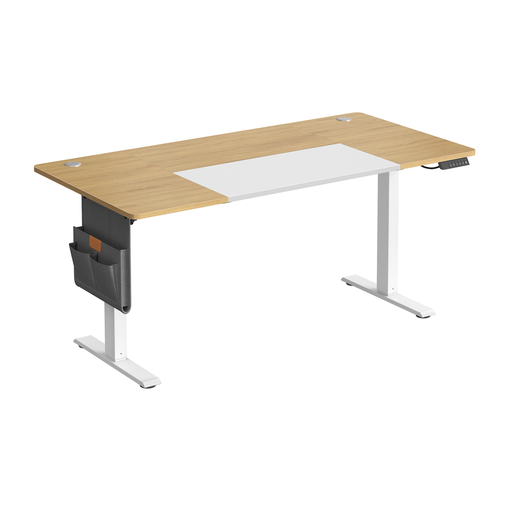
Why it stands out: This model combines a large 160 x 70?cm work surface with the most sought-after features. Its quiet motor, memory function for saving your favourite heights, and integrated USB-C connectivity make it an exceptionally versatile and well-designed model.
Highlights:
Who is it for? Ideal for professionals working from home or in an open-plan office who want a spacious, full-featured sit-stand workstation built for intensive use.
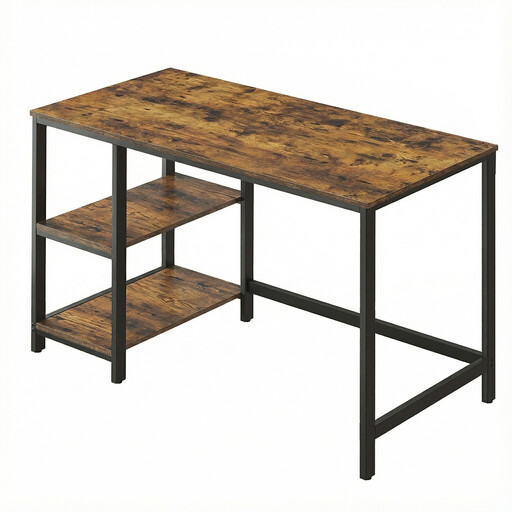
Why it stands out: If the sit-stand function isn't a priority, but style and stability are, this model is an excellent alternative. Its industrial design and modular shelves offer a great compromise between aesthetics and functionality.
Highlights:
Who is it for? Perfect for students, those setting up their first home office, or simply fans of a bold industrial design who don't need height adjustment.
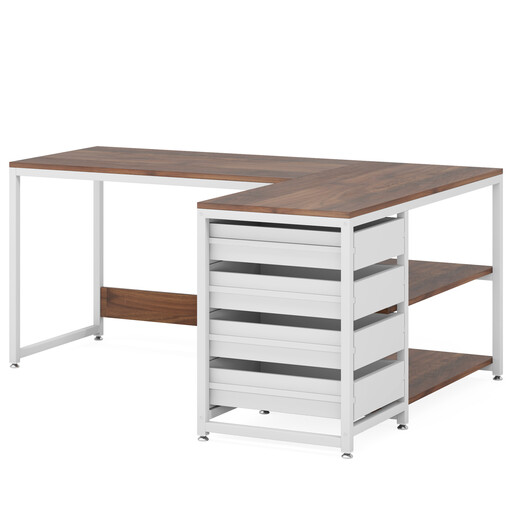
Why it stands out: For those who juggle a lot of equipment and want to optimise every square inch, this corner desk is a formidable all-in-one solution. It allows you to create a spacious and perfectly organised work area.
Highlights:
Who is it for? Ideal for users who need a lot of space (multi-monitors, files, peripherals...) and want to transform a corner of a room into an ultra-organised command centre.
If your space is truly limited or you're looking for a secondary solution, other options are available. When even a compact standing desk is too bulky, a folding metal desk can be a smart alternative. These models are all about flexibility and can be tucked away when the workday is over.
Discover our selection of folding desks here
The main benefit is breaking the cycle of a sedentary lifestyle. By alternating postures, you actively combat the common ailments of prolonged sitting: back pain, a stiff neck, and more. Many users also report a real boost in energy and better concentration throughout the day.
There's no golden rule; the important thing is to move! A popular approach is the 30/30 cycle (30 minutes sitting, 30 minutes standing) or even 45/15. But the key is to listen to your body and find the rhythm that works for you.
Modern models are designed to be as discreet as possible. The motor noise is generally very low (often under 50 decibels), comparable to that of a modern refrigerator. In other words, it won't disturb your concentration, your colleagues, or your family.