
Livraison le jour même ou le lendemain

Qualité garantie

Débloquez vos offres de bienvenue: Livraison GRATUITE | Jusqu'à -80 % | 30 jours d'essai gratuits à JoyPlus
Téléchargez l'application
Long hours spent sitting are now a daily reality for many, both in the office and at home. This sedentary lifestyle comes with consequences: discomfort, back pain, and decreased concentration. In response, the standing desk is emerging as THE ideal solution to break the cycle of immobility and energise our workdays.
As a product expert at Joybuy, I'm here to guide you through the maze of available models. In this guide, I'll share my tips for choosing wisely and present a selection of desks that have caught my eye, helping you create a workspace that is both ergonomic and inspiring.
Before you take the plunge, let's review the essential criteria to ensure you make the right choice—one that will perfectly suit your needs and your home.
The convenience of an electric height-adjustable desk is unparalleled. A simple press of a button is all it takes to adjust the desktop's height, effortlessly. Some models go even further by offering position memory presets. This is a particularly useful feature for saving your preferred heights (for sitting and standing, for example) and switching between them in an instant. A good motorised desk should also provide a smooth and quiet transition, so as not to break your concentration.
The space you have is obviously a key factor. Take the time to measure your room before deciding on the size of the desktop. A 120 cm wide top is generally sufficient for a laptop and a monitor. For more room, especially with a multi-monitor setup or if you like to spread out your documents, aim for 140 cm or 160 cm instead.
Also, remember to check the maximum load capacity (expressed in kg). It must be able to support all your equipment without issue: monitors, computer tower, peripherals, etc. A load capacity of 70 kg is a good indicator of sturdiness for standard use.
It's often the small details that make all the difference. A good ergonomic desk should make your life easier. Look for cable management options (grommets, trays, etc.) to keep your workspace clean and uncluttered. The presence of integrated USB or USB-C ports is a real plus for easily charging your devices. Accessories like a headphone hook or a storage basket are also welcome additions for keeping a perfectly organised desk.
Now, let's move on to our top picks. Here are models that stand out for their design, features, and value for money, created for different types of remote workers.
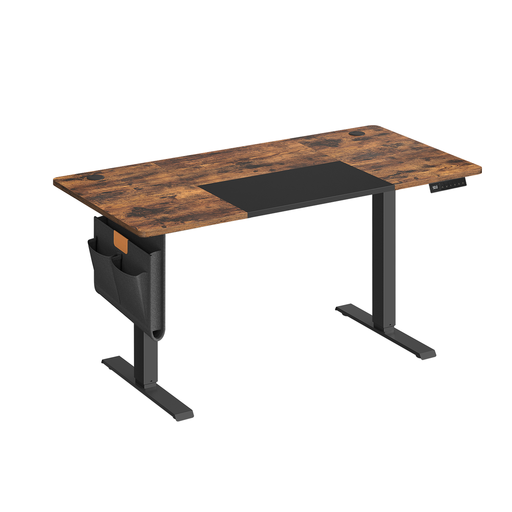
Why it stands out This model is the perfect marriage of aesthetics and functionality. Its 140 x 60 cm desktop offers a generous work surface. Above all, its control panel with 4 memory presets and its integrated USB-C port make it a modern and ultra-practical daily companion. A nice bonus: the reminder function encourages you to switch positions regularly for a more active day.
Pros
Who is it for? The ideal choice for demanding remote workers looking for a versatile and smart desk for intensive daily use.

Why it stands out With its minimalist design and clean white finish, this desk blends into any decor. Its compact 120 x 60 cm dimensions make it a perfect solution for smaller spaces, like a student's room or a home office nook in the living room. This model gets straight to the point: reliable, simple, and quiet height adjustment.
Pros
Who is it for? Perfect for students or anyone with limited space who is looking for a simple and effective solution to improve their daily ergonomics.
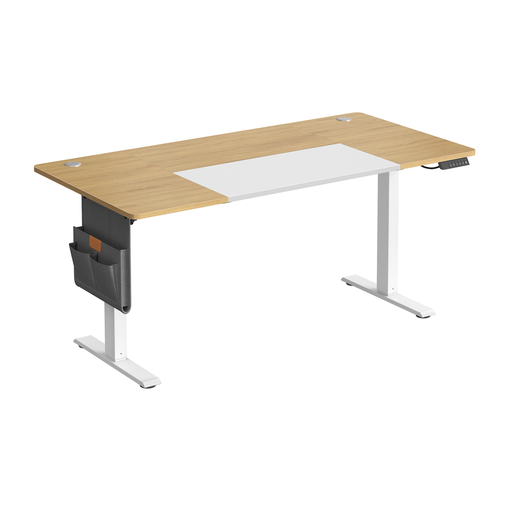
Why it stands out This model is for those who think big. Its extra-large 160 x 70 cm desktop is perfect for accommodating a multi-monitor setup, documents, and numerous accessories without ever feeling cramped. It features all the benefits of the 140 cm model (position memory, USB-C port, organisation accessories), but with an XXL work surface.
Pros
Who is it for? A must-have for professionals who need a large work surface: developers, architects, graphic designers, or anyone juggling extensive computer equipment.
A standing desk isn't the only solution. If you're looking to optimise a corner or if your needs are different, other formats are available. A corner desk (or L-shaped desk), for example, offers a vastly increased work surface and allows you to clearly define different zones: a corner for the computer, another for creative work...
To explore these alternatives, take a look at our range of desks designed for every layout.
Discover our selection of dark L-shaped desks
In a seated position, the golden rule is simple: your forearms should form a right angle (90°) with your upper arms when typing, and your feet should be flat on the floor. In a standing position, the same principle applies: aim for a right angle at your elbows. Most electric desks offer an adjustment range (typically from 72 to 120 cm) that accommodates the vast majority of body types.
The goal isn't to eliminate sitting, but to find a balance by alternating. It's often recommended to start with 30-minute standing sessions and then gradually increase the duration. The most important thing is to listen to your body to find a rhythm that works for you, such as alternating every hour.
Modern models are designed to be particularly discreet. The noise level of a good motorised desk rarely exceeds 50 decibels during adjustment, which is equivalent to a quiet conversation or a calm office environment. So you can change positions without disturbing your colleagues (or your family) and without losing your train of thought.