People who make bread regularly
If you regularly knead bread or brioche to cut down on hands-on work, compare the mixer’s bread dough capacity with the size of your usual batches. Also check how much space it will take up in your kitchen.


If you often make bread, brioche and other bakes, choose a stand mixer with a bowl that suits the size of your batches, and check how much bread dough it can handle: the bowl’s capacity alone won’t tell you. Make sure it comes with a dough hook, beater and whisk. Extra attachments are only really worth considering if you’ll use them regularly and have room to store them.
Que Choisir suggests that a stand mixer is particularly useful if you make bread, brioche or other bakes frequently or in large quantities. The right set-up depends on what you actually make.
If you regularly knead bread or brioche to cut down on hands-on work, compare the mixer’s bread dough capacity with the size of your usual batches. Also check how much space it will take up in your kitchen.
If you switch between bread dough, cream and whisked egg whites, check which tools are included and choose a bowl that suits the quantities you make most often, not just your largest batches.
If you’d also like to blend, grate or slice, check which attachments come with the exact model you’re considering and which are available separately. Make sure you have somewhere to store them.
Start with how often you bake and the size of your batches, then check the tools, the space you have available and whether you’ll use any extra functions.
| Priority | What to check | What matters to me |
|---|---|---|
| Kneading bread | Check that it comes with a dough hook and find out how much bread dough the exact model can handle. If there’s an independent test of the model, see how it performs with a maximum-capacity bread dough, as in Que Choisir’s testing protocol. | I often knead bread or brioche and want my usual batch sizes to fall within the appliance’s stated limits. |
| Bowl size | Compare its capacity with the quantities you make most often. Check how much space you’ll need to position the mixer and handle the bowl. Its capacity alone doesn’t tell you the maximum amount of bread dough it can handle. | A large batch needs to fit in the bowl, but I also sometimes make smaller quantities and need to be able to lift and clean it. |
| A range of bakes | Check that it comes with a dough hook, beater and whisk. To compare results, look for tests covering the things you want to make: Que Choisir assesses bread dough, cake batter, egg whites and whipped cream, among other preparations. | I want to switch from kneading to mixing or whisking without choosing an appliance based only on its wattage or number of speeds. |
| Extra functions | Check which attachments are included and which are optional, and make sure they’re compatible with the exact model. Also think about how you’ll store and clean them. | A blender or grater appeals to me if I’ll use it regularly; otherwise, I’d rather focus on the things I already make. |
The limits may apply to different types of preparation. Moulinex states that its QA502GB1 has a 4.6 L bowl and can handle up to 0.8 kg of bread dough. These figures answer different questions.
For your bread or brioche batches, check the limit for this type of dough in the instructions or ask the manufacturer.
Que Choisir says that motor power and the number of speeds aren’t the most important criteria when choosing a stand mixer. They’re no substitute for checking the bowl, tools and kneading performance.
Compare the limits for the recipes you make and, where available for the model you’re considering, tests of similar preparations.
What’s included varies by model: an attachment may be compatible but sold separately rather than supplied with the mixer.
Make a list of what you regularly use, then check the box contents and the compatibility of any attachments you’re thinking of adding.
Extra attachments also need space for storage.
A bowl that’s big enough for large batches also needs to be easy to remove, carry and clean in your kitchen.
Measure the space you have, including the clearance needed to access the bowl, and consider how comfortable it is to handle before choosing a size.
The specifications below apply to the models named by their manufacturers, not to every stand mixer from each brand.
The Masterchef Gourmet QA502GB1 combines baking tools with extra food preparation functions.
The Série 6 MUMS6ZS00 may appeal if you’re looking for a large bowl and built-in scales.
The Artisan 5KSM175PSEPL is worth considering if you make batches of different sizes.
The Titanium Chef Baker XL KVL85.424SI combines baking with extra functions, if they suit the way you cook.
These models are suited to shoppers looking for a stand mixer for kneading dough and making bakes. Compare their bowls and tools, then check that the bread dough capacity suits your batch sizes.
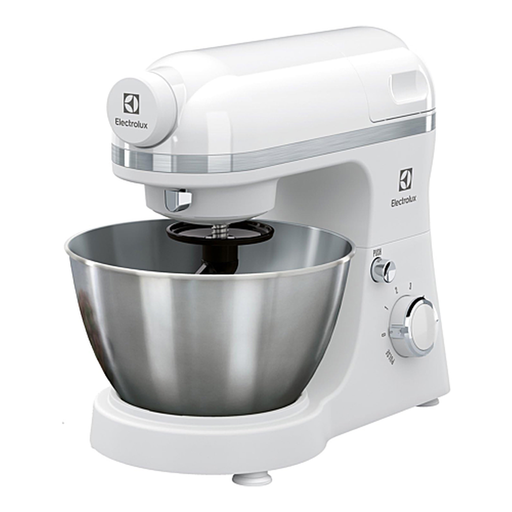 Image unavailable
For regular batches, compare its 4.1 L bowl with the quantities you make, and check how much bread dough it can handle and which tools are included. The product title lists a power rating of 800 W, but that alone isn’t enough to judge its kneading performance.
 Image unavailable
This model is listed with a dough hook, whisk and beater, making it suitable for switching between bread and baking. The product title specifies a 5 L bowl and a tilt-head design. For bread, check how much dough it can handle rather than trying to work it out from the bowl capacity.
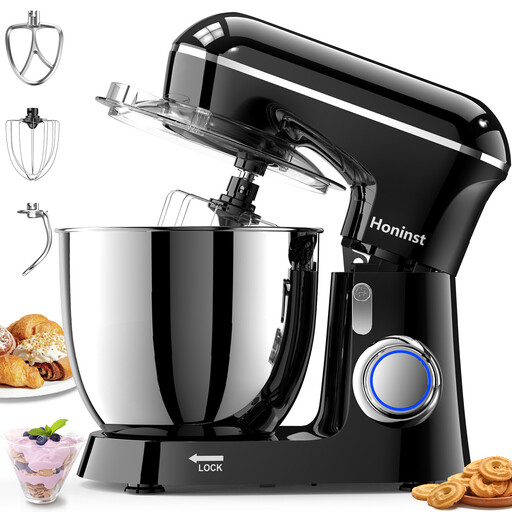 Image unavailable
If you’re planning to make large batches as well as bakes, check that the bread dough capacity suits your recipes: you can’t work it out from the 6.5 QT bowl. The product title lists a dough hook, whisk, beater and tilt-head design. When mixing heavy dough, follow the instruction not to run the mixer continuously for more than 10 minutes.
Start with the quantities you usually make, then check the model’s bread dough limit separately. Que Choisir recommends choosing a bowl to suit the preparations you make most often; a large capacity can also make the mixer harder to handle and store. For example, for its QA502GB1 model, Moulinex lists a 4.6 L bowl and a bread dough capacity of up to 0.8 kg.
No. Wattage alone won’t tell you how well a mixer handles bread dough. Que Choisir advises against treating motor power or the number of speeds as deciding factors. Instead, check the tools, the amount of dough the mixer can handle and, if available for that model, the results of kneading tests.
These extra functions are worth considering if you’ll use them regularly. Check exactly what comes with the model you choose: Moulinex lists a blender and a grating and slicing attachment for the QA502GB1, while Kenwood lists a blender and food processor bowl for the KVL85.424SI. A compatible attachment isn’t necessarily included.
Measure the available worktop space and the room you’ll need to access the bowl, then check where you’ll store the attachments. For cleaning, follow the instructions for the exact model, including guidance on which parts are dishwasher-safe.