You often make bread or brioche
You’d like the mixer to do the kneading, without choosing an unnecessarily large bowl. The model’s stated capacity for yeast dough should suit the size of the batches you make.


If you often make bread, brioche or other bakes, first choose a stand mixer with a stated dough capacity that suits the batches you make, rather than choosing a large bowl based on its litre capacity alone. A dedicated stand mixer is a good choice if you mainly knead, mix and whisk. Attachments or a multifunction food processor are more worthwhile if you’ll also use their other features, as long as you’re happy to find space to store and clean them.
You’d like the mixer to do the kneading, without choosing an unnecessarily large bowl. The model’s stated capacity for yeast dough should suit the size of the batches you make.
You switch between cake mixtures, creams and whipped ingredients. If you also plan to blend or mince, check which attachments are included and which are compatible with the model you’re considering.
You bake regularly, but need to be able to store the mixer and access the bowl easily. Its dimensions, whether the head tilts up and how easy the parts are to clean all matter just as much as bowl capacity.
To choose between a dedicated stand mixer, a model with attachments and a multifunction food processor, start with the tasks you’ll actually do regularly. UFC-Que Choisir distinguishes traditional stand mixers from models with attachments in particular: having more functions doesn’t mean you can skip checking the kneading capacity.
Choose this if: you mainly make dough, cakes and whipped mixtures.
Bear in mind: without the right attachments, it won’t replace an appliance designed for grating, mincing or blending.
Choose this if: you knead regularly and will also use features such as blending or mincing.
Bear in mind: attachments may need storage space, and they may not all be included.
Consider this if: general food preparation matters more to you, while kneading is only an occasional task.
Check: the model you choose should include kneading or beating functions and handle the quantity of dough your recipes require.
| Feature | What to check | Who is it for? |
|---|---|---|
| Yeast dough capacity | The model’s stated maximum capacity for bread or yeast dough; bowl capacity in litres. | If I regularly make bread or brioche, I want a capacity that suits my usual batch size. Around 33% of consumers would prioritise this need. |
| Additional features | Which attachments are included and whether the attachments you want are compatible with the exact model reference. | I want to knead, but also use the same appliance for other recipes from time to time. Versatility would be the main priority for around 25% of consumers. |
| Varied baking | Whether a whisk, beater and dough hook are included; the manufacturer’s guidance for small quantities. | I sometimes make a small amount of cream or cake mixture and don’t want to default to a large bowl. Around 25% of consumers would prioritise this use. |
| Space and cleaning | Dimensions and clearance needed to access the bowl; cleaning instructions for removable parts. | I need to be able to leave the mixer on my worktop or take it out easily, then clean its parts after use. Around 17% of consumers would put this need first. |
A larger bowl won’t, by itself, improve results when you’re making small quantities. It may also be harder to handle and wash.
Compare your usual batch sizes with the stated dough capacity, and check the mixer’s dimensions, how easy the bowl is to handle and the clearance under your cupboards.
The stated electrical power alone doesn’t tell you how much yeast dough a model can handle. Comparing wattage figures isn’t enough to choose a mixer for your batches.
Check the maximum capacity stated for the type of dough you plan to make, as well as the instructions and the dough hook supplied with the exact model.
A mixer described as versatile may offer some attachments separately. Compatibility depends on the mixer’s model reference.
Check what’s in the box and only choose features you’ll use. Also think about where you’ll store any extra parts.
In France, the Ministry of the Economy states that the legal guarantee of conformity applies to new, second-hand and refurbished goods sold by a business to a private individual. Any commercial guarantee is an additional benefit; it doesn’t replace your legal rights.
Keep your proof of purchase and read the cover and exclusions of any commercial guarantee so you understand what it offers beyond your legal rights.
Kenwood offers multifunction stand mixers designed for tasks including dough, bread and brioche, with the option to add attachments depending on the range.
The range includes the Masterchef Gourmet+ QA510110, listed with a 4.6 L bowl, and the Masterchef Grande QA810D01, listed with a 6.7 L bowl.
The specifications for some Bosch mixers let you check bowl capacity, stated dough capacity and dimensions separately.
KitchenAid’s ranges include both tilt-head and bowl-lift stand mixers, with a choice of bowl capacities.
These models are suited to regular bread-making or baking. The selection includes mixers focused on kneading, mixing and whisking, as well as one model with additional functions. For large batches, always check the dough capacity for the model you’re considering.
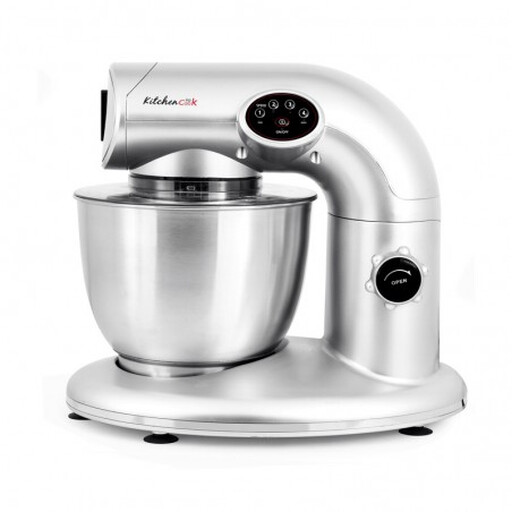 Image unavailable
Worth considering if your regular recipes call for kneading, mixing and whisking. Before planning your batches, check the manual for the permitted dough quantity and any guidance on extended kneading.
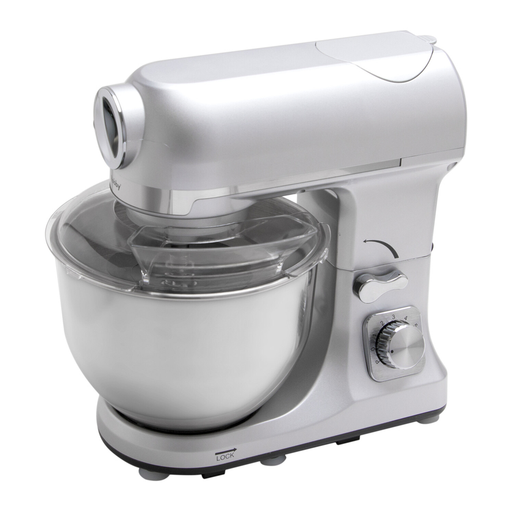 Image unavailable
Consider this if you’d also like to blend and mince with your food processor. The product name lists a 5 L bowl, a 1.5 L glass blender and a mincer. Check the permitted dough capacity for your batches and make sure you have room for the attachments.
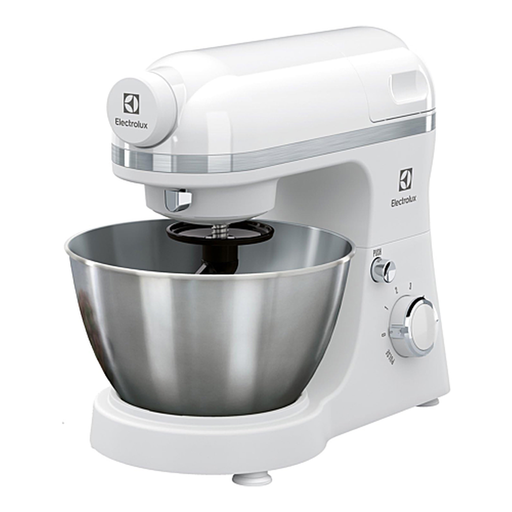 Image unavailable
A model to consider for making both dough and bakes in a 4.1 L bowl. Its stated rated power is 800 W. For bread or brioche, base your batch size on the dough capacity stated in the manual, not the wattage.
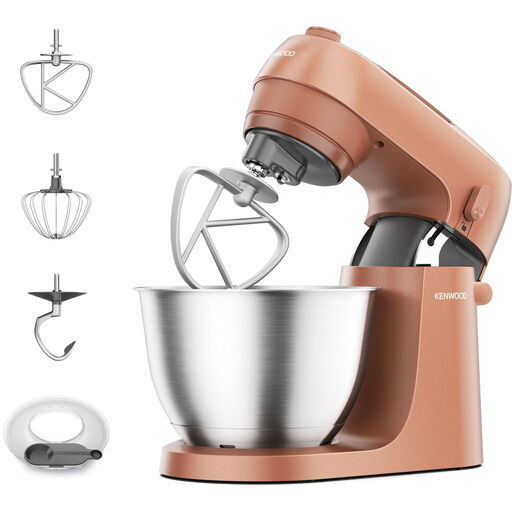 Image unavailable
Worth considering if available space is a factor in choosing a stand mixer. Check its dimensions against your worktop and confirm the maximum dough capacity before using it for your usual batches.
 Image unavailable
Consider this if you’d like to use a dough hook, whisk and beater for a variety of recipes. The product name lists a 5 L bowl and 10 speeds. Check the manual for the maximum dough capacity and cleaning instructions for each part.
First, check the stated capacity for bread or yeast dough for the exact model, then make sure the bowl also suits your other recipes. As examples for specific appliances, Moulinex states that the Masterchef Grande QA810D01 can handle up to 2.2 kg of bread dough, while Bosch states a capacity of up to 1.9 kg of yeast dough for the MUM58200. These figures don’t refer to exactly the same type of dough.
No: wattage alone doesn’t tell you how much dough the mixer can knead. UFC-Que Choisir advises against focusing solely on power or the number of speeds. Instead, compare the bowl, attachments and stated capacity with the recipes you make.
Check the instructions for the mixer and each attachment before washing them. KitchenAid says the motor unit shouldn’t be put in the dishwasher or immersed in water, and recommends wiping it with a soft, damp cloth. Whether bowls and attachments are dishwasher-safe depends on the specific part.
No. According to the Ministry of the Economy, the legal guarantee of conformity applies in France to new, second-hand and refurbished goods sold by a business to a private individual. Any commercial guarantee is additional and doesn’t replace it. Read the terms to find out exactly what extra cover it provides.