For regular bread-making
If you regularly make bread or brioche, start with the amount of dough you usually make in a batch. Then check the model’s maximum dough load, how easy the bowl is to handle and how stable the mixer is while kneading.


If you regularly make bread, brioche and pastries, start by considering how much dough you make in a typical batch. The dough capacity specified for the model matters more than the bowl’s volume or wattage alone. A dedicated stand mixer is designed for kneading, mixing and whisking; a model with attachments may suit you if you’ll also use its other functions regularly. If you’re looking for something for occasional, varied food preparation, a food processor is worth considering, provided you check its tools and kneading capacity.
If you regularly make bread or brioche, start with the amount of dough you usually make in a batch. Then check the model’s maximum dough load, how easy the bowl is to handle and how stable the mixer is while kneading.
If you switch between cake batters, creams, whisked egg whites and yeasted doughs, check that the mixer comes with a whisk, beater and dough hook. Its performance with smaller quantities also matters if you don’t always make a full batch.
If you’d also like to grate, slice, chop or blend, check the attachments included with the specific model. A function listed for a product range won’t necessarily be included with every model in that range.
First decide whether kneading is your main use, then look at any extra functions and how much space the appliance will take up in your kitchen.
Worth considering: if you regularly make bread, brioche and pastries, and mainly use your mixer for kneading, mixing and whisking.
The trade-off: chopping or blending functions may not be included.
Worth considering: if kneading is still a priority and you’ll regularly use other food-preparation functions.
The trade-off: extra attachments need storage space and cleaning, and may be sold separately.
Worth considering: if you knead occasionally but chop, grate, slice or blend more often.
The trade-off: check that the model you choose can handle the batches of dough you make.
| What to consider | What to check | Who is it for? |
|---|---|---|
| Kneading capacity | The maximum load for bread or yeasted dough, including the unit of measurement, and whether a dough hook is included. | If I regularly make bread or brioche, I want a mixer that can handle the amount of dough in my usual batch. Around 50% of consumers put kneading capacity at the top of their list. |
| Useful attachments | Which attachments are included and whether optional ones are compatible with the exact model. | If I also plan to grate, chop or blend regularly, I want one appliance to do it all. This versatility would be the main priority for around 30% of consumers. |
| Ease of use and cleaning | The space needed around the bowl, how easy the parts are to clean and, if these matter to you, how noisy and stable the model is in use. | For occasional small batches in a kitchen with limited space, I’d prioritise an appliance that’s easy to set up and clean. Around 20% of consumers would put these practical considerations first. |
The stated wattage alone doesn’t tell you how well a mixer will knead. Que Choisir advises against giving it too much weight when choosing a stand mixer.
Compare the maximum dough load, the tools supplied and, where available, test results for the specific model.
Manufacturers may list separate capacities for cake batter, yeasted dough and bread dough. These measurements aren’t interchangeable.
Look for a capacity stated for the type of dough you make and compare it with your usual batch size.
An attachment shown for a product range may be optional or only available with certain models.
Check what’s included in the box and whether each attachment you plan to use is compatible.
Extra attachments also take up storage space and mean more parts to clean.
Que Choisir’s testing protocol assesses factors including stability, noise and cleaning. A claim on a product page isn’t an independent test result for the model in question.
If these factors are important to you, look for a test of the exact model. Also read the manual for instructions on use and care.
The Titanium Chef Baker KVC85.009SI combines baking tools with the option to add further attachments, according to Kenwood.
The 5KSM70SHX is a bowl-lift stand mixer that KitchenAid presents as suitable for larger batches.
The Masterchef Gourmet range includes stand mixers with different attachments and specifications, depending on the model.
Bosch MUM multifunction stand mixers are aimed in part at people who want to add attachments to their baking set-up.
The CS 4200XL is a food processor to consider if you’ll mainly chop and mix, with only occasional kneading.
These models are designed for kneading and home baking: four stand mixers and one appliance with additional food-preparation functions. Before deciding, check that each one can handle the amount of dough in your usual batches.
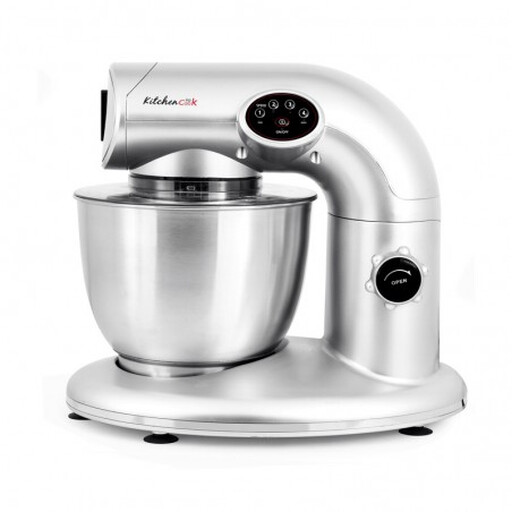 Image unavailable
Worth considering if you alternate between bread-making and baking. Before using it for repeated kneading, check the manual for the dough load and continuous operating time recommended for your recipes.
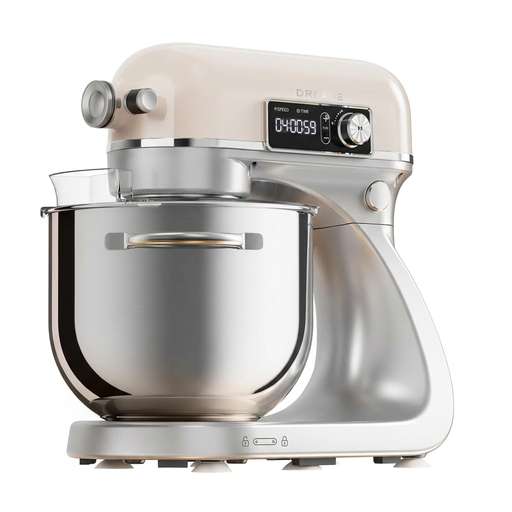 Image unavailable
If you’re considering this model for bread-making, ask for the maximum dough load for your recipe: the amount of flour isn’t the same as the weight of the finished dough. The product listing flags lead above 0.1% in some welded components and claims REACH compliance. Ask the seller for the documentation applicable to this model before buying.
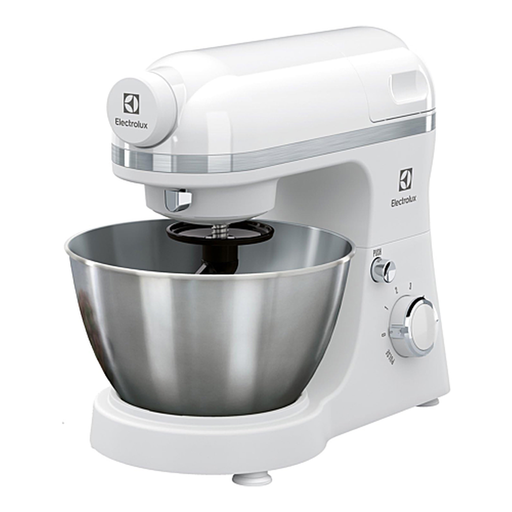 Image unavailable
Worth considering for switching between doughs, cakes and whisked mixtures, if its size suits your kitchen. The model name indicates a 4.1 L bowl and 800 W of power; these figures don’t replace checking the maximum bread dough load.
 Image unavailable
If you’re looking for a 6 L bowl for a range of recipes, don’t assume that means it can knead a certain amount of bread dough. The product name lists a tilt-head design, dough hook, whisk, beater and splash guard; check the permitted dough load for your batches.
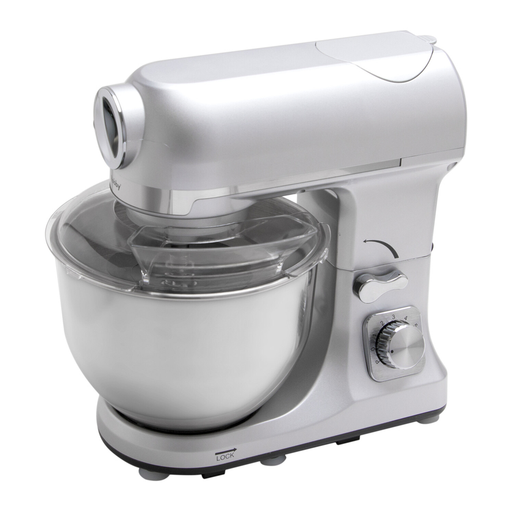 Image unavailable
Worth considering if you’d also like to blend and chop as well as prepare dough. The product name lists a 5 L bowl and a 1.5 L glass blender; if you regularly make bread, check the maximum dough load separately. You’ll also need space to store the attachments, so check their cleaning instructions too.
Start with the amount of dough in your usual batch and look for the stated bread or yeasted dough capacity of the exact model. The bowl’s volume isn’t enough on its own: for example, Moulinex lists a bread dough capacity of up to 0.8 kg for its QA5081B1, which has a 4.6 L bowl.
Not necessarily. Check what’s included in the box and whether separately sold attachments are compatible with the model you’ve chosen. Que Choisir specifies that its tests of additional attachments cover those supplied with the model being tested.
Look for a test of the specific model: Que Choisir’s testing protocol assesses factors including noise, vibration and stability. For care and cleaning, also check the manual for details of the parts and cleaning instructions.
For goods sold by a business to a private customer in France, the statutory guarantee of conformity applies, including when the goods don’t match the seller’s description, according to the Ministry of the Economy. Keep the product listing, order confirmation and proof of purchase so you can explain the issue to the seller.