People who regularly make bread
If you knead several batches of bread or brioche, compare the maximum dough weight specified for each model with the quantities you usually make. Also allow enough space to handle a full bowl.


If you often make bread, brioche and baked treats, first choose a machine with a dough capacity that suits your batches, then check which tools it comes with for kneading, mixing and whisking. A dedicated stand mixer is designed for these tasks. If you also regularly grate, chop or blend, compare models with accessories or a food processor too, taking into account the extra parts you’ll need to clean and store.
According to Que Choisir, a stand mixer is particularly useful if you often make bread, brioche or baked treats, or prepare them in large quantities. The recipes you make most often will help you decide which features to check.
If you knead several batches of bread or brioche, compare the maximum dough weight specified for each model with the quantities you usually make. Also allow enough space to handle a full bowl.
If you switch between cakes, whipped cream and whisked egg whites, check that the mixer comes with a whisk, beater and dough hook. Bowl size alone won’t tell you how well the machine will handle the recipes you usually make.
If you also plan to grate, slice, chop or blend, compare the accessories available for a stand mixer with the functions of a food processor. The right choice depends on the tasks you do regularly and how much room you have for extra parts.
Start with the batches you make and the recipes you repeat, then consider extra functions and cleaning requirements.
Choose this: if kneading, mixing and whisking make up most of what you’ll use it for.
Bear in mind: you’ll need other equipment for tasks such as grating or chopping.
Choose this: if working with dough is still your priority and you’ll regularly use the extra functions.
Bear in mind: accessories mean more parts to fit, clean and store, so check which ones are included.
Consider this: if grating, slicing, chopping and blending are just as important to you as kneading.
Check: its dough capacity and whether it has the right tools for egg whites or cream before choosing it for your batches.
| Feature | What to check | Who it matters to |
|---|---|---|
| Kneading capacity | The maximum weight of risen dough specified for the exact model; consider the bowl capacity alongside this limit. | If I make several batches of bread or brioche, I want to know how much dough the machine can handle, not just how many litres the bowl holds. Around 37% of consumers would put this capacity at the top of their list. |
| Kneading, mixing and whisking | Whether a dough hook, beater and whisk are included; look for tests using the recipes you make, where available. | If I switch between cakes, egg whites and whipped cream, I mainly need the right tool for each recipe. This would be the top priority for around 27% of consumers. |
| Extra functions | Which accessories are included rather than merely compatible, and whether you’ll actually use the extra functions. | If I also grate or chop regularly, having one machine for these tasks matters more to me than choosing a machine dedicated to dough. Around 18% of consumers would prioritise this versatility. |
| Space and cleaning | Dimensions and weight; cleaning instructions for the parts and storage for the accessories. | In a kitchen with limited space, I want to be able to get the machine out, clean it and put it away without making every use a chore. Ease of setup and cleaning would be the main concern for around 18% of consumers. |
According to Que Choisir’s guide, these aren’t the most important factors when choosing a stand mixer. They don’t replace checking the model’s dough capacity or how well it handles the recipes you want to make.
Compare the stated maximum dough weight and the tools included. If possible, also look for tests covering bread, cakes, egg whites and whipped cream.
A bowl designed for large batches must also be easy to handle and wash in your kitchen. Its capacity in litres doesn’t tell you the maximum dough weight.
Start with the quantities you usually make, then check the machine’s dimensions, the weight of the parts you’ll need to move and the space available for washing them.
A function listed in a product range doesn’t mean the relevant part comes with every model. Que Choisir’s testing procedure assesses the accessories supplied with each machine separately.
Check which accessories come with the model you’ve chosen, which are sold separately and where you’ll store them.
In France, the Ministry of the Economy states that the statutory guarantee of conformity applies to new, second-hand and refurbished goods sold by a professional to a private individual. A commercial guarantee or additional cover is separate from this right.
Keep your proof of purchase and a copy of the offer, and check the terms of any additional cover separately.
The range mentioned includes the kMix and Titanium Chef Pâtissier XL, with bowl capacities and accessory options that vary by model.
The Masterchef Gourmet+ QA510110 is an example of a stand mixer supplied with a basic set of tools, with other accessories available depending on the package you choose.
The MUM models mentioned combine dough preparation with accessory options that vary by model.
Magimix food processors are another option if slicing, chopping and blending are regular parts of your food preparation.
This selection includes machines designed for kneading and baking, as well as a model that combines a blender and chopper. If you bake in large batches regularly, always compare the dough capacity of the model you’re considering with the quantities you usually make.
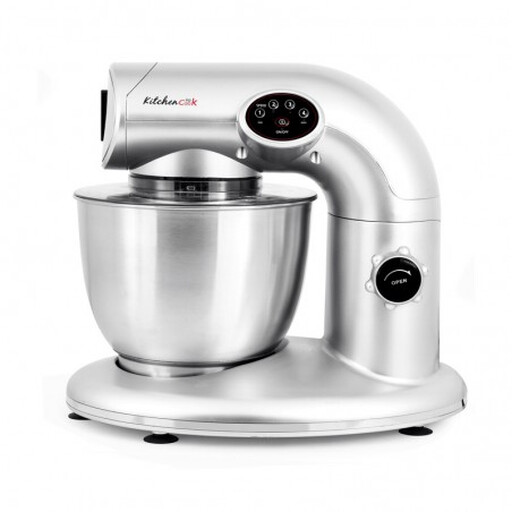 Image unavailable
Worth considering if you want a stand mixer for both bread and baking. For heavy doughs, bear in mind the guidance to limit continuous use to 5 to 10 minutes. Also check the instructions for cleaning the parts.
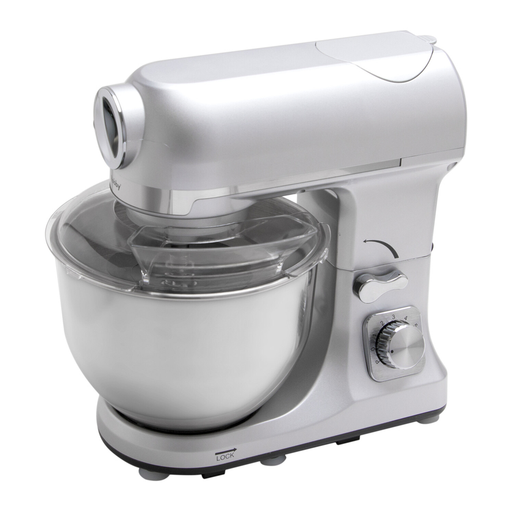 Image unavailable
Consider this if you also plan to blend or chop regularly. The product title specifies a power rating of 1000 W and a 1.5 L glass blender. For bread batches, check the maximum dough weight. Hand-washing the disassembled parts is recommended.
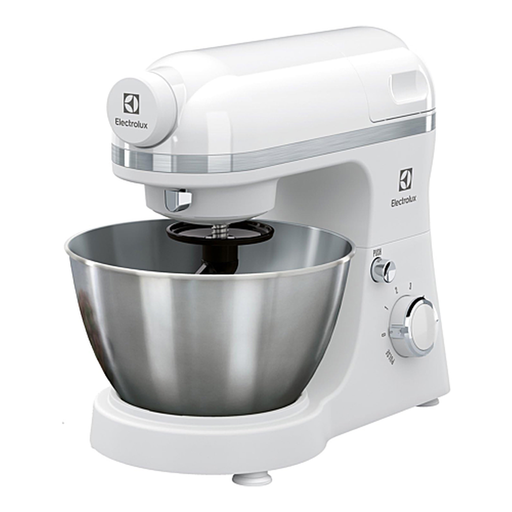 Image unavailable
Worth comparing if you mainly want to make bread and baked treats. The 4.1 L capacity alone won’t tell you how large your batches can be, so check the maximum dough weight specified for the EKM3010 too.
 Image unavailable
Worth considering if you want a 5 L bowl for bread and baking. The product title mentions a tilt-head design, a dough hook, whisk and beater, plus a 400 W motor. Check the dough capacity and cleaning instructions before choosing this model.
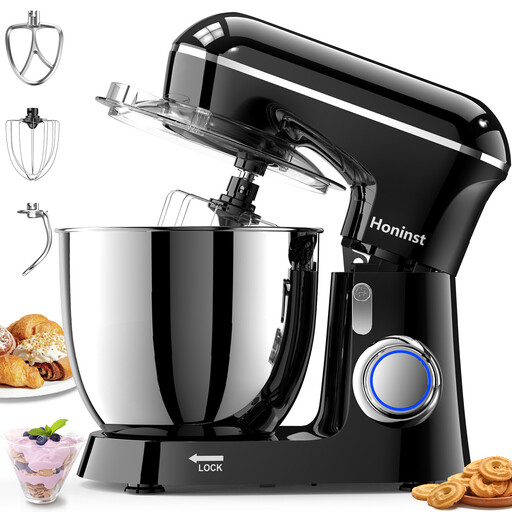 Image unavailable
Worth considering if you’re looking for a mixer with a 6.5 QT bowl, dough hook, beater and whisk. For large batches, check the maximum dough weight rather than relying on bowl capacity alone. The guidance for heavy dough also limits continuous use to 10 minutes.
First compare the maximum dough weight specified for the model with the batches you usually make, then check the bowl capacity. As examples for specific models, Kenwood France lists a dough capacity of 2.56 kg for the KWL90.004SI and 1.35 kg of bread dough for the kMix KMX750ARD; Bosch Électroménager France lists a capacity of up to 1.9 kg of risen dough for the MUM58200E. Also allow enough space to handle and wash the bowl.
Check that the model you choose comes with a dough hook, beater and whisk. Que Choisir describes these as the main tools for a stand mixer. Its testing procedure covers bread dough, cake batter, whisked egg whites and whipped cream, among other things. Slicing or blending accessories are designed for different tasks.
Measure the space available and check the machine’s weight, the cleaning instructions for its parts and how much room the accessories will need. Que Choisir’s testing procedure assesses cleaning, carrying and storage. Its test of the Moulinex QA512G10 shows why these points should be checked for each model rather than judged by bowl size alone.
For new, second-hand or refurbished goods sold by a professional to a private individual in France, the statutory guarantee of conformity is provided by the seller. The Ministry of the Economy states that it is compulsory; any additional commercial cover doesn’t replace it.