Anyone making batch after batch of bread
You often make bread, pizza or brioche and want to spend less time kneading by hand. The stated amount of yeast dough the mixer can handle per batch matters more than the bowl’s capacity alone.


If you regularly knead large batches of bread or brioche, choose a stand mixer whose stated capacity for yeast dough matches the size of your batches, rather than basing your decision solely on the bowl’s capacity or the motor’s power. A model with attachments is a good choice if you’ll also use its other functions regularly. If chopping and blending matter more to you than kneading, it’s worth considering a food processor, provided it can handle enough dough for your needs.
You often make bread, pizza or brioche and want to spend less time kneading by hand. The stated amount of yeast dough the mixer can handle per batch matters more than the bowl’s capacity alone.
You might whisk a few egg whites or make a small amount of cream, then prepare enough cake mixture for the whole family. Consider how well the mixer handles small quantities, as well as how easy the bowl is to handle when full.
You knead dough, but also regularly grate, slice, chop or blend ingredients. A stand mixer with attachments or a food processor can handle all these jobs, provided it can also knead enough dough for your needs.
Worth considering: when bread, brioche and other yeast doughs are your main focus, especially if you bake batch after batch.
Bear in mind: a large bowl can take up a lot of space and be less convenient to handle or clean, as UFC-Que Choisir points out.
Worth considering: if you knead regularly and will genuinely use the extra food-preparation functions too.
Bear in mind: attachments may vary by model or be sold separately, and you’ll need somewhere to store them.
Worth considering: when chopping, grating or blending matters more than kneading large batches of yeast dough.
Bear in mind: the bowl’s total capacity alone doesn’t tell you its usable capacity or how much dough it can handle.
| What to consider | What to check before buying | Who it matters to |
|---|---|---|
| Yeast dough and batch size | The stated maximum weight for bread or yeast dough, and whether a dough hook is included. | When I regularly make large batches of bread or brioche, I want to know how much of those specific doughs the appliance can knead. Around 36% of consumers put this need first. |
| Extra functions | Which attachments are included with the model you’re considering and how much storage space they’ll need. | If I also regularly grate, slice or blend, I want one appliance to handle those jobs as well as kneading. Around 29% of consumers put this versatility first. |
| Small batches | Which whisking and mixing tools are included, and whether they work well with small quantities. | I make creams, whisked egg whites or small amounts of cake mixture more often than large batches, so these preparations guide my choice. They’re a priority for around 21% of consumers. |
| Everyday use | How easy the bowl is to handle and clean, how much space the appliance takes up, and what parts and repair services are available. | If I use the appliance often, I want to be able to empty and clean it easily, and keep it somewhere convenient. Around 14% of consumers put everyday use first. |
UFC-Que Choisir advises against making motor power your main deciding factor. A stated capacity for cake mixture doesn’t tell you how much yeast dough the mixer can handle.
Compare the stated maximum weights for the recipes you make most often, and check the limits in the model’s instructions.
A large bowl may suit a big batch, but UFC-Que Choisir points out that it can also be heavy, bulky and less convenient to clean.
Compare its size with your usual largest batch, the small quantities you often prepare and the space you have available.
The functions advertised across a product range aren’t necessarily available with every model’s included attachments.
Think about the jobs you’ll actually use it for, then check what’s in the box and whether any attachments you’re considering are compatible.
Extra attachments also need storage space and can mean more cleaning after each use.
Magimix states that the CS 4200XL has a total bowl capacity of 3 L, but a usable capacity of 1.3 L. Neither figure tells you how much yeast dough it can knead.
If bread and brioche are your main priority, check the instructions for the permitted dough quantity before choosing a food processor for your batches.
The MUM range includes stand mixers, with equipment varying by model.
The brand offers, among other options, bowl-lift stand mixers and attachments for a range of uses.
Depending on their equipment, Kenwood stand mixers can combine kneading with extra functions.
The Masterchef Gourmet range covers kneading and baking, with extra functions depending on the version.
The brand’s food processors are aimed in particular at households looking to chop, grate and blend, as well as prepare some types of dough.
These models are mainly suited to kneading and home baking; the Robby also comes with a blender and a mincer. For each one, check that its dough and operating limits suit the frequency and size of your batches.
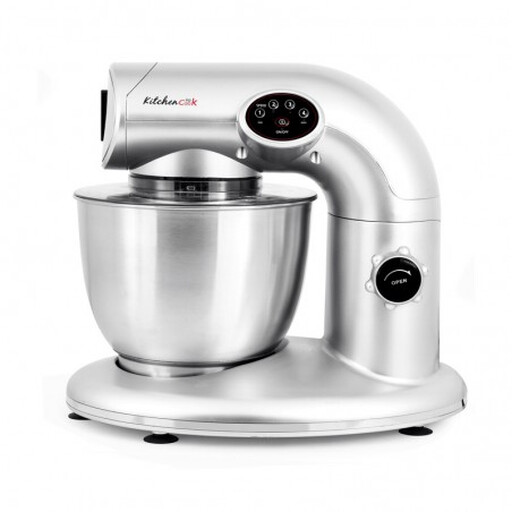 Image unavailable
Worth considering if kneading is your main use and you’d also like to make cake mixtures.
Before making batch after batch of heavy dough, check the permitted quantity for bread or brioche and the recommended continuous kneading time in the instructions.
 Image unavailable
Worth considering if you alternate between kneading, mixing and whisking.
The model name lists 450 W, six speeds, a tilting head, a SUS304 stainless steel bowl, a dough hook, a whisk, a beater and a splash guard. Check the permitted yeast dough weight before planning large batches.
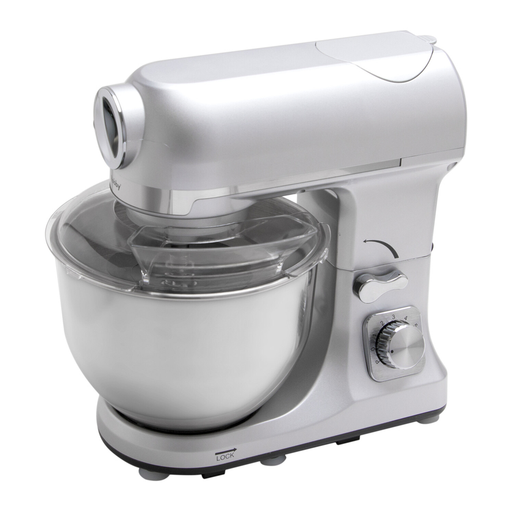 Image unavailable
Worth considering if you’ll use the blender and mincer as well as the mixer bowl.
The model name states a power rating of 1,000 W. If bread or brioche is your priority, check the maximum dough weight. Also bear in mind that the parts are recommended for hand-washing.
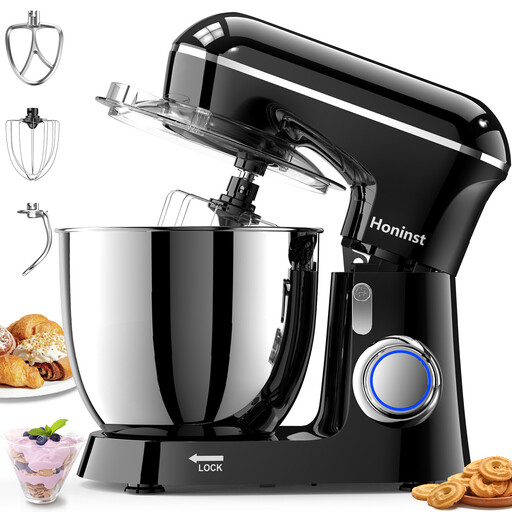 Image unavailable
Worth considering if you want one mixer that comes with a dough hook, whisk and beater.
If you bake frequently, check the permitted yeast dough weight and whether the continuous-use limit for heavy dough suits your recipes.
 Image unavailable
Worth considering if you want to switch between kneading and whisking or beating.
The model name lists a tilting head, a 400 W motor, a dough hook, a whisk and a beater. Before relying on it for repeated batches, check the permitted quantity for your yeast doughs.
Compare the stated quantities for the same types of dough, rather than looking only at bowl capacity. Moulinex states that the Masterchef Gourmet QA5001B1 can handle up to 0.8 kg of bread dough; the Joybuy listing for the Bosch MUM5XW40 states up to 1.9 kg of yeast dough. These limits apply to those specific models.
No. What’s included depends on the model, and some attachments are optional. Check what’s in the box and make sure any attachments you plan to use are compatible, rather than relying on the features advertised across an entire range.
Check which parts are available and what repair terms apply to the specific model and the manufacturer’s commitment. KitchenAid, for example, promises 15 years of repairability for the 5KSM70JPX; Magimix states that parts will be available for 30 years for the CS 4200XL. These commitments don’t automatically apply to other models from these brands.
Not necessarily. If your appliance still meets your needs, start by considering maintenance or repair before choosing another model. If it’s still usable but you no longer need it, ADEME also recommends considering donating or selling it.