People who regularly make bread
You often make bread, brioche or dense doughs, and want an appliance suited to the size of your batches to take care of the kneading.


If you regularly make bread or brioche, choose a stand mixer with a dough hook and a stated dough capacity that suits the size of your batches. Wattage alone isn’t enough to distinguish between models. If grating, chopping and blending matter just as much as kneading, a food processor is also worth considering, provided you check its dough capacity and which attachments are included. UFC-Que Choisir notes that a food processor is particularly worthwhile if you prepare food frequently or in large quantities.
You often make bread, brioche or dense doughs, and want an appliance suited to the size of your batches to take care of the kneading.
You alternate between cakes, whisked mixtures and yeasted doughs. The bowl and tools you choose matter just as much as the appliance itself.
You also want to grate, slice, chop or blend. The attachments you need, how easy they are to clean and how much storage space they take up are all part of the decision.
Start by choosing according to the tasks you’ll do most often. Then check the quantities you actually prepare and the space you have available, rather than comparing wattage or bowl capacity alone.
Consider it: if kneading, mixing and whisking regularly matter more to you than chopping; some models can take additional attachments.
Bear in mind: you’ll need a bowl suited to your batch sizes and enough room for the appliance, its tools and any extra attachments.
Consider it: if slicing, grating, chopping and blending matter just as much as occasional kneading.
Check: bowl capacity doesn’t necessarily tell you how many kilograms of yeasted dough the appliance can handle.
| Criterion | What to check | Who it matters to |
|---|---|---|
| Regular kneading | Check that the exact model comes with a dough hook and has a stated dough capacity; look for a test using bread dough, if possible. | If I often make bread or brioche in large batches, I want to choose an appliance that suits the size of my batches. Around 36% of consumers would make kneading their priority. |
| Versatility | Check the functions you want, whether the attachments are compatible and exactly what’s included in the box. | I also want to grate, chop or blend regularly, without giving up the ability to make dough. This versatility would be a priority for around 29% of consumers. |
| Small and medium quantities | Check the minimum quantity the appliance can handle and whether the tools are suitable; distinguish between bowl capacity and dough capacity. | I alternate between a small mixture to whisk and bakes for the family, so I need tools that can handle both. This flexibility would come first for around 21% of consumers. |
| Storage and cleaning | Check the dimensions, how easy the bowl is to handle and the cleaning instructions for the parts. | If I have to get the appliance out and put it away after every use, storage space and cleaning could decide which one I choose. Around 14% of consumers would put these factors first. |
These figures alone don’t show how well an appliance can knead a dense dough. UFC-Que Choisir advises against placing too much emphasis on power and the number of speed settings when choosing a stand mixer.
Start with your recipes and batch sizes, then check the dough hook, the stated dough capacity and any tests available for the model you’re considering.
A large bowl may suit a big batch, but it can take up more space and be less convenient to handle or clean. Its capacity doesn’t guarantee that it can process a small quantity.
Compare your usual batch sizes with the stated capacity. If you often whisk one or two egg whites, look for a documented minimum quantity.
The bowl capacity of a food processor and the maximum dough weight stated for a stand mixer are not the same measurement.
Compare capacities measured on the same basis. Otherwise, check the manual to find out how much dough each model can handle.
The functions available may depend on the model number and optional attachments. They also mean extra parts to handle and clean.
Check exactly what’s included in the box, whether the attachments you’re interested in are compatible and how much space you’ll need to store them.
These examples show different types of food processor and stand mixer. The features listed apply to the named models, not every product from each brand.
The Titanium Chef Baker range combines a stand mixer with options for adding extra attachments.
The Series 6 includes stand mixers designed for family-sized baking.
The Artisan 5KSM70SHX is a bowl-lift stand mixer, with optional attachments available for different uses.
The CS 5200XL is an example of a food processor for people who also want to slice, chop and blend.
These stand mixers are designed for kneading and home baking; one also combines its bowl with blender and mincer functions. To choose between them, compare their tools and instructions with the size of your batches.
 Image unavailable
For making dough and bakes with a stand mixer; check how much dough it can handle for your batch sizes.
The product name specifies a SUS304 stainless steel bowl, a dough hook, whisk, beater, splash guard, 450 W and 6 speeds. The 6 L capacity alone doesn’t tell you how much dough it can handle.
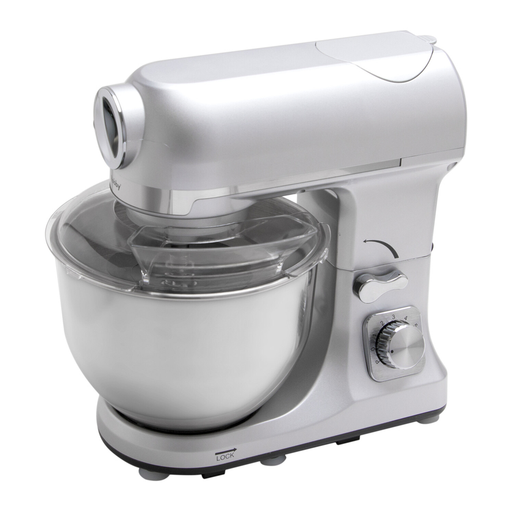 Image unavailable
For combining bowl-based preparation with blending and mincing; if bread is your priority, check whether a dough hook is included and how much dough this model can handle.
The product name specifies 1,000 W, a 1.5 L glass blender jug and a meat mincer. Remember to allow space for the attachments you plan to use, too.
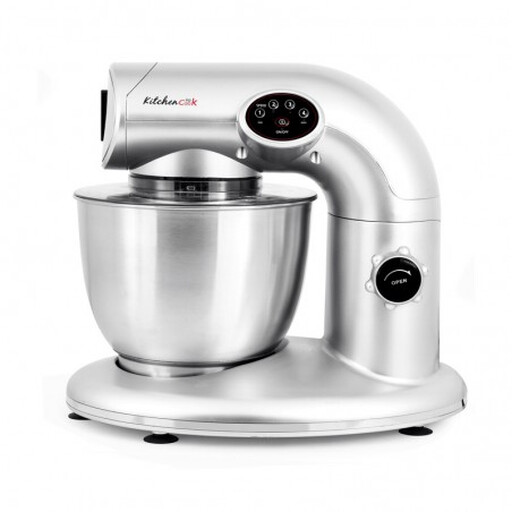 Image unavailable
For kneading and home baking, check that the appliance can handle the quantities in your recipes and that there’s enough space around it.
For heavy dough, follow the instructions for this model, which recommend kneading continuously for 5 to 10 minutes; also check that it can handle your smaller batches.
 Image unavailable
For switching between kneading, mixing and whisking; check the maximum dough capacity and minimum quantity that suit your recipes.
The product name specifies a 5 L bowl, a dough hook, whisk, beater and 400 W motor. These features alone aren’t enough to judge how it will perform with dense dough.
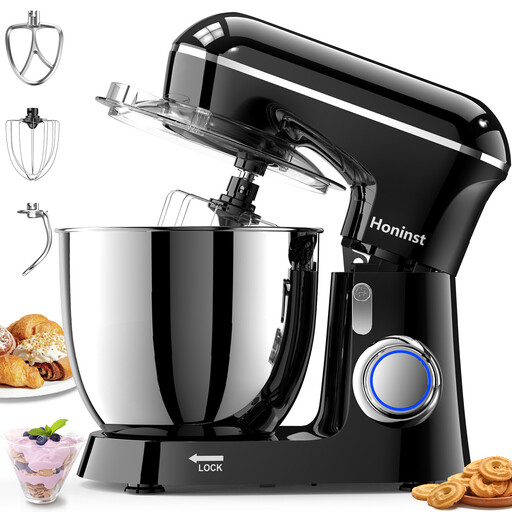 Image unavailable
For kneading, mixing and whisking at home; check how much dough it can handle before planning larger batches.
The product name specifies a 6.5 QT bowl, tilt-head design, dough hook, whisk and beater. Check its dimensions if you’ll need to put it away after use.
No: the stated power alone doesn’t tell you how well a model kneads bread dough. UFC-Que Choisir advises not to focus too much on this figure. Instead, check the dough hook, the stated dough capacity for the exact model and, if possible, a test using bread dough.
It depends on the bowl and its tools: its capacity doesn’t tell you the minimum quantity they can handle. Kenwood says the adjustable tools on the KVL85.009SI can process as little as one egg white. For another model, look for information specific to that model or a test using a small quantity.
Not necessarily: check the available functions and what’s included in the box separately for the model being sold. Compare the parts supplied, the compatibility of optional attachments and the space you’ll need to store them.
The legal guarantee of conformity may apply if an appliance sold by a business to an individual doesn’t match the seller’s description. The French Ministry of the Economy states that it covers new, second-hand and refurbished goods; any commercial guarantee offered by the manufacturer does not replace it.