Regular home baker
You often make bread, brioche or several batches of bakes, and want your mixer to handle the kneading, mixing and whisking.


If you regularly make bread, brioche or other bakes, choose a stand mixer with a dough capacity suited to the batches you usually make. A model with attachments is a good option if you’ll also use its extra functions. If grating, slicing or blending matters as much as kneading, consider a food processor instead, checking its usable capacity and how much space its attachments will need.
UFC-Que Choisir says a stand mixer is particularly useful if you regularly bake or make bread and brioche, or prepare them in large quantities. Your choice will then depend on the tasks you want it to handle.
You often make bread, brioche or several batches of bakes, and want your mixer to handle the kneading, mixing and whisking.
You make doughs and desserts, but also want to grate, slice, blend or chop without having lots of separate appliances. The space needed for the bowls and attachments is an important part of your decision.
You regularly work with large quantities of dough. The stated capacity for the type of preparation you make, how easy the bowl is to handle and the space available all deserve as much attention as its capacity in litres.
Choose this if: kneading, mixing and whisking are the main tasks in your regular baking.
Bear in mind: you’ll need another appliance for grating, chopping or blending if your model doesn’t offer these functions.
Choose this if: baking is still your priority, but you’ll genuinely use the extra functions too.
Bear in mind: included or optional attachments mean more parts to store and clean.
Choose this if: chopping, grating or blending features in your recipes just as often as making doughs and desserts.
Bear in mind: its usable capacity and included tools need to suit the doughs you actually make.
| Factor | What to check | Who it matters to |
|---|---|---|
| Amount of dough | Compare the stated maximum load for the type of dough you make with the bowl’s capacity; litres alone don’t tell the whole story. | If you make several loaves or brioches at once, you first need a capacity suited to those batches. Around 36% of consumers rank dough capacity as their top requirement. |
| Versatility | Check which functions you’ll use and which attachments are included or compatible with the model you’re considering. | If your recipes also involve grating, slicing or blending, avoiding a collection of separate appliances may be your priority. For around 29% of consumers, versatility is the main requirement. |
| Space and cleaning | Measure the space available, then check the weight, how the attachments are stored and the cleaning instructions for each part. | If you have to take the mixer out of a cupboard and clean it after every use, how easy it is to handle may matter more than its large capacity. This is the top priority for around 21% of consumers. |
| Baking tools | Check that it comes with a whisk, beater and dough hook, and that it can handle the quantities your recipes call for. | If you mainly make cakes, creams and everyday doughs, you may prefer the essential tools to extra functions. Around 14% of consumers prioritise this baking tool set. |
The bowl’s volume alone doesn’t tell you how much bread or brioche dough the model can handle. A large bowl also needs to fit in your kitchen and be easy to handle.
Compare the stated capacities with your usual recipes, then check the bowl’s dimensions and how easy it is to use.
Extra functions mean more parts to fit, store and wash, and some may be optional depending on the version.
Make a list of the things you prepare regularly and check exactly what’s included with the model before choosing a version with attachments.
These figures alone won’t tell you whether the mixer is right for the amount or type of dough you make.
Also check the stated dough capacity, included tools, bowl and instructions for the specific model.
UFC-Que Choisir highlights the importance of weight if you need to move the appliance regularly. Bowls and attachments also need their own storage space.
Decide where the mixer will stay between uses. If you’ll need to put it away, check its weight, dimensions and how easy it is to access its storage spot.
These examples show different capacities and configurations. Compare the specifications of the model you’re interested in rather than assuming they apply to the whole brand.
In the MUM range, the MUM5XW20 combines an integrated scale with a 3.9 L bowl.
The Chef range includes stand mixers that can be expanded with attachments; the Chef XL KVL4100S has a stated bowl capacity of 6.7 L.
The Masterchef Grande QA810D01 combines a 6.7 L bowl with a baking tool set.
The CS 4200XL food processor is an alternative if chopping, grating and blending are also important for the dishes you make.
These models are designed for kneading, mixing and whisking; one may also suit those looking for extra functions. To find the right model for your batches, compare the bowl capacity shown with the dough load allowed for your intended recipe.
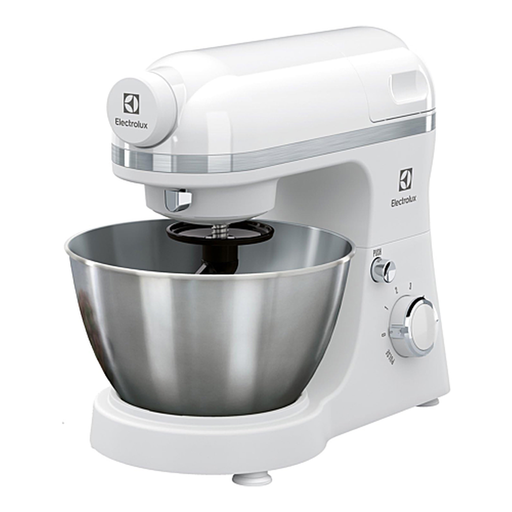 Image unavailable
Worth considering if you want a stand mixer for kneading, mixing and whisking. The product title lists a 4.1 L bowl and 800 W of power; check the maximum dough capacity for the batches you usually make.
 Image unavailable
Consider it for recipes that use the dough hook, whisk and beater listed in the product title. The title specifies a 5 L bowl and 10 speeds; check the permitted dough load and the cleaning instructions for the attachments.
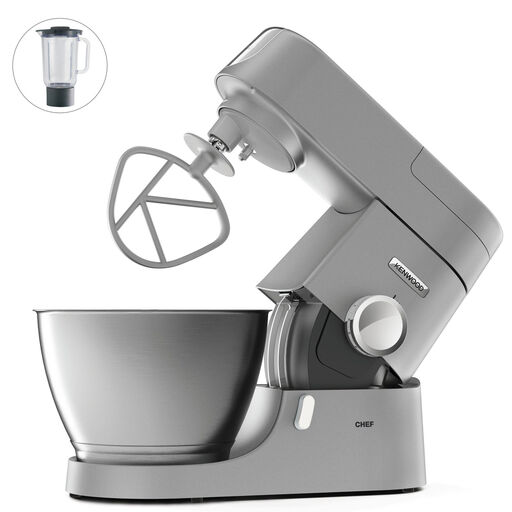 Image unavailable
Worth considering if you want to make doughs and are also interested in a blending function. Check exactly what’s included with this version and how much space the attachments need. The product title lists a 4.6 L bowl and 1,000 W of power; check the permitted dough load and speed settings before choosing.
 Image unavailable
Worth comparing if bowl capacity matters for your baking, but don’t assume it matches the amount of dough you usually make. The product title lists a 6 L stainless steel bowl, six speeds, a dough hook, whisk and beater; check the maximum load and the cleaning instructions for this version.
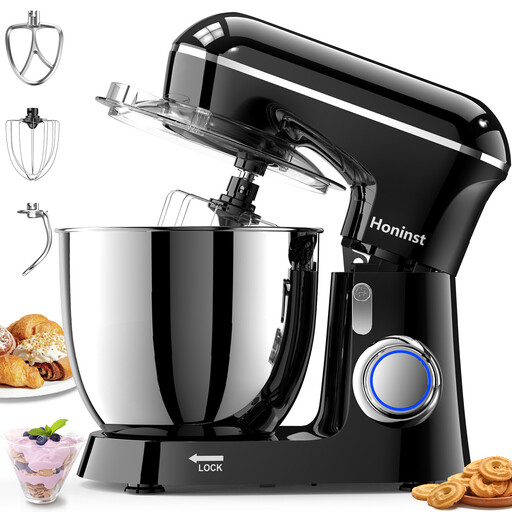 Image unavailable
Worth considering for kneading, mixing and whisking with the three tools listed in the product title. The bowl is stated as 6.5 QT and the mixer has 10 speeds. When working with heavy dough, follow the instruction not to run it continuously for more than 10 minutes, and check the manual for permitted quantities.
No. UFC-Que Choisir refers to frequent baking or making large quantities, without setting a universal frequency. Start with the recipes you actually make, the size of your usual batches and the tasks you’d like the mixer to handle.
No. Wattage alone can’t tell you whether a mixer is right for your doughs. Check the maximum stated load for the model and type of dough, the included dough hook and the instructions for use.
Measure the space where you’ll use and store it, then compare its dimensions and weight, as well as the space needed for the bowl and attachments. For cleaning, follow the instructions for each part rather than assuming that everything is dishwasher-safe.
Ask which parts are available for the specific model and what the after-sales service arrangements are. If a brand makes a repairability commitment, check the terms that apply to the model you’re considering.