People who bake bread regularly
If you often make bread, pizza or brioche, check the model’s capacity for yeasted dough and whether it comes with a dough hook. These details are more useful when choosing than the number of speed settings.


For regular batches of bread or brioche, start by checking how much yeasted dough the model can knead, rather than focusing on wattage or bowl capacity alone. A basic stand mixer handles kneading, mixing and whisking; a model with attachments or a food processor is worth considering mainly if you’ll use its other functions too. For occasional small batches, kneading by hand saves you the space and cleaning involved in adding another appliance.
If you often make bread, pizza or brioche, check the model’s capacity for yeasted dough and whether it comes with a dough hook. These details are more useful when choosing than the number of speed settings.
If you’re making several cakes or a large quantity of dough, compare the stated maximum quantity for the type of preparation you have in mind. Also consider how much space you’ll need and how easy the bowl will be to handle when full: its capacity in litres won’t answer all these questions.
If you also want to grate, chop, blend or make fresh pasta, check which attachments are suitable for these tasks, whether they’re included and whether they duplicate appliances you already own.
Start with the batches you usually make, then decide whether you need the mixer just for dough and baking or for other kitchen tasks too.
Choose this if: you regularly knead, mix or whisk and don’t need to combine other functions.
Bear in mind: you’ll still need separate appliances for tasks such as grating or chopping.
Choose this if: you bake often and will genuinely use extra functions that are compatible with the model.
Bear in mind: optional attachments need storage space and add extra parts to clean.
Choose this if: chopping, grating, slicing or blending matters as much to you as baking.
Bear in mind: its versatility doesn’t mean you can skip checking the dough capacity and functions of the specific model.
Choose this if: you make small or infrequent batches and would rather keep your worktop clear.
Bear in mind: you’ll need to put in the time and effort to knead the dough yourself.
| What matters | What to check | Who this matters to |
|---|---|---|
| Quantity of yeasted dough | The maximum quantity of yeasted dough stated for the model and the size of the largest recipe you usually make; don’t confuse dough weight with flour weight. | When I often make bread or brioche, I want to avoid dividing the dough into several batches for kneading; around 31% of consumers prioritise this capacity. |
| Baking tasks | Whether the chosen model or bundle includes a whisk, flat beater and dough hook, and how easy they are to clean. | For the cakes and bakes I make regularly, I want to delegate mixing and whisking without adding lots of functions; around 31% of consumers make this their priority. |
| Extra functions | Which attachments are actually included, whether they’re compatible with your exact model and which appliances they could replace in your home. | If I regularly grate, chop or make fresh pasta, I’d rather avoid buying equipment that duplicates what I already own; around 23% of consumers prioritise useful versatility. |
| Space and how often you’ll use it | The size of your smallest batches, the space available and whether you’ll need to move or store the appliance. | For smaller, less frequent batches, I don’t want to take up kitchen space for something I’ll rarely use; around 15% of consumers prioritise this simplicity. |
Rated power and the number of speed settings don’t, on their own, tell you how much yeasted dough a model can handle.
Compare the limits stated for the exact model and, if available, look for tests that assess its kneading performance.
A large bowl takes up space and may be less convenient to handle or wash. Its capacity doesn’t guarantee that it’ll also suit your smaller preparations.
Make a note of your usual quantities, check the preparation limits and measure how much space you’ll need to use and remove the bowl.
Chopping, grating or making fresh pasta may require separate attachments that are compatible with a particular range or model.
Check what’s included in the bundle and make sure each attachment you plan to use is compatible.
If you’ll rarely use the appliance and have to take it out, set it up and clean it each time, doing the work by hand may be simpler. UFC-Que Choisir says a mixer is most useful for frequent preparations or large quantities.
Consider this against how often you’ll really use it before making space for a mixer.
The Titanium Chef Baker range may appeal to households looking for an expandable stand mixer and making large quantities.
Some MUM models let you compare their stated dough capacities with the quantities you make at home.
The brand’s tilt-head stand mixers are worth considering if you’re looking for a mid-sized bowl and compatible attachments.
This selection includes mixers for mixing and kneading, as well as an appliance that combines extra kitchen functions. For bread and brioche, always check how much dough the exact model can handle: bowl size alone isn’t enough to determine this.
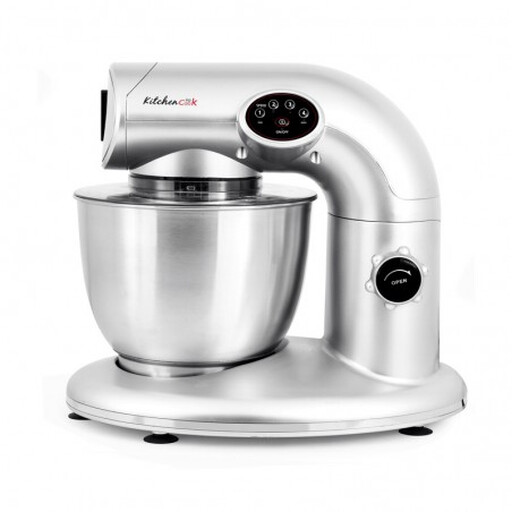 Image unavailable
If you regularly make dough and cakes, check that the included attachments suit your recipes. If you plan to make heavy doughs, also check the dough capacity and the permitted kneading time in the manual.
 Image unavailable
For switching between doughs, cakes and whisked mixtures, this model is listed with a dough hook, beater and whisk. The product name specifies a 6 L SUS304 stainless steel bowl, 450 W, six speeds, a tilt-head design and a splash guard; check the dough capacity before planning to make large batches.
 Image unavailable
For recipes that involve kneading, whisking and mixing, the product name lists a dough hook, whisk and beater. It also specifies a 5 L bowl, a tilt-head design and a 400 W motor; check the dough capacity if you make heavy batches.
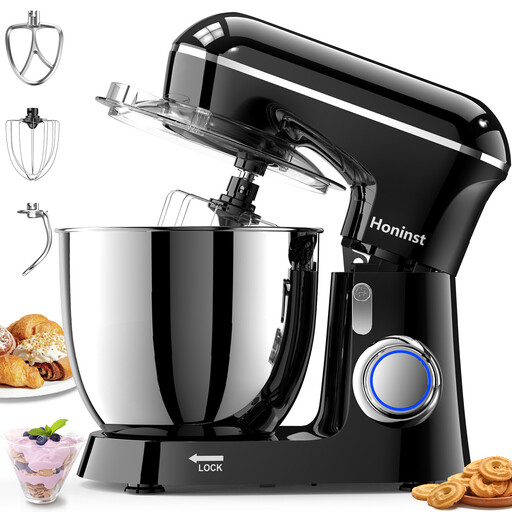 Image unavailable
For recipes that alternate between kneading and whisking, this model is listed with a dough hook, beater and whisk. The bowl is stated as 6,5 QT and the head tilts; before making a large quantity of heavy dough, check the maximum load and the recommended operating time in the manual.
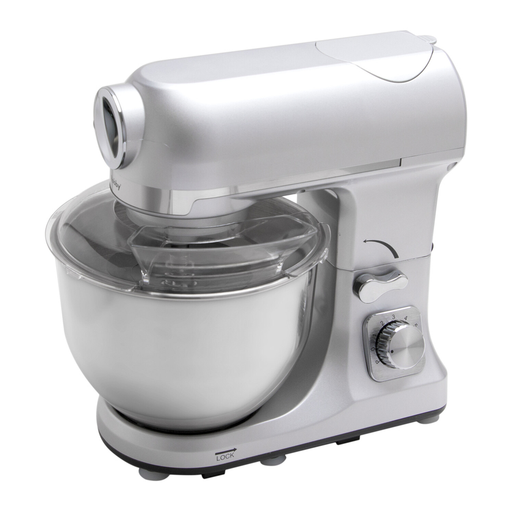 Image unavailable
If you also want to blend and mince, the product name lists a 1,5 L glass blender and a meat mincer alongside the 5 L mixer. It states a rated power of 1 000 W; for bread or brioche, check separately whether a dough hook is included and what dough capacity applies.
Start by checking how much dough the model can handle and the size of your largest recipe, rather than looking at bowl capacity in litres alone. Bosch states that the MUM58720, with its 3,9 L bowl, can handle up to 1,9 kg of yeasted dough; Kenwood states that the KVL65.001WH, with its 7 L bowl, can handle 2,56 kg of dough. These figures apply to each specific model and don’t establish a universal capacity per litre of bowl space.
Check for a dough hook for kneading, a flat beater for mixing and a whisk for whisked mixtures. UFC-Que Choisir lists these as the three main attachments for a stand mixer; make sure they’re included with the exact bundle you’re considering.
It may suit you if you need an appliance for several food preparation tasks, but you’ll need to assess the kneading capacity of the specific model. Check its dough capacity and attachments, as well as which functions you’ll genuinely use, before replacing a mixer designed primarily for baking.
Check the instructions for each part in the model’s manual. Information about an accessory bowl doesn’t automatically apply to the whisk, dough hook or other bowls, so check each one separately if you plan to use the mixer often.
A mixer bought from a professional seller is covered by the statutory guarantee of conformity. The French Ministry of the Economy states that consumers have two years to claim under it for new or second-hand goods; any commercial guarantee is in addition to this and doesn’t replace it.