Regular bakers and bread-makers
If you often knead and whisk, check the dough capacity, the bowl and how easy it is to handle. Also consider how easy it’ll be to clean between batches.


If you often make bread, brioche and pastries in large batches, start by looking at stand mixers: UFC-Que Choisir considers this type of appliance worthwhile for frequent baking or large batches. Choose a model with attachments if you’ll also regularly use its blending or mincing functions. If chopping matters just as much as working dough, compare food processors instead. Whichever you choose, check the dough capacity for the exact model, as well as how much space you’ll need to use and clean it.
How often you bake, how much you make and what else you do in the kitchen will help you decide which type of appliance to consider.
If you often knead and whisk, check the dough capacity, the bowl and how easy it is to handle. Also consider how easy it’ll be to clean between batches.
If you make several loaves, pizzas or cakes at once, start with the quantities in your recipes. The bowl’s capacity alone won’t tell you how much dough the appliance can knead.
If you knead as well as regularly blend, mince or slice, compare the attachments available for a stand mixer with those for a food processor. Check what’s included with each model and how much space you’ll need to store it.
Worth considering: if kneading, whisking and mixing are the tasks you do regularly, and you don’t often need to chop or blend.
Bear in mind: it’s mainly designed for these jobs, so make sure its bowl and footprint suit the batches you usually make.
Worth considering: if dough-making is your priority and you’ll also regularly use a blender, mincer or chopping attachment.
Bear in mind: attachments vary by model and will need space to store.
Worth considering: if grating, slicing, mincing or blending are just as common in your kitchen as making dough.
Check: its usable capacity and dough limit before relying on it for regular large batches.
| Factor | What to check | What I need |
|---|---|---|
| How often you’ll use it | Think about what you make regularly and where the appliance will live between uses. | I make bread, brioche or pastries often enough to use and clean this appliance regularly. |
| Dough quantity | Check the maximum bread dough capacity for the exact model. Don’t confuse it with the bowl’s volume or the stated limits for flour or cake batter. | My batches need to stay within the stated limit for the type of dough I make, not just fit in a bowl that looks large. |
| Additional functions | Check which attachments are included, what they do and whether they’re compatible with the model you’re considering. | If I blend, mince or slice every week, these functions will be useful; otherwise, kneading is still my main priority. |
| Space and cleaning | Check the dimensions, access to the bowl, attachment storage and the model’s cleaning instructions. | I want to be able to remove the dough and clean the parts without the appliance becoming a chore after every batch. |
| Long-term use | Check the instructions for working with heavy dough, along with information about parts and after-sales service for the specific model. | If I’ll use it often, I’d rather know its operating limits and repair options before choosing. |
These figures alone won’t tell you how much dough the appliance can handle. That’s an important limit to check if you’re planning to make large batches.
Look up the maximum dough capacity for the exact model, then, if possible, read a review that tests kneading at that capacity. UFC-Que Choisir’s test protocol includes bread dough at maximum capacity among the preparations assessed.
Published limits can vary depending on whether you’re making bread dough, cake batter or working with other ingredients. So a large bowl alone won’t tell you how much you can make in a batch.
Compare the weight of your recipes with the stated capacities for each preparation, and check that the bowl also works for smaller quantities.
Different versions of the same stand mixer can offer different functions depending on the attachments supplied. An attachment that’s compatible isn’t necessarily included.
Check what’s in the box and the model number of each attachment you need. Remember to allow space to store them, too.
These examples illustrate different configurations; their features won’t necessarily apply to every model in each brand’s range.
The Chef range includes stand mixers, including Chef XL models, with configurations that can offer additional functions.
The Masterchef Grande and Bake Partner + models showcase a large bowl and a configuration with several attachments, respectively.
KitchenAid offers stand mixers in a range of machine and bowl sizes.
The CS 5200 XL is a food processor designed to handle a range of food preparation tasks.
These stand mixers are designed for kneading and baking. If you plan to make large batches regularly, check the maximum dough capacity for the model you choose, regardless of its bowl volume.
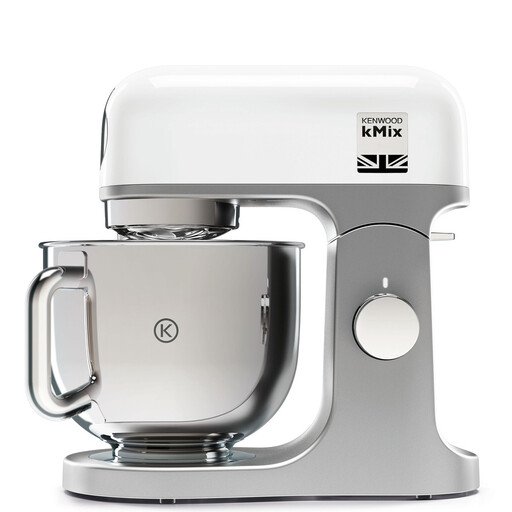 Image unavailable
If you make dough regularly, check the maximum dough capacity and exact model number before planning your batch sizes: the title lists KMX750WH, while the description mentions KMX750AWH. If you plan to use other attachments, confirm that they’re compatible and included.
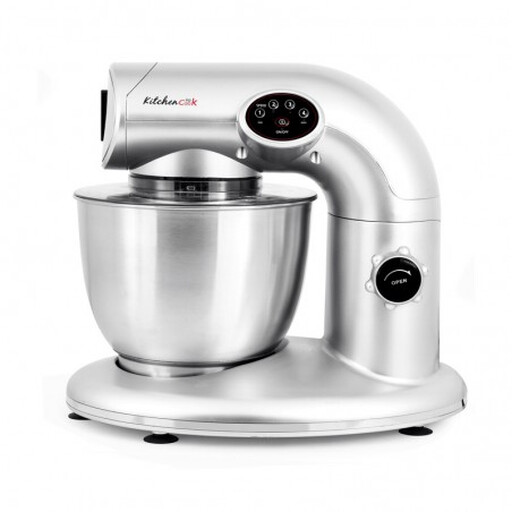 Image unavailable
If you knead regularly, check the dough capacity and the recommended operating time for heavy dough. Also confirm the model number before buying: the title lists AK80, while the product details mention AK80SIL.
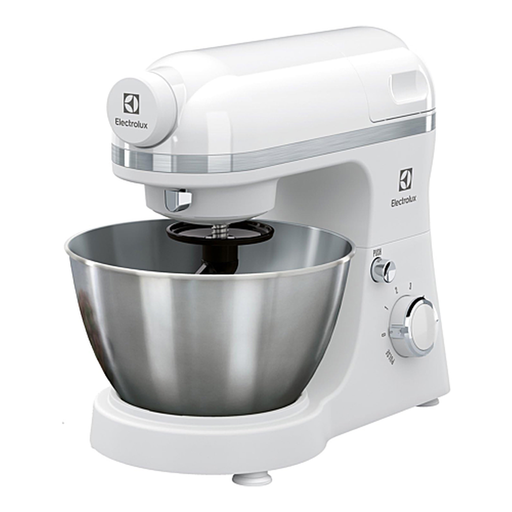 Image unavailable
If you make bread in repeated batches, compare your quantities with the maximum dough capacity for the EKM3010. Its 4.1 L bowl doesn’t tell you what that limit is.
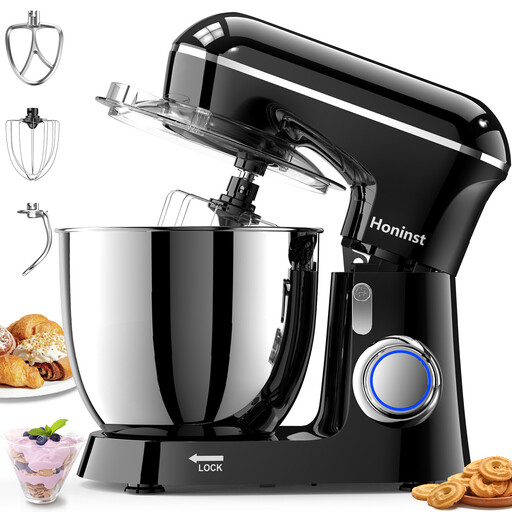 Image unavailable
For switching between kneading and whisking, this model is supplied with a dough hook, whisk and beater. Check its dough capacity: the description recommends running it for no more than 10 minutes continuously with heavy dough and says the attachments should be washed by hand.
 Image unavailable
For kneading and baking, this tilt-head model is supplied with a dough hook, whisk, beater and splash guard. Before planning large batches, check the maximum bread dough capacity for the ASM1559: a 6 L bowl alone won’t tell you what it is.
UFC-Que Choisir considers a stand mixer worthwhile if you bake, make bread or make brioche often, or in large quantities. When choosing one, weigh how often you’ll use it against the space it’ll take up and the cleaning involved, rather than looking for a specific number of recipes per month.
Not necessarily: check the bread dough limit for the exact model. For example, Moulinex France states that the Masterchef Grande QA810D01, which has a 6.7 L bowl, can handle up to 2.2 kg of bread dough. This stated capacity for one model doesn’t determine the capacity of another appliance with a similar-sized bowl.
If your current appliance handles the blending and chopping you need, first compare stand mixers based on how well they can handle your quantities of dough. A model with attachments makes more sense if you’ll genuinely use its extra functions or want it to take over some of the jobs you currently do with your other appliance.
Check the instructions for your exact model to find out how to wash the bowl and each attachment, particularly before putting them in the dishwasher. UFC-Que Choisir’s stand mixer test protocol looks at ease of cleaning and how parts hold up after washing, so a review of the model you’re considering can be useful alongside the instructions.