
Livraison le jour même ou le lendemain

Qualité garantie

Débloquez vos offres de bienvenue: Livraison GRATUITE | Jusqu'à -80 % | 30 jours d'essai gratuits à JoyPlus
Téléchargez l'application
A stand mixer can make preparing brioche, bread, cakes, creams and pizza dough much easier. But a well-presented product listing is not enough to make the right choice. Between the advertised power, the bowl’s actual capacity and the accessories that are genuinely useful, certain details can quickly turn a promising purchase into an appliance that gathers dust.
Here are the main pitfalls to avoid and the criteria to consider before choosing your next stand mixer.
A 1000 W stand mixer is not automatically capable of kneading every type of dough. Power indicates something about the motor, but it needs to be considered alongside the actual kneading capacity, the type of drive system and the appliance’s stability. For dense bread dough, a less powerful but well-designed motor may be perfectly suitable. Conversely, a lightweight model may vibrate or move across the worktop.
So check the recommended maximum quantity of flour or dough, rather than focusing solely on the wattage.
A 6-litre bowl cannot be filled to the brim. Splashes, ingredient circulation and the volume taken up by whipped mixtures mean that some headroom is essential. Some manufacturers clearly distinguish between total capacity and the volume actually recommended for use.
For a family, a large-capacity stand mixer with a 5 to 6-litre bowl can be very practical. For one person or a couple, a 4 to 4.6-litre bowl will often be easier to store and handle.
Noise levels vary according to the speed, the preparation, the worktop and the mechanical drive system. A figure given in decibels should therefore be treated with caution: check the measurement distance and test conditions. Even when presented as a quiet stand mixer, an appliance can still be clearly audible when kneading firm dough.
The weight, chassis construction and non-slip feet are at least as important as the acoustic specifications when it comes to limiting movement and vibration.
For everyday preparations, focus mainly on how smoothly the speed can be adjusted. A variable-speed control with several settings lets you start slowly to incorporate flour, then gradually increase the speed for whisking or mixing.
Compare the advertised power with the rated power when this is specified. The MONSGA SM100, for example, lists a peak power of 1000 W and a rated power of 600 W. This difference is worth taking into account when comparing models.
A stand mixer with a stainless-steel bowl offers a durable surface that is generally easy to clean. Check the following:
For family use, a 4 to 5-litre bowl is enough for many recipes. A 6-litre model is more worthwhile if you regularly prepare several loaves, brioches or batches.
Measure the available space before placing your order. A tilt-head stand mixer also requires sufficient clearance above it to change the accessories. A heavy metal body will often provide better stability, but it will be less convenient to move after each use.
Here are the features to look out for:
Always unplug the appliance before changing the dough hook, whisk or beater. Never immerse the motor unit in water.
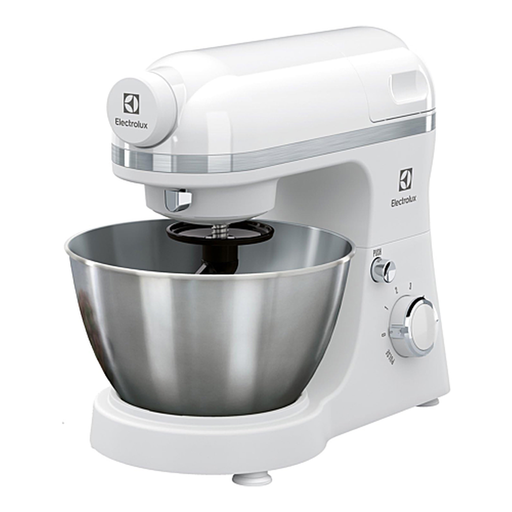
Why this model suits these needs : Its 4.1 L bowl is suitable for family recipes while keeping its footprint reasonably compact. The six speeds and pulse function make it easy to build confidence when you are starting out.
The listing specifies the 800 W power, six speeds and dishwasher compatibility of the removable bowl, rather than relying on a vague promise of versatility.
4.1 L stainless-steel bowl, whisk, dough hook, flat beater and splash guard.
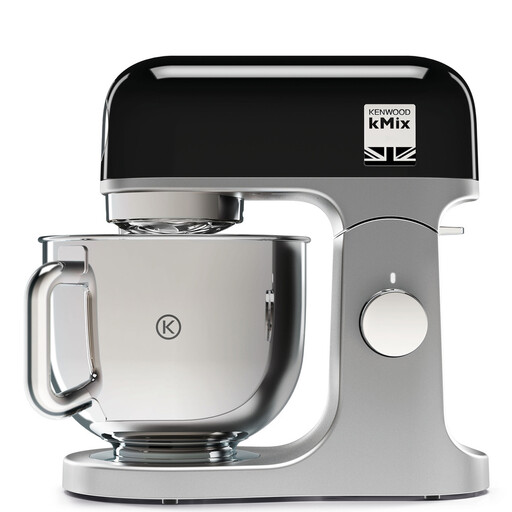
Why this model suits these needs : Its all-metal construction, 5 L stainless-steel bowl and upgradeable accessories are ideal for anyone looking for an appliance to keep for years and expand as their recipes evolve.
The listing distinguishes between the Gentle Mix function, gradual start-up and electronic control: three details that are more meaningful than a simple power figure.
1000 W motor, 5 L bowl, three included accessories and more than 15 optional accessories listed.
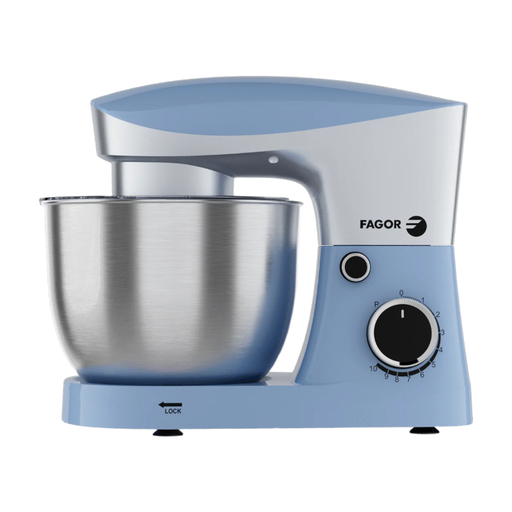
Why this model suits these needs : Its 6 L bowl and 10 speeds, complemented by a pulse function, are suitable for large quantities and repeated preparations, provided you follow the stated working capacity.
The listing distinguishes between the 6 L total capacity and the 5.7 L that can actually be used. This makes it easier to size recipes correctly and avoid overfilling the bowl.
Advertised rated power of 1500 W, metal accessories, overheat protection and suction-cup feet.
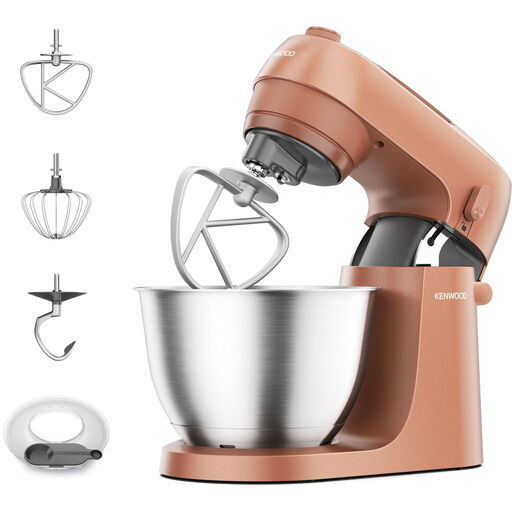
Why this model suits these needs : With a stated height of 30 cm and a 4 L bowl, it fits more easily into a kitchen where every centimetre counts.
Its dimensions are specified in the listing, along with its six speeds and pulse function. You can therefore check its footprint before buying.
800 W motor, 4 L stainless-steel bowl, tilt head and dishwasher-safe parts according to the listing.
We have put together a complete, real-time updated selection of products that meet these demanding criteria and European safety standards.
Always start at a low speed to prevent splashing. For bread dough, use the dough hook and follow the maximum operating time stated in the manual. Do not exceed the recommended quantities, even if the bowl appears to have plenty of room left.
After each use, unplug the appliance, remove the accessories and clean the bowl according to the manufacturer’s recommendations. Clean the motor unit with a slightly damp cloth. Store the mixer in a dry place and protect its accessories to minimise wear and flour deposits.
For regular use, consider the power alongside the kneading capacity, the appliance’s weight and whether it has overload protection. Wattage alone is not enough to assess how a mixer will perform with dense dough.
A 5-litre bowl is suitable for many family-sized preparations, but its usable capacity may be lower than its total volume. Check the recommended limits for flour, dough and whipped mixtures.
Consumption depends on the power, operating time and frequency of use. A 1000 W appliance used for 10 minutes theoretically consumes around 0.17 kWh. In practice, consumption varies according to how the motor operates and the preparation being made.