
Livraison le jour même ou le lendemain

Qualité garantie

Débloquez vos offres de bienvenue: Livraison GRATUITE | Jusqu'à -80 % | 30 jours d'essai gratuits à JoyPlus
Téléchargez l'application
Finding the ideal stand mixer can quickly become a headache. Between motor power, bowl capacity, and a jungle of attachments, it's easy to get lost. Whether you're a beginner baking your first cakes or a baking expert looking to knead the most demanding doughs, this appliance is an indispensable ally for your countertop.
Our goal? To help you find clarity. We've broken down the essential features to give you practical advice and a selection of models that stand out from the crowd. Everything you need to make the right, informed choice for your kitchen.
Before diving into our selection, let's review the key criteria to ensure your future stand mixer perfectly matches your culinary ambitions.
A powerful stand mixer isn't a luxury, but a necessity if you plan to work with heavy doughs like bread or brioche. Measured in watts (W), the power reflects the motor's ability to maintain a steady speed without overheating, even when faced with a thick mixture. For versatile use, a power of around 1000?W is an excellent starting point.
The planetary mixing action is another crucial feature: the mixer head spins on its own axis while sweeping the sides of the bowl. This dual motion ensures a perfectly homogeneous mix, leaving no ingredients behind.
The bowl's size determines how much you can prepare in one go. A 5L stainless steel bowl is a very versatile standard, ideal for most family recipes (cakes, a batch of cookies, or a nice loaf of bread). If you regularly cook for a large crowd or in large quantities, a 6L bowl or larger will offer you more convenience. Stainless steel is the preferred material: it's durable, hygienic, easy to clean, and doesn't retain odours or stains.
The attachments included with the stand mixer transform a simple mixer into an ultra-versatile kitchen assistant. The essential trio consists of:
When it comes to comfort, silence is golden. A quiet stand mixer is a daily game-changer. A noise level below 75-80 decibels (dB) is considered pleasant, allowing you to cook without drowning out the radio or waking up the entire house.
Here are three models that particularly caught our eye, each catering to different needs and budgets.

Why it stands out?: The Monsga SM100 represents the perfect balance of performance, capacity, and comfort. Its 1000?W motor, combined with planetary mixing action, tackles everything from light batters to the densest bread doughs with ease. Its controlled noise level (under 75?dB) makes it a pleasant companion for daily use.
Pros?:
Who is it for?? Ideal for regular home bakers looking for a reliable, complete, and versatile appliance for daily use, without breaking the bank.
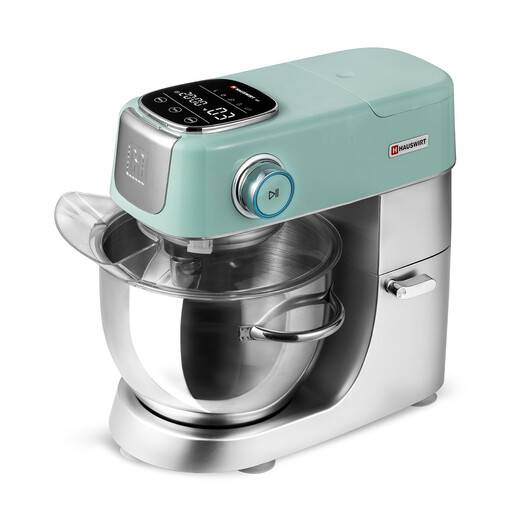
Why it stands out?: The HAUSWIRT M5 has a modern edge. Its LED touchscreen and 5 automatic programs simplify life in the kitchen, while its 11 speeds offer highly appreciated fine-tuned control. With its sleek design, it's an appliance you'll be proud to display on your countertop.
Pros?:
Who is it for?? For cooking enthusiasts who appreciate beautiful objects and technological aids, and who are looking for an appliance that is as high-performing as it is stylish.
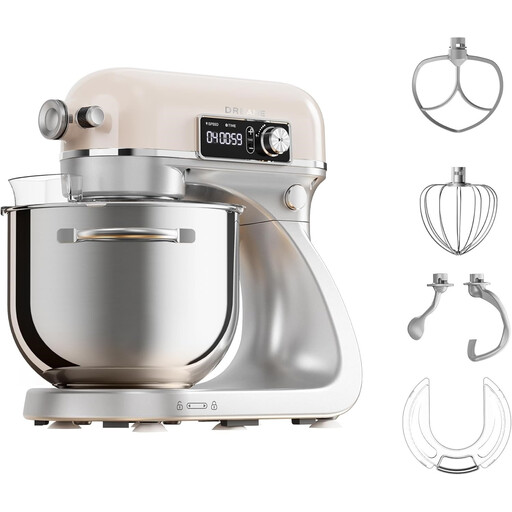
Why it stands out?: The BioKnead is a force of nature, built for the toughest jobs. Its 800?W high-torque DC motor delivers kneading power equivalent to a 1500?W AC motor, but with the added benefits of quiet operation and longevity. Its large 6L bowl and full die-cast metal body make it a beast of durability for home bakers.
Pros?:
Who is it for?? For seasoned bakers and pastry chefs who knead large quantities of dough and demand a machine with rock-solid robustness, stability, and performance.
None of these models catch your eye? Or perhaps you're looking for a more compact alternative? Feel free to browse our complete selection. You'll find appliances for every budget and every need.
? Discover our full range of electric kitchen mixers
It all depends on your usage. For light mixtures (creams, cake batters), a 300 to 500?W motor may be sufficient. For versatile use including occasional kneading, aim for 800 to 1200?W. For intensive kneading of heavy doughs (bread, pizza), a powerful stand mixer with a high-torque motor (like a DC motor) or a power rating above 1200?W is essential to ensure its longevity and efficiency.
The stand mixer is a specialist in mixing, whipping, and kneading thanks to its planetary action and dedicated attachments (whisk, beater, hook). In contrast, a standard food processor uses blades at the bottom of a bowl to chop, blend, or grate. Although some food processors offer kneading attachments, they will never match the efficiency of a true stand mixer for baking and pastry.
Good news: most stainless steel bowls and attachments (whisk, beater, hook) are now dishwasher-safe, which greatly simplifies cleanup. However, always check the manufacturer's recommendations. As for the mixer's body, which houses the motor, it should never be submerged: a simple wipe with a damp cloth is enough to keep it spotless.