
Livraison le jour même ou le lendemain

Qualité garantie

Débloquez vos offres de bienvenue: Livraison GRATUITE | Jusqu'à -80 % | 30 jours d'essai gratuits à JoyPlus
Téléchargez l'application
Whether you're a weekend baker or a seasoned home bread-maker, the stand mixer is the ally that turns a chore into a joy. Say goodbye to exhausting hand-kneading and egg whites that fall flat! But with a jungle of models to choose from, making a purchase can quickly become a headache. Our editorial mission? To help you decode the spec sheets and make a truly informed choice, far from the siren song of marketing.
Before you dive in, here are the pitfalls to avoid so your investment doesn't become a regret:
To avoid nasty surprises, focus on these few non-negotiable technical specifications. They are the true indicators of the quality and durability of your future kitchen machine.
A powerful stand mixer isn't just about watts.
The bowl's size determines the quantity you can prepare in a single batch.
Always opt for a stainless steel bowl. It is durable, hygienic, easy to clean, and won't retain odours or stains, unlike some plastic or glass bowls.
A stand mixer comes with at least three essential attachments. Their quality is paramount.
Rather than an endless list, we've matched user profiles with appliances that meet specific needs, based on the quality criteria we've just discussed.

Why this choice? Ideal for those who want to get equipped without breaking the bank. It offers a good balance of capacity, power, and features for getting started with home baking, from cookies to simple cake batters.
Its 1000W motor and planetary mixing action deliver respectable performance for regular home use, avoiding the underperformance of low-end models.
The 5-litre stainless steel bowl provides a generous capacity for most family recipes, a noteworthy feature in this price range.
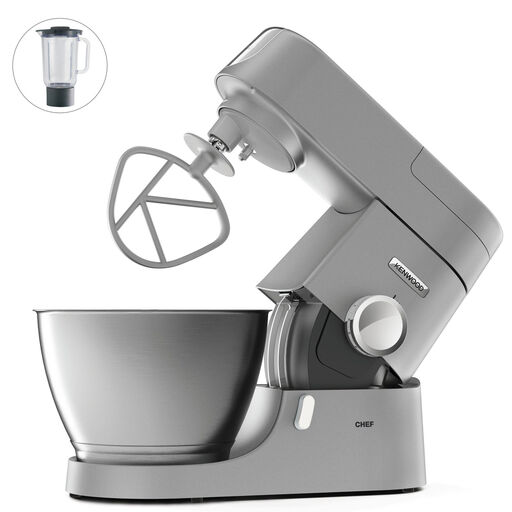
Why this choice? For those who bake regularly and are looking for a reliable and versatile appliance. The Kenwood stand mixer Chef is a benchmark for its robustness and versatility, capable of handling everything from light batters to bread dough.
Its full metal body and high-quality baking toolkit ensure excellent durability, avoiding the pitfall of fragile gears and accessories.
The ability to add numerous attachments (meat grinder, pasta roller, etc.) makes it a long-term investment that grows with your culinary skills.
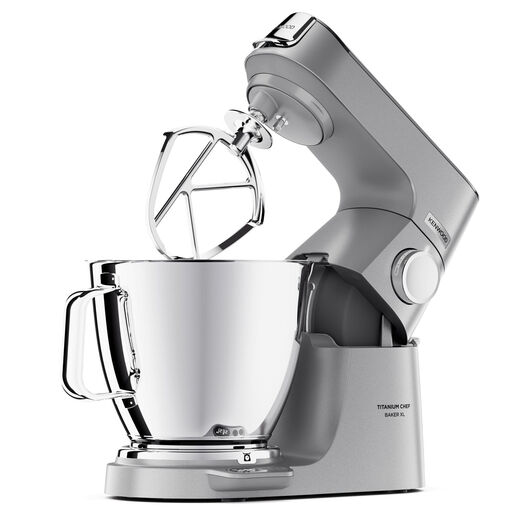
Why this choice? Designed for enthusiasts who make no compromises. Ideal for intensive bread-making, very large quantities, and the pursuit of absolute precision thanks to its advanced features.
It represents the pinnacle of home performance: a 1200W ChefMotor designed for durability, a full metal body, and professional-grade accessories. It's built to last.
The integrated EasyWeigh scale and the DuoBowl (7L and 5L) offer unparalleled time savings and precision, allowing you to move from one recipe to the next without intermediate cleaning.
We have selected a full range of products that meet our quality criteria and local safety standards.
Rather than focusing on watts, look at the motor technology. An 800W Direct Current (DC) motor will often be more effective for kneading than a 1200W Alternating Current (AC) motor. For versatile use that includes bread dough, a power rating of at least 1000W for an AC motor or 600W for a DC motor is a good starting point.
Yes, absolutely. It's one of its greatest strengths. A good stand mixer, equipped with a metal dough hook and a high-torque motor, will develop your dough's gluten network evenly and efficiently, without tiring you out. The planetary mixing action ensures that all the dough is worked uniformly.
The lifespan depends primarily on the build quality and your usage. An entry-level model with plastic components may show signs of weakness after 2 to 3 years of regular use. A mid-range or high-end appliance with a metal body and robust gears, like those from the Kenwood brand, can easily last more than 10 years, making it a more cost-effective investment in the long run.