
Livraison le jour même ou le lendemain

Qualité garantie

Débloquez vos offres de bienvenue: Livraison GRATUITE | Jusqu'à -80 % | 30 jours d'essai gratuits à JoyPlus
Téléchargez l'application
Shopping is one thing. Hauling it all up to your apartment without an elevator is another story. Between water bottles, canned goods, and fresh produce, every step becomes an ordeal. A stair-climbing shopping trolley seems like a game-changer, but be warned: the market is flooded with models that make tempting promises but don't always hold up.
To avoid regretting your purchase after just a few weeks, here are the common traps to avoid.
To avoid these disappointments, you need to focus on objective criteria that guarantee your trolley's longevity and practicality.
For a shopping trolley to be a true daily ally, three technical parameters must be scrutinised. They are what separate a gadget from a long-term investment.
The secret to a good stair-climbing trolley lies in its wheel system. The most common is the 6-wheel shopping trolley, with two sets of three wheels on each side.
A large-capacity shopping trolley must be able to handle the weight without failing. Its sturdiness is directly dependent on the quality of its structure.
A good trolley should also be easy to use and store.
To help you see more clearly, we have identified models that meet specific needs, based on the criteria of sturdiness and practicality discussed above.
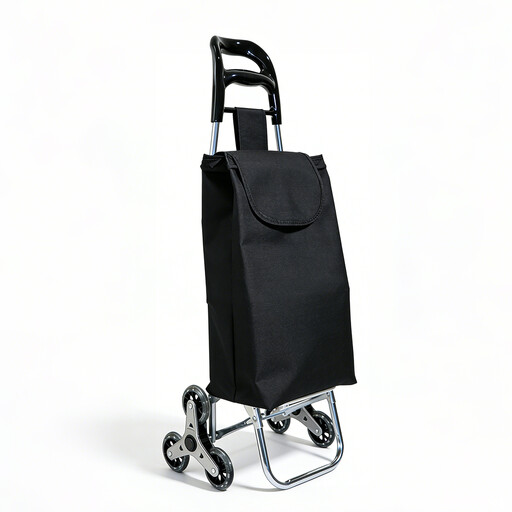
Why it stands out: Perfect for city dwellers who do large weekly grocery runs. Its large capacity and stair-climbing design make it a reliable ally for effortlessly transporting heavy loads up several floors.
Its "Heavy-Duty" design and stair-climbing system are marks of reliability, suggesting a structure that can handle heavy loads and wheels that won't fail on the first step.
It combines a large loading capacity with a stair-climbing feature and an ergonomic handle for maximum user comfort.
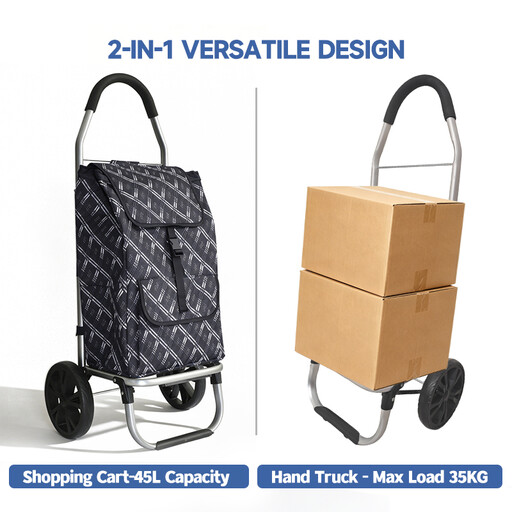
Why it stands out: Excellent for seniors or anyone looking for an easy-to-handle trolley for smaller grocery runs. Its aluminium alloy frame makes it lighter to lift and maneuver, even when empty.
It bypasses the trap of trolleys that are too heavy and cumbersome. The use of aluminium alloy aims for the perfect balance between low weight and a structure that is strong enough for daily use.
Its light weight makes it much easier to handle, whether you're hoisting it onto public transport or storing it in a small space thanks to its foldable design.
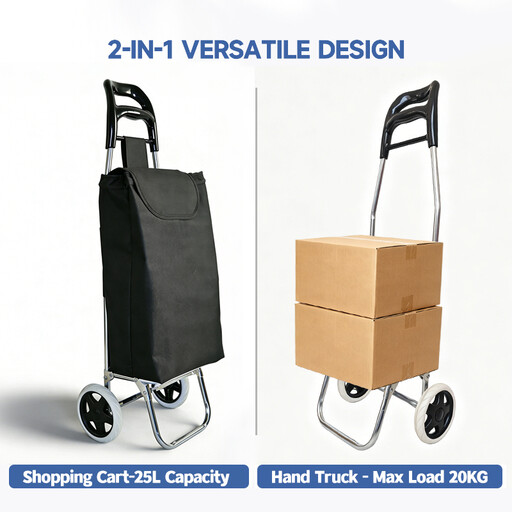
Why it stands out: Designed for those who walk longer distances to do their shopping. The priority here is a comfortable grip to reduce wrist and hand fatigue.
It tackles the often-overlooked flaw of basic, uncomfortable handles. A well-designed ergonomic handle prevents aches and blisters, a crucial detail for regular use.
Its handle design is its strong suit, offering a natural and comfortable grip that makes pulling the trolley easier, even when heavily loaded.
Discover our complete selection of products that meet our quality criteria and current safety standards.
1. What is the lifespan of the wheels on a stair-climbing trolley? It all depends on the material and how often you use it. Quality solid rubber or caoutchouc wheels can last several years, even with weekly use. Conversely, low-end hard plastic models can crack in less than a year, especially if you load them generously.
2. Is a foldable trolley as sturdy as a fixed model? Absolutely, provided you choose a well-designed model. A good foldable shopping trolley has reliable locking systems that ensure excellent rigidity when unfolded. The point to check: the joints. They must be reinforced and have no play, which would be a sign of future weakness.
3. What bag capacity should I choose for a shopping trolley? This depends on your shopping habits. For small, quick trips (bread, fruit, a few items), a 30-litre bag may be enough. For a week's worth of groceries for one or two people, including bulky items like cartons of milk or water, a large capacity of 40 to 50 litres is more appropriate. Also, consider the dimensions of the bag, not just its volume, to ensure your usual products will fit without being forced.