
Livraison le jour même ou le lendemain

Qualité garantie

Débloquez vos offres de bienvenue: Livraison GRATUITE | Jusqu'à -80 % | 30 jours d'essai gratuits à JoyPlus
Téléchargez l'application
A stainless steel kitchen grater can be used every day for cheese, vegetables, citrus fruit or spices. However, some models quickly become frustrating to use: the surface is too small, the handle is slippery, the blades are unsuitable or cleaning is a chore. Before you buy, it is therefore worth separating genuinely practical features from the more general claims highlighted by manufacturers.
A multi-purpose grater with several sides may seem capable of doing everything. In practice, each surface usually has a specific function: coarse grating, fine grating, slicing or zesting citrus fruit. If the openings do not match the way you cook, you may end up using only one side and lose the benefit of a four-sided model.
For a family that regularly prepares gratins, a cheese grater or coarse vegetable grater may be more than sufficient. By contrast, lemon zest, ginger and nutmeg require a fine surface.
Stainless steel generally withstands moisture and acidic foods better than some unprotected metals. That does not mean all graters are equal. You should also check the rigidity of the surface, how securely the blades are fixed, the quality of the handle and whether there is a non-slip base.
Even when a product is dishwasher-safe, it may still need to be dried promptly. Residue trapped in the perforations can affect hygiene and make cleaning more laborious.
Sharp blades make grating easier, but they also increase the risk of cuts if the grater slips or your fingers get too close to the surface. An ergonomic handle, a stable foot and, on some models, a protective cover are all features to check before buying.
Having several sides does not remove the need to choose openings suited to the ingredients you use most often.
Choose a stainless steel surface, a sufficiently rigid structure and a comfortable handle, even during repeated movements. Models that combine steel blades with a plastic body are often lighter and easier to handle, while an entirely metal grater offers a different grip.
The term Cromargan, used for the WMF model shown below, refers to the brand’s own stainless steel material. However, check the product details for precise care instructions.
Before choosing, check:
A food processor can grate and slice large quantities, but it requires more assembly and cleaning. For a small everyday preparation, a manual grater is often quicker to take out and put away.
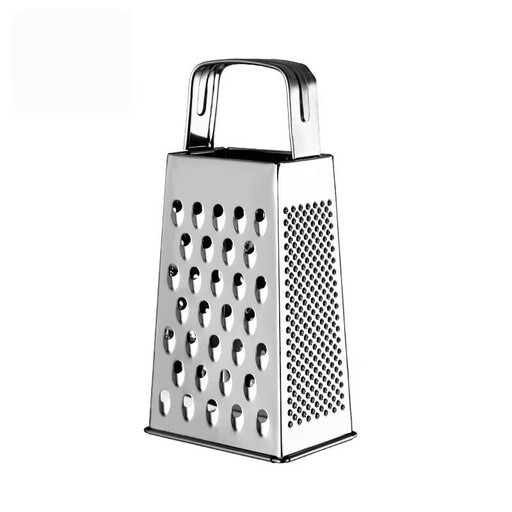
Why this choice suits this profile: Its four-sided design lets you explore several uses with a single utensil, particularly for vegetables and cheese.
The four surfaces reduce the risk of buying a grater limited to a single texture. You should still check the size of the openings in the product details before ordering.
Advertised stainless steel and a four-sided multi-purpose design with a single handle.
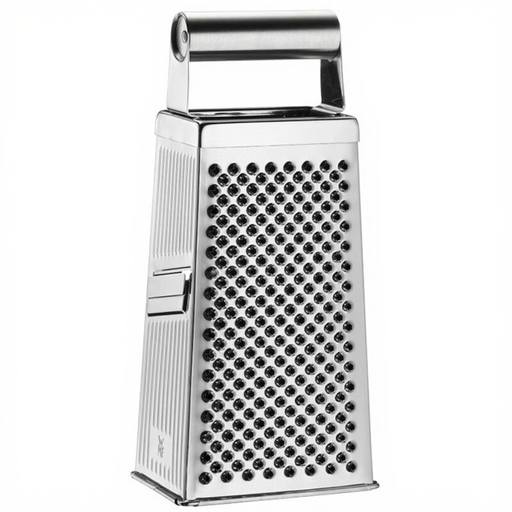
Why this choice suits this profile: This 4-in-1 model is designed for kitchens looking for a well-thought-out utensil for cheese, vegetables, fruit, chocolate and nuts.
The functions are clearly separated into coarse grating, fine grating, slicing and ribbon grating. The stable base and handle are designed to improve control.
Advertised Cromargan stainless steel, ergonomic handle, stable base and dishwasher compatibility.
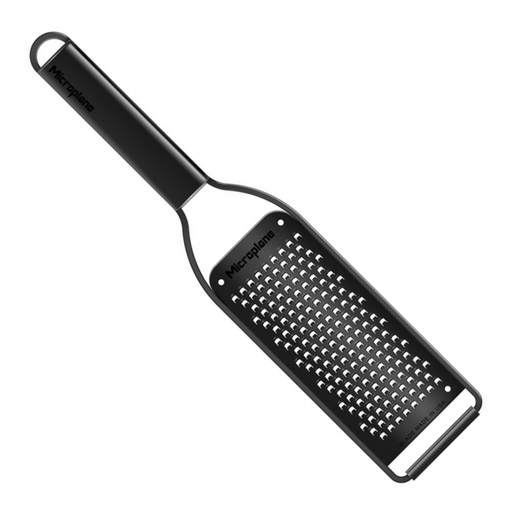
Why this choice suits this profile: Its fine surface is suitable for citrus zest, garlic, ginger, spices and hard cheeses.
It does not claim to replace every grating surface. Its specialisation in fine grating means you can choose a tool genuinely suited to the preparations you have in mind.
Stainless steel blades, soft-grip handle, non-slip base, protective cover and advertised dishwasher-safe cleaning.
Always place the grater on a flat, dry and stable surface. For models with a non-slip foot, check that it grips the worktop properly. Hold the handle with one hand and move the food across the grater in steady movements, without applying excessive pressure.
After use, remove any residue with a soft brush, following the direction of the blades. If the manufacturer states that the grater is dishwasher-safe, follow the instructions in the product details and dry the utensil as soon as possible. A protective cover helps prevent accidental contact in a drawer.
For large quantities, a food processor fitted with grating discs can save time. For mash, stewed fruit or coulis, a food mill meets a different need: it presses cooked food through a grid and does not replace a grater.
We have compiled a complete, real-time updated list of products that fully meet these strict selection criteria and European safety regulations.
A fine grater is generally suitable for Parmesan, citrus fruit, garlic, ginger and spices. A star-shaped surface produces lighter shavings, while a traditional fine grater gives a more even texture. Check that the handle is stable and keep your fingers away from the blades.
It depends on the model. Several products state that they are dishwasher-safe, but washing by hand with a brush can help preserve the blades and dislodge trapped particles. Always consult the manufacturer’s instructions before cleaning.
No specific lifespan can be guaranteed for every product. Longevity depends on how often it is used, the foods grated, cleaning and storage. Avoid frozen or particularly hard foods unless the grater is designed for this purpose, dry it thoroughly and replace it if the handle, base or blades are damaged.