
Livraison le jour même ou le lendemain

Qualité garantie

Débloquez vos offres de bienvenue: Livraison GRATUITE | Jusqu'à -80 % | 30 jours d'essai gratuits à JoyPlus
Téléchargez l'application
A spoon that bends, a ladle that is awkward to clean or a skimmer with a handle that becomes dangerously hot can quickly turn a practical purchase into an unnecessary expense. Stainless steel kitchen utensils offer a sleek look, durability and versatility. However, performance and suitability can vary considerably from one model to another.
Before choosing an ice cream scoop, kitchen ladle or stainless steel cutlery, it is worth keeping three common pitfalls in mind.
A polished or matt finish is not enough to assess an utensil’s strength. Some products specify their grade, such as 304 stainless steel, while others simply state ‘stainless steel’. This wording does not always provide information about thickness, rigidity or resistance to staining.
For accessories that come into contact with food, check the product details for information about the material and its suitability for food contact. A precise description also makes it easier to compare several models.
A large ladle can certainly be used to serve soup, but it will not replace a stainless steel skimmer for lifting ravioli, vegetables or fried foods from the pan. Similarly, a spaghetti server should be able to grip pasta while allowing the water to drain through its perforated design.
Your intended use therefore matters more than a vague promise of versatility. In a family kitchen, a small, well-chosen selection will often be more useful than a large set full of accessories that are rarely used.
The word ‘stainless steel’ does not automatically mean that an utensil is dishwasher-safe. Some handles contain plastic, certain finishes may become dull and an accessory left in a hot pan can quickly become impossible to pick up with bare hands.
Check the manufacturer’s recommendations for washing, drying and prolonged exposure to heat. In a catering environment, these precautions become even more important when utensils are used several times a day.
304 stainless steel is a grade commonly used for kitchen and serving utensils. However, it is not enough on its own to assess a product. The quality of the construction, the thickness of the metal and the handle design also affect grip and lifespan.
In particular, check for:
Information about food contact and usage precautions should be available before purchase, in accordance with the requirements applicable to products intended to come into contact with food.
The length should suit your cookware. A 28.5 cm ladle is suitable for many saucepans and serving bowls, while a shorter model is easier to store in a drawer. With a 34 cm spaghetti server, the handle keeps your hand further away from steam and the edges of a stock pot.
Also consider the diameter and capacity of the head, especially if you regularly prepare sauces or serve identical portions in a restaurant, bar or catering operation.
A spoon rest helps keep the worktop clean while you prepare food. A 23.5 × 9.5 × 4.5 cm matt stainless steel model can hold a ladle, spatula or serving spoon. However, check the care instructions before ordering, particularly if hand washing is recommended.
To keep your kitchen accessories in good condition:
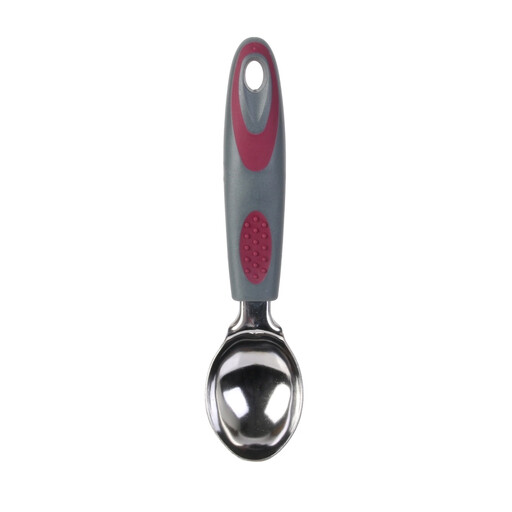
Why this choice suits this profile: This stainless steel ice cream scoop is ideal for family desserts, sorbets and small gatherings. Its size makes it easy to handle and store.
The product details specify the material and intended uses, and recommend hand washing. This means you do not have to assume that it is automatically dishwasher-safe.
Stainless steel head, practical length and suitable for ice cream, sorbet or melon balls.
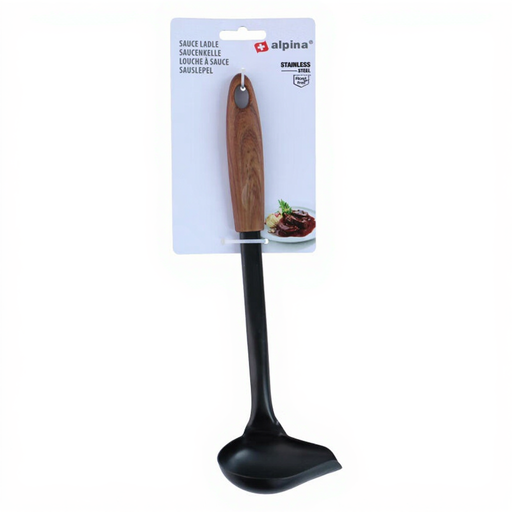
Why this choice suits this profile: Its polished finish and deep bowl look equally at home on a carefully laid table or in a kitchen where sauces, soups and dressings are prepared regularly.
The 28.5 cm length and stated weight of 87 g provide useful points of reference before purchase, rather than allowing appearance alone to dictate your choice.
Deep bowl, curved handle and dishwasher compatibility stated in the product details.
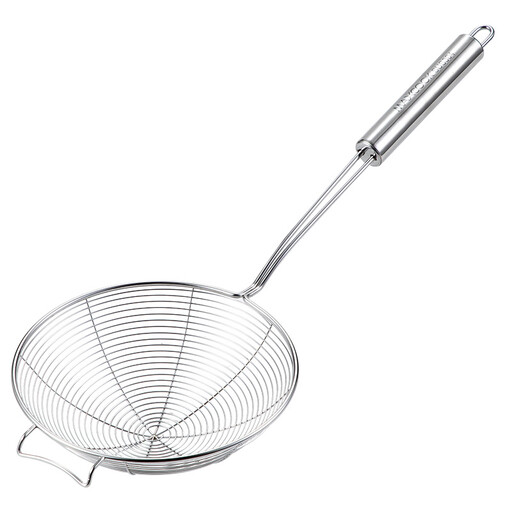
Why this choice suits this profile: This stainless steel skimmer is designed for kitchens that regularly prepare pasta, ravioli, fried foods or slow-cooked dishes.
The product details mention 304 stainless steel, a wide head and a support hook that rests on the edge of the pan. They also specify the limitations relating to heat and acidic residue.
Deep head, hollow handle described as insulated and hanging hole for storage.
We have put together a comprehensive, real-time updated list of products that meet these strict selection criteria and European safety regulations.
Depending on your needs, you can gradually add other accessories:
In a professional establishment, choose consistent formats that are easy to identify and suited to the pace of service. At home, focus mainly on dimensions, storage requirements and how often you will genuinely use each accessory.
No. Compatibility depends on the product, its finish and whether it has a plastic handle or several assembled components. Check the manufacturer’s recommendations. Even when machine washing is permitted, drying the utensil promptly helps minimise water marks.
Rinse the utensil after contact with salt, acidic sauces or certain foods. Clean it with a soft sponge, then dry it with a clean cloth. Avoid abrasive products and prolonged soaking, which can encourage marks or superficial corrosion spots to appear.
For a family saucepan, a medium length generally offers a good balance between reach and ease of storage. For a deep stock pot or professional use, a longer handle keeps your hand further away from the steam. Measure your cookware before ordering and also check the stated weight.