
Livraison le jour même ou le lendemain

Qualité garantie

Débloquez vos offres de bienvenue: Livraison GRATUITE | Jusqu'à -80 % | 30 jours d'essai gratuits à JoyPlus
Téléchargez l'application
Switching to a stainless steel tray seems like a great idea on paper. It's durable, healthy, and far more eco-friendly than plastic, ticking all the right boxes. In reality, however, many buyers are left disappointed as their trays start to rust, warp, or become a nightmare to clean.
To ensure your purchase doesn't turn into a disaster, here are the common pitfalls you need to know before you buy.
unbreakable kids' plate quickly turns into a bent, unstable object.To avoid these unpleasant surprises, you just need to check a few technical details. These are what separate a great tray from a poor one.
The term "stainless steel" is generic. For food-grade use, the standard to look for is 304 stainless steel, also known as 18/8 (18% chromium, 8% nickel). This composition gives it excellent resistance to corrosion and oxidation. It is completely inert and stable when in contact with food, including acidic ones like tomatoes or lemons, ensuring no unwanted substances leach into your meal. This is the standard for a quality stainless steel canteen tray or a stainless steel compartment plate for children.
For even greater durability, especially for heavy-duty portable use, 316 steel is a superior option, but 304 remains the benchmark for safe home and institutional use.
The manufacturing method is as important as the material itself. Opt for trays made using a "unibody" or "seamless" forming process. This technique eliminates joints, crevices, and corners where food and bacteria can accumulate. The surfaces are smooth and the corners are rounded, making them much easier to clean by hand or in the dishwasher.
A unibody tray is also structurally stronger. The metal is often thicker on these models, which prevents warping and ensures greater longevity, even after repeated drops.
A good tray should fit your needs.
portion control plate, 4 or 5 compartments allow for clear separation of food groups. For a young child starting on solid foods, 3 compartments are usually enough to present a balanced meal without overwhelming them.Keeping these criteria in mind, we've selected three models that stand out from the crowd, each suited for a specific use case.
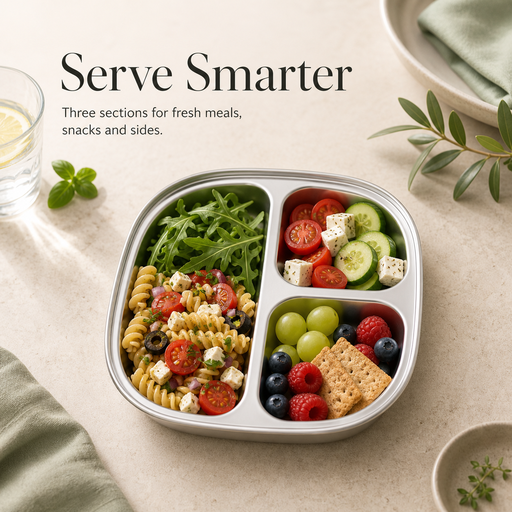
Why it's a great choice: Ideal for parents seeking a healthy and virtually indestructible alternative to plastic plates. Its 19.5 cm size and 3 compartments are perfect for introducing children to balanced eating by separating flavours and textures.
Its food-grade 304 stainless steel construction prevents any risk of rust. The seamless unibody design eliminates food traps, ensuring perfect hygiene.
Thick and sturdy design, resistant to impacts and warping. Dishwasher and steriliser safe for easy maintenance.
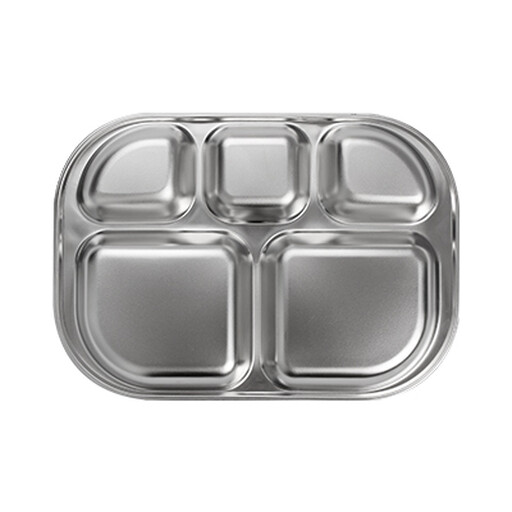
Why it's a great choice: Perfect for adults following a specific diet, practising portion control, or simply wanting to create more structured meals. The five compartments allow for precise separation of proteins, vegetables, starches, and sauces.
The use of 304 stainless steel ensures total neutrality, even with acidic dressings or sauces. Its robust construction resists scratches and impacts, avoiding the pitfall of cheap trays that degrade quickly.
Five distinct compartments for optimal meal organisation. Resistant to extreme temperatures, making it suitable for both hot dishes and cold storage.
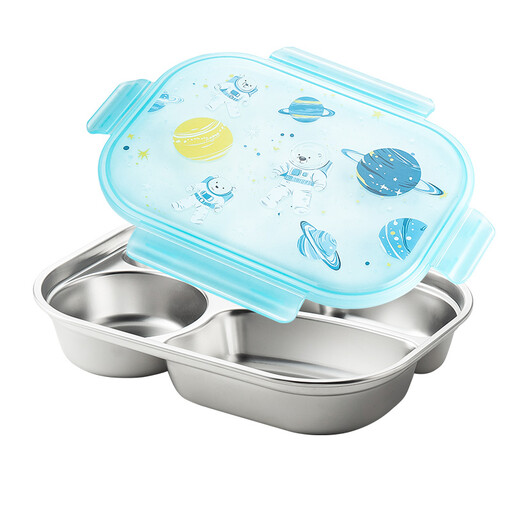
Why it's a great choice: Designed for those who eat lunch at the office, on a picnic, or while camping. This stainless steel bento box comes with a lid, making it perfectly portable. Its 4 compartments allow you to pack a complete and varied meal without the foods mixing.
It goes beyond the standard by using 316 stainless steel, offering superior corrosion resistance—a key advantage for intensive and varied use. Its rugged design is built to withstand the rigours of transport.
Superior material (316 steel) for maximum durability. Bento box format with a lid, ideal for taking meals on the go.
Explore our full selection of dinner trays that meet our quality criteria and food safety standards.
Absolutely not! You should never place any metal object, including a stainless steel tray, in a microwave oven. It can cause sparks, damage your appliance, and create a fire hazard.
Most high-quality stainless steel trays are perfectly dishwasher safe. To maintain a flawless finish and prevent water spots, the secret is to dry them with a soft cloth immediately after washing. Never use abrasive sponges or scouring powders, as they will scratch the surface.
Absolutely. 304 stainless steel is one of the safest materials for food contact. It is completely inert, meaning it doesn't react with food or leach any chemical substances. It's the same steel used in professional kitchens and for medical equipment, making it a trustworthy choice for an unbreakable kids' plate.