
Livraison le jour même ou le lendemain

Qualité garantie

Débloquez vos offres de bienvenue: Livraison GRATUITE | Jusqu'à -80 % | 30 jours d'essai gratuits à JoyPlus
Téléchargez l'application
Stainless steel kitchen utensils have plenty going for them: a simple, understated look, good durability and generally easy care. But a well-written product description doesn’t necessarily mean the item will suit your kitchen. Actual capacity, a lid that isn’t compatible with certain appliances, the grade of steel used… small details can make a big difference in everyday use.
Whether you prepare meals in advance, cook for the whole family, organise a buffet or are looking for easy-care kitchen accessories, here are the points to check before you order.
A stainless steel container isn’t automatically safe to use in the oven, microwave or directly over a flame. Stainless steel is generally not suitable for microwaves, unless this is explicitly stated for a specific component. Some plastic lids or accessories may also be intended for a different use from the metal container.
Check the compatibility of the container, lid, handles and seals separately. For heating in a bain-marie, PP lids and silicone seals should generally be removed.
A clip-on lid can help reduce the risk of leaks, but how well a container seals also depends on the seal itself, its condition and the container’s position during transport. If you’re carrying soup or any other liquid, it’s best to keep the container upright, even when using airtight food containers.
The dishwasher-safe claim may apply only to the stainless steel body. Lids, seals, plastic handles or bamboo lids may need to be washed by hand. Checking the details helps you avoid warping, unpleasant smells and premature wear.
304 stainless steel is widely used for bowls, mixing bowls, saucepans and food storage containers. It’s suitable for many everyday uses and, on several of the models featured here, has a smooth, uncoated interior.
316L steel is also used for some food containers. Its composition is known for offering greater resistance to corrosion. Even so, you’ll still need to dry it carefully and follow the care instructions, particularly for lids and seals.
Steel grade isn’t everything, though. Also check the thickness, the finish on the edges, the quality of the closures and whether the product information confirms it’s suitable for food contact.
A large stainless steel mixing bowl is handy for preparing dough or a family-sized salad, but it can quickly take up a lot of space. Nesting models are easier to store in a kitchen where every cupboard counts.
For meal prep, a range of sizes can come in handy: around 350 to 600 ml for snacks and side dishes, 1 to 1.6 l for individual portions or leftovers, and more than 2 l for family meals. Rectangular containers generally make it easier to organise your fridge.
If you’re looking for versatile equipment, choose smooth, uncoated interiors. Avoid abrasive sponges, steel wool and chlorine-based products, which can mark the surface. Bamboo components, such as some lids, should be washed by hand and dried promptly.
For electrical appliances such as a stand mixer, check the recommended working capacity rather than relying solely on the bowl’s maximum volume. The Monsga SM100, for example, has a 6 l bowl, but the recommended maximum working capacity is 5 l.
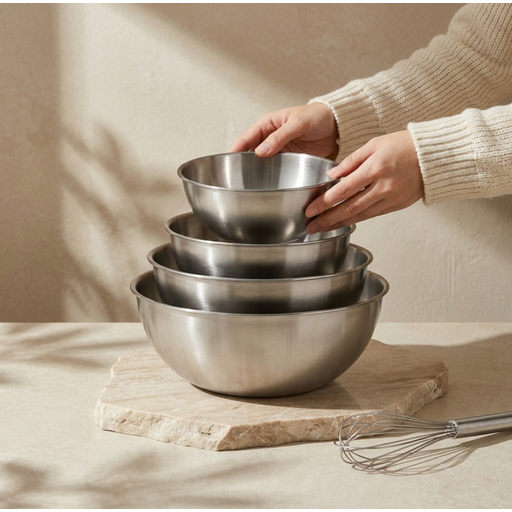
Why it suits this profile : This set of four bowls, ranging from 19 to 28 cm, covers everyday needs: making a salad, beating eggs, kneading dough, washing vegetables or serving food at the table.
The different sizes nest together to save space. The product details confirm that the interiors are uncoated and the bowls aren’t suitable for microwave use.
304 stainless steel, rolled edges and stated dishwasher-safe cleaning.

Why it suits this profile : The four 1 600 ml containers are ideal for regularly organising your fridge, freezer and pre-prepared meals.
The matching sizes make stacking and storing food easier. Even so, check that the lids are secure and keep the containers upright when they hold liquids.
Stated 316L steel, snug-fitting lids, and stated freezer and dishwasher compatibility.
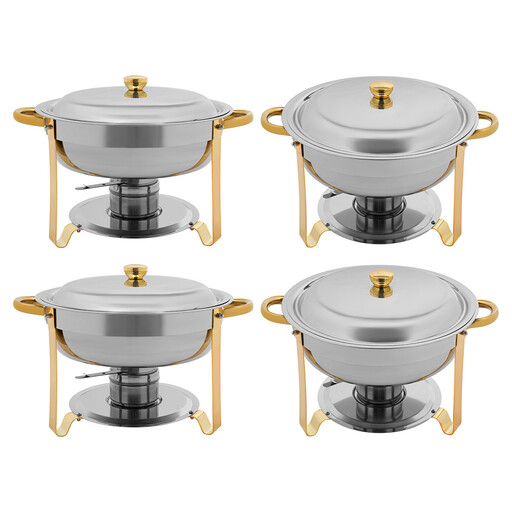
Why it suits this profile : This set is designed for group meals, associations, caterers and event organisers looking for a buffet food warmer that doesn’t need an electricity supply.
The product details make clear that solid fuel isn’t included. You can then buy the fuel you need and take the appropriate precautions when using a flame.
Set of four, stated capacity of 1,19 gallon per dish, with lids and fuel holders included.
We’ve put together a comprehensive list, updated in real time, of products that meet these exacting selection criteria and European safety requirements.
Generally, no. A metal container can cause sparks and damage the appliance. Always check the microwave’s instructions and the manufacturer’s guidance. Lids should also be removed before heating, unless the manufacturer clearly states otherwise.
It depends on the thickness of the metal, the quality of the welds and handles, exposure to salt or harsh products, and how the item is cleaned. Gentle washing, thorough drying and avoiding steel wool all help preserve the surface. Seals and lids are often the first parts to wear, so keep an eye on them.
No. Check the instructions for each component. Stainless steel bowls and containers may be dishwasher-safe, while PP lids, silicone seals or bamboo components may need to be washed by hand. This distinction is essential for keeping your accessories in good working order over time.