
Livraison le jour même ou le lendemain

Qualité garantie

Débloquez vos offres de bienvenue: Livraison GRATUITE | Jusqu'à -80 % | 30 jours d'essai gratuits à JoyPlus
Téléchargez l'application
Packing your child's lunch for school or an outing is a daily ritual for many parents. But choosing the right kids' lunch box can sometimes be a real headache. Between brand promises and the harsh reality of the playground, it's easy to end up with an unsuitable product. As product experts, our mission is to guide you. Let's break down the common pitfalls to avoid so you can make the right choice, with confidence.
The most frequent disappointments revolve around three key points:
leak-proof kids' lunch box that spills in a school bag is every parent's nightmare. Mashed potatoes or salad dressing on a poetry notebook? No, thank you!To avoid these traps, here are the essential criteria to check. They are what will make all the difference in your daily routine.
Stainless steel is the gold standard for its durability and food-safe properties. But be aware, not all stainless steel is created equal. For a stainless steel kids' container, look for 18/8 or 304 grade stainless steel. This standard guarantees excellent resistance to rust and corrosion and, most importantly, is recognized as safe for food contact. It's the healthiest and most durable alternative to plastic. Also, ensure that any plastic parts (like the lid or dividers) are explicitly guaranteed BPA-free (Bisphenol A).
The locking system is an absolutely crucial point. It must be simple enough for little hands to operate without help, yet robust enough to ensure a rock-solid seal. Systems with large clips are often an excellent option. As for the seal, its effectiveness depends on the quality of the silicone gasket integrated into the lid. A well-designed and perfectly fitted gasket is your best guarantee against leaks—a non-negotiable feature for a school lunch box.
The size of the box should be suited to your child's appetite and the type of meals you prepare. A capacity of around 800-900 ml is often a good compromise for a main course. Some models offer compartments, either fixed or removable, which are very practical for separating foods in a stainless steel snack box or for a kids' picnic box. Finally, check for ease of cleaning: dishwasher compatibility (usually for the stainless steel base) is a major plus that makes parents' lives easier.
Instead of an endless list, here are user profiles and the products that suit them, based on the criteria we've just discussed.
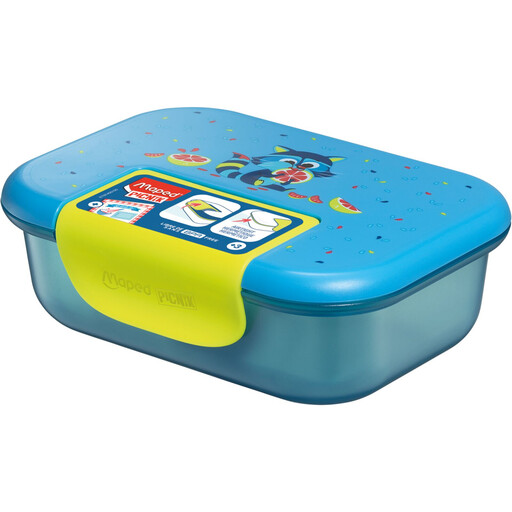
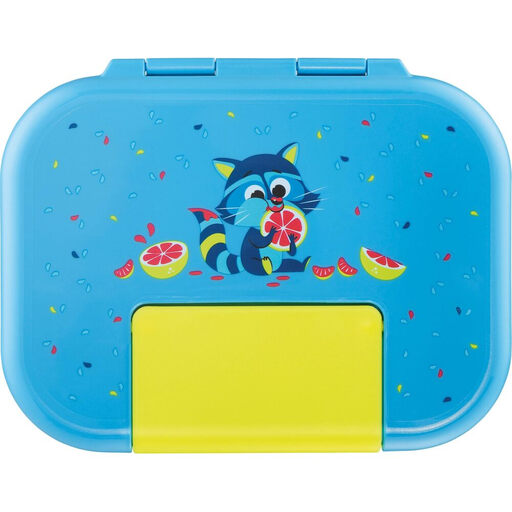
Why this model? It's designed entirely with kids in mind. Its fun design, and especially its opening system, are adapted to their strength and motor skills, promoting their independence in the cafeteria.
Its large clip is easy to spot and handle, putting an end to the problem of boxes that are impossible for a child to open alone.
The lid is attached to the base, so it's impossible to lose it in the chaos of the cafeteria! The stainless steel base is dishwasher-safe for a quick cleanup.

Why this model? It's perfect for parents who want to pack soup, a saucy dish, or hot pasta. Its double-wall insulated design maintains the temperature for several hours.
This product meets a specific need that standard boxes ignore. The more resilient 316 stainless steel is a mark of durability compared to low-end materials.
Vacuum insulation to retain heat (or cold) and high-quality 316 stainless steel. The included carrying bag is a real bonus.
Why this model? Its large 900 ml capacity makes it a great choice for long days or family outings. It's a simple, sturdy, and versatile solution for carrying a full meal.
Its simple and solid construction with quality stainless steel avoids the trap of flimsy materials. Its high-performance gasket prevents leaks, even during bumpy transport.
A large 900 ml capacity and a rectangular shape that optimizes space in a backpack. It's the reliable container for any occasion.
We've put together a complete selection of products that meet our quality criteria and safety standards.
No, never! Metal, including stainless steel, should never be placed in a microwave oven. It reflects microwaves, which can create sparks, damage your appliance, or even cause a fire. To reheat a dish, you must transfer it to a microwave-safe container.
Most stainless steel bases are dishwasher-safe, which is the easiest solution. For handwashing or for stubborn odors (like curry or tomato sauce), a little elbow grease is needed. After a standard wash with hot water and dish soap, let the box soak for about fifteen minutes in a mixture of water and baking soda (or white vinegar). Rinse thoroughly and let it air dry, separating the lid from the base for optimal ventilation.
Both of these stainless steels are excellent quality and perfectly food-safe.