
Livraison le jour même ou le lendemain

Qualité garantie

Débloquez vos offres de bienvenue: Livraison GRATUITE | Jusqu'à -80 % | 30 jours d'essai gratuits à JoyPlus
Téléchargez l'application
Bringing your own lunch is a triple win: it saves money, promotes healthier eating, and is better for the planet. But finding the perfect container to carry your meals can be a challenge. Between promises of keeping food hot and the risk of leaks, choosing a stainless steel insulated lunch box isn't a decision to be taken lightly. To help you out, our editorial team has broken down the key criteria and selected the models that truly deliver, whether you're at the office, in class, or simply looking for a great meal on the go.
Follow our guide to find your perfect lunch companion: a reliable, safe, and practical product perfectly suited for your daily routine.
Before diving into our top picks, let's review the essential points to ensure you make the right choice.
This is the most critical factor: the ability to keep your meal hot (or your salad cold). It all comes down to the insulation technology. The highest-performing models rely on vacuum-insulated double-wall stainless steel, the most effective method for preventing heat transfer.
A good hot food thermos should keep your meal at the right temperature for 4 to 6 hours, easily lasting until your lunch break. Pro tip for maximising performance: before adding your food, fill your insulated food jar with boiling water for a few minutes to "preheat" it. The same principle applies with ice water to keep contents cold.
Soup spilling all over your work bag is the ultimate nightmare. A leak-proof design is therefore a non-negotiable feature, especially for fans of soups and saucy dishes. Inspect the lid carefully: the most secure models combine a silicone seal with a secure closure (screw-on or sturdy clips). A leak-proof soup container is specifically designed for this purpose, but many versatile lunch boxes now offer excellent protection against spills.
Stainless steel is the go-to material, and for good reason:
There are two main types of food-grade stainless steel: 304 (or 18/8) and 316. The latter, enriched with molybdenum, offers enhanced corrosion resistance, particularly against salt and acids. This is a guarantee of longevity, especially for heavy use.
As for capacity (in L or ml), it should simply match your appetite and habits. A 1.4 L insulated bento box is suitable for a full meal, while a set of airtight containers offers more flexibility for separating the different components of your lunch.
Let's move on to our selection of models that caught our eye for their design and everyday practicality.
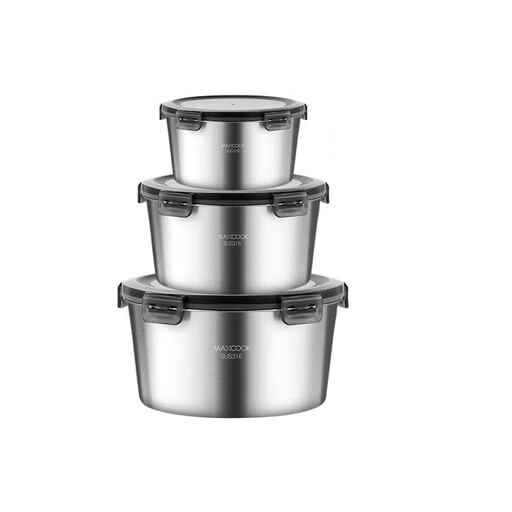
The highlight of this set: while not insulated, it serves as a perfect foundation for meal prep. These stainless steel food storage containers are ideal for transporting cold meals or food to be reheated upon arrival. The 316 stainless steel is a real bonus for durability.
Pros:
Who is it for? Perfect for meal prep enthusiasts who want a healthy and sturdy set of airtight containers to prepare and keep their meals fresh before taking them on the go.
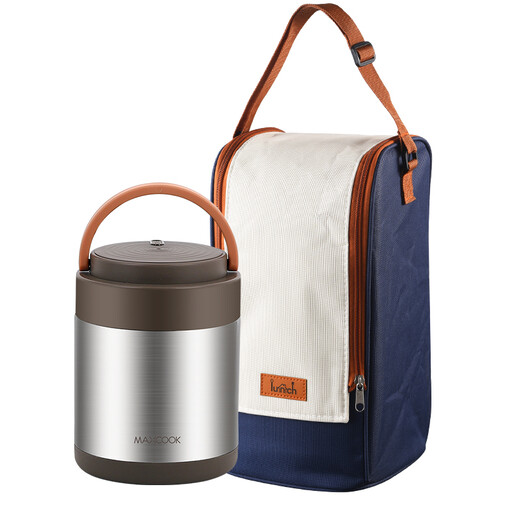
What we love: this hot food thermos combines a large capacity with a truly practical design. Its wide opening is a game-changer, whether you're filling it, eating directly from it, or cleaning it.
Pros:
Who is it for? The ideal choice for professionals and students who can't imagine lunch without a proper hot meal. Its generous capacity also makes it very practical for picnics.
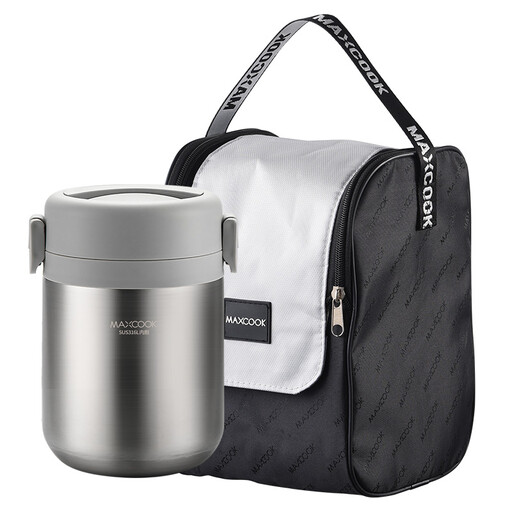
The concept: an all-in-one solution that combines a premium stainless steel lunch box (316) with its own insulated carrying bag. A complete, ready-to-go package.
Pros:
Who is it for? The perfect solution for those who are always on the move. The carrying bag is a real plus for daily commutes, whether to the office, university, or for an outdoor adventure.
Our selection focuses on flagship models, but the market is full of options. If you need a different capacity, a compartmentalised insulated bento box format, or a specific design, don't hesitate to explore further.
To discover a wider range of solutions for your on-the-go meals, take a look at our dedicated category.
? Discover our full range of food containers
The answer is no, and it's non-negotiable. Metal and microwaves don't mix: you risk damaging your oven or even starting a fire. To reheat your meal, transfer it to a microwave-safe container (glass, ceramic, etc.).
It couldn't be simpler. Most stainless steel lunch boxes can be hand-washed with hot, soapy water. For insulated models, it's best to wash the lid by hand to avoid damaging the seal. The advantage of stainless steel is that it doesn't retain odours; a good wash is all it takes. For stubborn stains, a paste made from baking soda and water will work wonders.
304 (or 18/8) stainless steel is the quality standard for most kitchen utensils. It is already very durable and resistant. 316 stainless steel, sometimes called "marine-grade stainless steel," goes a step further: it contains molybdenum, an addition that makes it ultra-resistant to corrosion, especially from salt and acidic foods. In practical terms for a lunch box, this promises maximum longevity, especially if you're a fan of vinaigrettes or tomato-based sauces.