
Livraison le jour même ou le lendemain

Qualité garantie

Débloquez vos offres de bienvenue: Livraison GRATUITE | Jusqu'à -80 % | 30 jours d'essai gratuits à JoyPlus
Téléchargez l'application
Switching from plastic to stainless steel means choosing a healthier, more durable, and high-performance solution. Say goodbye to containers that stain from the first tomato sauce, warp from heat, or are made of questionable materials. In short, you're looking for the ideal alternative to store your meals, organise your fridge, or pack your lunch without risking a disaster in your bag.
As the head of product curation at Joybuy, I'm here to break down the market for you. This guide provides everything you need to know to understand the differences between models and choose the airtight stainless steel food container set that's perfectly suited to your daily life.
Before diving into our selection, here are the key points to check to make the right choice.
Not all stainless steel is created equal. There are two main categories on the market:
The effectiveness of a stainless steel food storage container hinges on its lid. For an on-the-go stainless steel lunch box with no unpleasant surprises, a food-grade silicone seal is non-negotiable. It's what guarantees a perfectly airtight and leak-proof closure. Systems vary: clip-on lids, transparent models to identify contents at a glance, or even all-stainless-steel lids for a zero-plastic solution.
Your future containers should make your daily routine easier. Check their compatibility with your appliances. Most stainless steel containers are fine for the fridge and freezer. The key advantage is dishwasher compatibility: a stainless steel food container that is dishwasher-safe will save you precious time. Also, consider modularity: stackable containers are a real bonus for optimising space in your cupboards and fridge.
We have selected several models that excel in their materials, design, and practicality. They are perfect for getting started with zero-plastic meal prep.
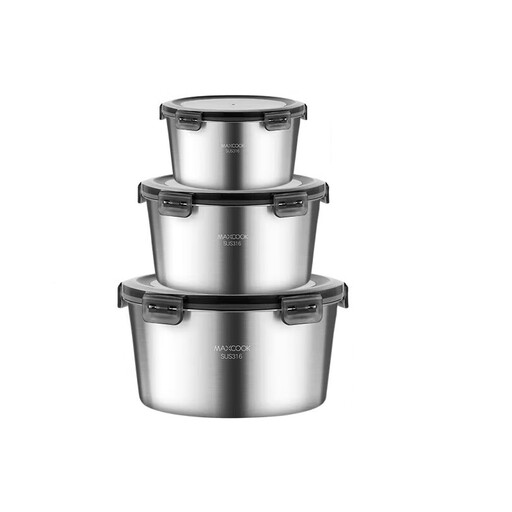
The key feature: Its 316 stainless steel immediately places it in the premium category. This guarantees maximum durability and corrosion resistance for total peace of mind, no matter the dish.
Advantages:
Who is it for? For those who demand the best in durability and cook a wide variety of foods, including very acidic or salty dishes.
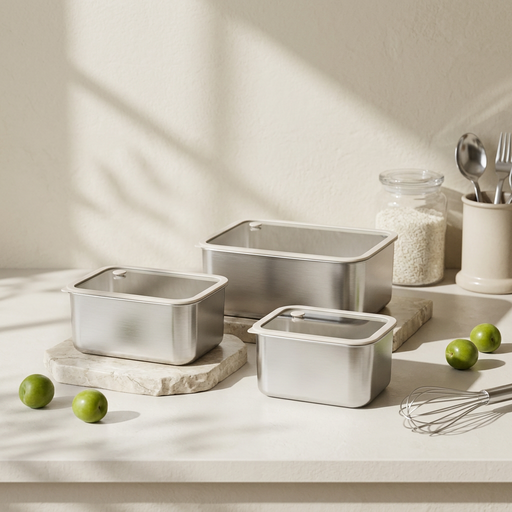
Its main advantage: The smart combination of a sturdy 304 stainless steel body and a transparent borosilicate glass lid. The result: you can see what's inside without having to open it.
Advantages:
Who is it for? For meal prep enthusiasts and fridge organisation pros who love to see what's in their containers at a single glance.
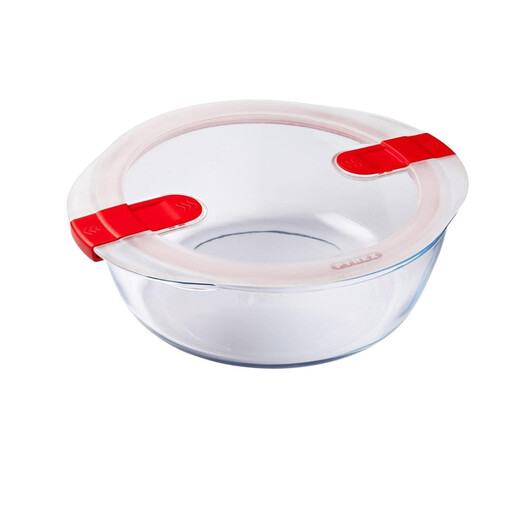
The key feature: It's not stainless steel, but this tempered glass dish is a champion of versatility: it goes from the oven to the fridge, then to the table, for cooking, storing, reheating, and serving.
Advantages:
Who is it for? For those who do a lot of oven cooking, reheat in the microwave, and are looking for a single large dish for family meals.
Our selection focuses on versatile sets, but your needs might be more specific. Are you looking for particular sizes to freeze portions of meat or homemade sauces? Other solutions are available.
Explore our full range of containers to find the size that will fit perfectly into your kitchen routine.
Discover more reusable containers for freezing meat
1. Can you put a stainless steel container in the microwave?
The answer is no, and this is a golden rule. Never put metal, including a stainless steel food container, in a microwave. Metal reflects the microwaves, which can cause sparks, damage your appliance, and even start a fire. To reheat, simply transfer the contents to a suitable plate or bowl.
2. How do you remove stubborn stains or odours from stainless steel?
Stainless steel is naturally very resilient. But if an odour lingers (garlic, curry, fish, etc.), don't panic. Cleaning it with a mixture of warm water and baking soda or white vinegar is usually enough to neutralise it. Rinse thoroughly, dry well, and you're all set. Most importantly, do not use an abrasive sponge that could scratch the surface.
3. Is stainless steel really healthier than plastic?
Yes. Food-grade stainless steel (304 or 316) is an "inert" material. In practical terms, this means it doesn't react with food (even when hot, acidic, or oily) and doesn't leach any chemicals. This is a major advantage over certain plastics, which are suspected of releasing compounds like bisphenol A (BPA) or phthalates under certain conditions. Choosing stainless steel is therefore applying the precautionary principle for healthier food storage.