
Same-day & Next-day Delivery

Quality Guaranteed

Unlock Your Welcome Offers: FREE Delivery | Up to 80% OFF | Free 30-day JoyPlus trial
Download the APP
Stainless steel food containers are suitable for a wide range of uses: lunches at the office, children’s meals, storing leftovers, picnics or meal preparation in advance. Durable and generally easy to clean, they have naturally earned their place in French kitchens.
However, a well-written product description is not enough to guarantee the right choice. A box may be sturdy but difficult to open. A container marketed as leakproof may depend entirely on the quality of its seal. As for an insulated bottle, its capacity should match your daily routine—not merely a promise of long-lasting temperature retention.
Here are the criteria to consider before buying, followed by a selection suited to several user profiles.
Simply being made of stainless steel does not mean that a container can go in the oven, microwave, freezer or dishwasher. Metal must not be placed in a microwave, while plastic lids and seals may have their own temperature limitations.
For an induction stainless steel saucepan or a stainless steel stockpot, check that the base is fully induction-compatible. For a food storage box, review the freezer and dishwasher instructions separately.
A clip closure, screw-top lid and silicone seal do not necessarily offer the same level of leak protection. If you plan to carry soup, choose a container whose closure system is described in detail, and test it carefully before placing it in a bag.
Removable lids can sometimes be easier to clean, but they may also be misplaced or fitted incorrectly. For a child, a closure that is easy to operate is just as important as the stated leakproof performance.
A 1.6-litre box is practical for storing family-sized portions, but it may take up a great deal of space in a work bag. Conversely, a compact stainless steel lunch box may not be suitable for a complete lunch.
Measure the available space in your refrigerator, bag or school backpack. Also consider the weight: stainless steel is durable, but a large container filled with food can quickly become heavy to carry.
Grades 304 and 316/316L are commonly used in food containers and kitchenware. 304 is suitable for most everyday uses. 316L is described in some product listings as more corrosion-resistant, particularly in demanding environments. However, this difference does not eliminate the need to follow the product’s care instructions and usage limitations.
Also examine the lid’s composition: a container may have a stainless steel base and a lid made from PP, silicone or another material. For food use in France, review the compliance information provided by the manufacturer and seller.
Leakproof stainless steel containers are particularly practical for moist foods, provided that the lid and seal are fitted correctly. To keep grains, vegetables and side dishes separate, a compartmentalised stainless steel lunch box prevents food from mixing during transport.
A lid with several fasteners makes it easy to check that the container is properly closed, while a single clip can be operated more quickly. The best choice depends on the contents, transport method and user’s age.
Wash the container before using it for the first time. A soft sponge and standard dish soap are usually sufficient. Avoid steel wool and abrasive products, which can scratch the surface. Dry boxes and seals thoroughly before storing them to help prevent lingering odours.
Some products are dishwasher-safe, while others recommend hand washing to preserve the seal or lid design. Stainless steel is not microwave-safe. For particularly salty or acidic preparations, follow the recommendations given for each product.
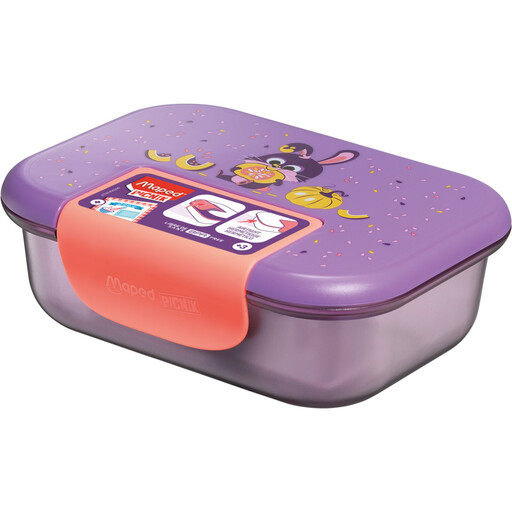
Why choose it: Its rectangular shape slips easily into a school backpack and is well suited to school lunches. The fluorescent clip is designed to be easy for small hands to operate.
The 900 ml capacity and clip closure are clearly specified. The product is not microwave-safe.
Stainless steel, attached lid, rectangular shape and stated dishwasher compatibility.
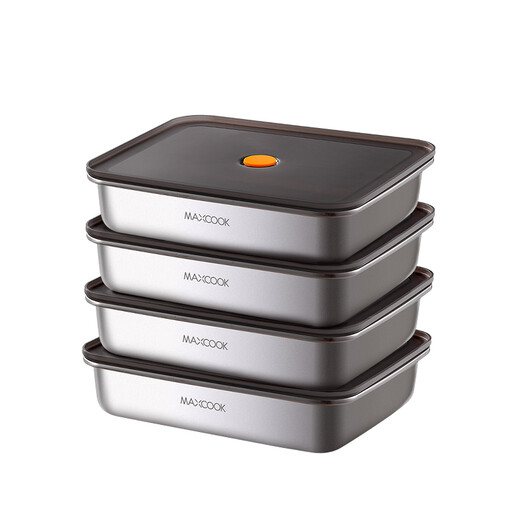
Why choose it: With four containers of the same capacity, this set is suited to families and batch-cooking enthusiasts who want to organise their refrigerator, freezer and pantry supplies.
The listing specifies the capacity of each box as well as the stated freezer and dishwasher compatibility, leaving no room for ambiguity.
Four-piece set, 316L stainless steel, lids included and rectangular design.
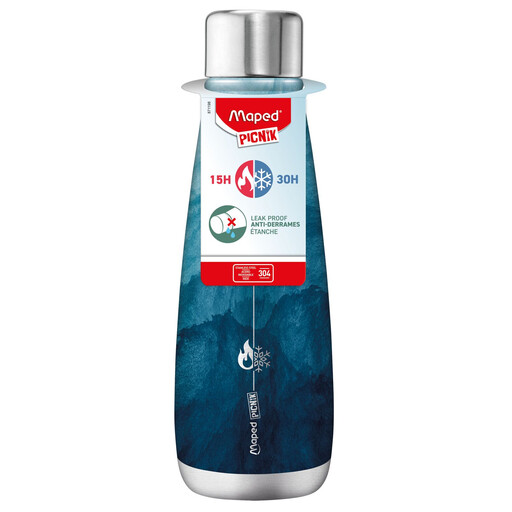
Why choose it: Its size is well suited to the office, school, commuting and outings lasting a few hours. Its vacuum-insulated double wall is designed to keep drinks hot or cold.
The stated performance is “up to 15 hours hot” and “up to 30 hours cold”: actual results depend on the conditions of use.
500 ml capacity, stated leakproof design and double-wall stainless steel construction.
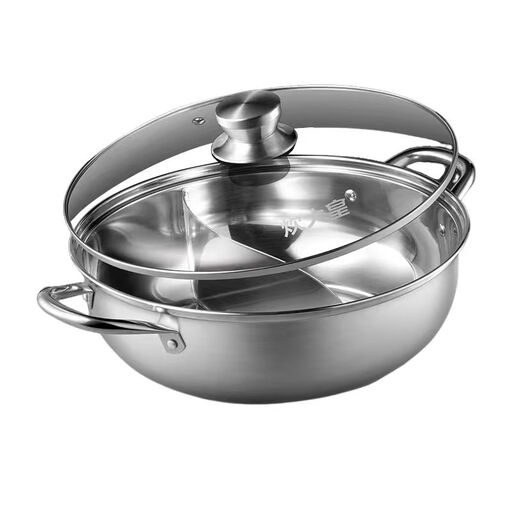
Why choose it: Its divider lets you prepare two recipes or broths simultaneously, making it particularly well suited to shared meals.
Compatibility with gas, electric and induction hobs is specified. Hand washing is recommended, and the handles may become hot.
304 stainless steel, 30 cm diameter, two compartments and compatibility with several hob types.
Discover an up-to-date selection of products suited to a range of stainless steel storage, transport and cooking needs.
To prepare a salad or rinse vegetables, a stainless steel salad bowl with colander can combine several functions in a single set. The five-piece Maxcook 304 model combines bowls and a colander for everyday food preparation.
If you regularly transport hot dishes, compare 1.5-litre insulated stainless steel food jars made from 304 or 316 steel. A wide opening makes filling and cleaning easier, but these products generally require hand washing.
For a picnic, stackable 260 ml stainless steel cups take up very little space in a bag. They are suitable for hot and cold drinks, with particular care required when handling very hot liquids. Stainless steel kitchen utensils and stainless steel picnic tableware can complete your setup.
No. Metal must never be placed in a microwave. To reheat a meal, transfer it to a container explicitly designed for microwave use.
Clean it after every use, dry it completely and avoid abrasive sponges. Check the condition of the seals and clips regularly. If the lid is cracked, the seal no longer closes properly or the surface shows significant deterioration, replace the affected component or the container.
304 is a widely used grade for food-related applications. 316L is known to offer greater resistance in certain corrosive environments. In both cases, the intended use, maintenance, lid quality and product compliance remain decisive factors.