
Same-day & Next-day Delivery

Quality Guaranteed

Unlock Your Welcome Offers: FREE Delivery | Up to 80% OFF | Free 30-day JoyPlus trial
Download the APP
A stainless steel food container is easy to slip into your bag for lunch at work, a school meal, a gym session or a spot of meal prep. But not all stainless steel lunch boxes are created equal. The size, lid, leak resistance and reheating options can all make a difference to everyday use.
Before buying a stainless steel lunch box or food container, here are the main pitfalls to avoid and the features to look out for.
A stainless steel airtight lunch box with a silicone seal and clips will generally help prevent leaks. That doesn’t necessarily mean you can carry it in any position, though. Liquids, sauces and soups should usually be kept upright, especially if the lid doesn’t have a reinforced locking system.
Remember to check:
The stainless steel body can often go in the dishwasher, while the PP lid, silicone seal or clips may need to be washed by hand. It’s worth checking, as this can help prevent the lid from warping and the container from losing its leak resistance.
So, if a product listing says the “container is dishwasher-safe”, read the details carefully. This may apply only to the container itself, not all the parts.
Stainless steel should never be put in the microwave without checking first. Some products come with specific instructions, but you’ll need to remove the lids, seals and clips. Other lunch boxes, such as Maped Picnik models, are explicitly not microwave-safe.
To reheat a meal, follow the manufacturer’s recommended method: use a bain-marie, transfer the food to another container or use an electric lunch box designed for this purpose.
Stainless steel 304 is widely used for food containers. Its smooth surface is generally uncoated, and it’s suitable for storing hot or cold meals, as long as you follow the manufacturer’s instructions.
Stainless steel 316 or 316L is also popular for its improved corrosion resistance. You’ll still need to follow the care instructions, particularly when storing very salty or acidic foods for a long time.
The material used for the container alone isn’t enough to determine whether a food container is BPA-free. You’ll also need to check the lid and seal, which may be made from PP and silicone. Check the product specifications to find out exactly which materials come into contact with food.
The ideal capacity depends mainly on how you plan to use it:
A compartment lunch box keeps foods separate, but the dividers don’t always make each compartment independently leakproof. For liquid sauces, it’s best to use a small separate container.
Check the external dimensions too. A freezer-safe container needs to fit inside without blocking a drawer or shelf. Stackable models can also make it easier to organise your fridge.
A removable seal is easier to clean thoroughly. Take it out regularly to remove food residue, then dry it carefully before putting it back. Clip fastenings distribute pressure evenly, but keep an eye on the moving parts if they become loose or develop cracks.
If you’re preparing several meals in advance, a set of stainless steel meal prep containers is often more practical than one oversized model. A range of capacities makes it easy to portion out meals, leftovers and ingredients to suit your needs.
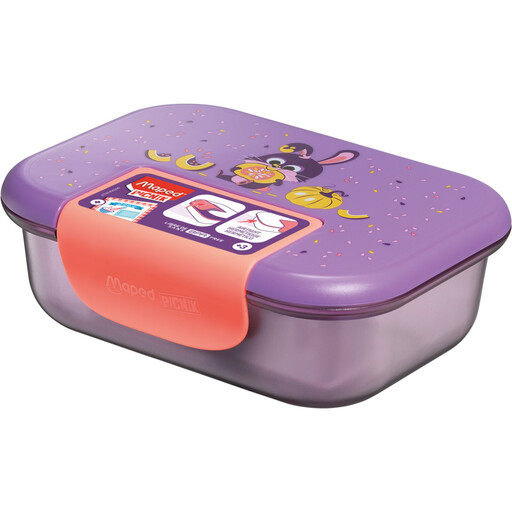
Why it suits this type of user : With a 900 ml capacity, this model is ideal for school meals, snacks and picnics. Its attached lid means you won’t lose it at the bottom of your bag.
The product listing specifies a clip fastening and dishwasher compatibility, while also making clear that the lunch box isn’t microwave-safe.
A 900 ml capacity, a rectangular shape and a lid attached to the base.

Why it suits this type of user : The three capacities—600 ml, 1 100 ml and 2 200 ml—cover the needs of a household preparing different types of meals.
The product listing clearly distinguishes between the stainless steel body, which is dishwasher-safe, and the PP lids, which should be washed by hand.
316 stainless steel, four fastening clips and freezer storage, as stated in the product listing.

Why it suits this type of user : This stainless steel food flask is designed for commuters, sports enthusiasts and drivers who take hot or cold meals with them.
The wide opening makes filling and cleaning easier. The manufacturer recommends hand-washing it and advises against turning the container upside down while carrying it.
A 1.5-litre capacity, 316 stainless steel and vacuum insulation that’s stated to keep food warm or cool for 4 to 6 hours.
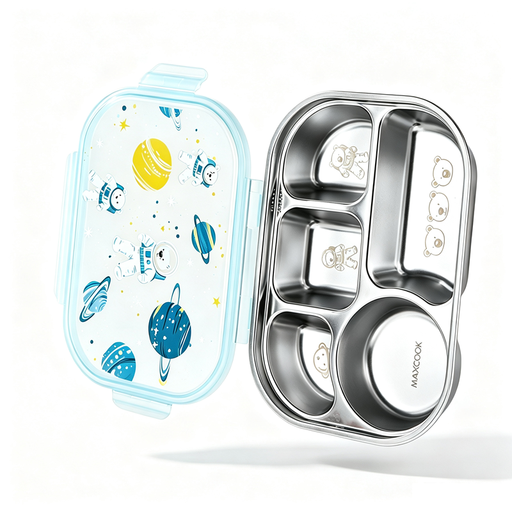
Why it suits this type of user : The five compartments let you keep grains, vegetables, fruit and side dishes separate in one stainless steel bento box.
The product listing states that this model is not suitable for the microwave or oven and recommends hand-washing. Its usage limitations are clearly set out.
316L stainless steel construction, four fasteners and practical food separation to help you manage portion sizes.
We’ve put together a complete, regularly updated selection of products that meet these strict criteria and European safety regulations.
Some models are listed as freezer-safe, including several stainless steel 304 or 316 sets. However, leave enough room for foods that may expand, and check the manufacturer’s instructions before using it for the first time.
It depends on the thickness of the metal, any knocks it takes, the condition of the seals and how well it’s cared for. A stainless steel container can remain useful for many years, but a worn lid or seal can compromise its leak resistance. Replace any damaged parts where possible.
Yes, as long as the manufacturer says it can be used to store liquids and the fastener is properly secured. Always carry the lunch box upright, especially if the product listing recommends doing so. For longer storage, also follow the usual food refrigeration guidelines.