
Livraison le jour même ou le lendemain

Qualité garantie

Débloquez vos offres de bienvenue: Livraison GRATUITE | Jusqu'à -80 % | 30 jours d'essai gratuits à JoyPlus
Téléchargez l'application
Stainless steel cookware has a lot going for it: it’s versatile, robust and relatively easy to look after. But a well-presented product page doesn’t always guarantee a good purchase. A frying pan that sticks, a saucepan that’s too lightweight, or a base that isn’t compatible with induction can quickly turn a bargain into a waste of money.
Before you compare a stainless steel frying pan, a saucepan or a stainless steel steamer, take a moment to identify three common pitfalls.
The mentions 304 and 316L refer to a grade of stainless steel. However, they don’t tell you anything about the thickness of the pan, the construction of the base, or the quality of the handles. A utensil can boast a prestigious grade while having a base that’s too thin or poorly designed, leading to uneven heat distribution.
So, look at the whole construction: the body material, the multi-layer base, how the handles are fixed, the lid, and the care recommendations.
Compatibility with gas, electric, ceramic or induction hobs depends mainly on the magnetic base and its design. On an induction hob, a non-magnetic utensil won’t heat up properly, even if its body is stainless steel.
An induction-compatible saucepan needs to have a suitable base and sit nice and stable on the hob. With a gas cooker, the diameter of the base and the height of the flame also play an important role.
A large family-sized stockpot is handy for soups, pasta or meals with lots of guests. However, it can become awkward to handle in a small sink and take up a lot of cupboard space. On the other hand, a pot that’s too small limits the quantities you can cook and encourages spillovers.
The stated diameter isn’t always enough. Also check the capacity in litres, the overall height and the space the handles take up.
For everyday use, 304 stainless steel is very common on frying pans, saucepans and stockpots. Some models use 316L stainless steel, like the Maxcook stockpot featured later. These details should be considered alongside the product’s other features, particularly whether it has a composite or multi-layer base.
A thick, well-constructed base promotes more even heat distribution. That doesn’t mean you can ignore adjusting the cooking power: with stainless steel, a gradual preheat and a medium temperature are generally easier to control than cranking it up to maximum straight away.
A casserole dish with a lid is ideal for slow-cooked dishes. A stainless steel steamer, on the other hand, lets you stack several levels. A stockpot with a divider serves a different purpose: cooking two broths or two preparations at the same time.
Silicone handles reduce the feeling of heat, but they don’t replace the usual precautions when handling a hot pan. A glass lid lets you keep an eye on the cooking without lifting it, while a metal lid is generally more resistant to knocks.
Also remember to check the dishwasher instructions. Some utensils can go in the dishwasher, while others need to be washed by hand. To minimise white or iridescent marks on stainless steel, dry the pan after each wash and occasionally use diluted white vinegar. Avoid steel wool and abrasive cleaners, though.
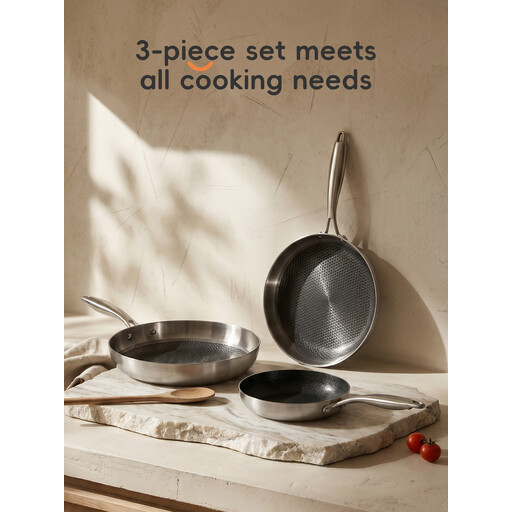
Why this choice suits this profile: With its three diameters of 20, 26 and 30 cm, this set provides a versatile foundation for cooking everything from an individual portion to a family meal.
The set stops you from ending up with just one pan that’s too big or not right for the job. Its magnetic composite base is stated to be compatible with induction, gas and ceramic hobs.
304 stainless steel, three sizes, smooth rim and stainless steel handle. The manufacturer recommends hand washing.
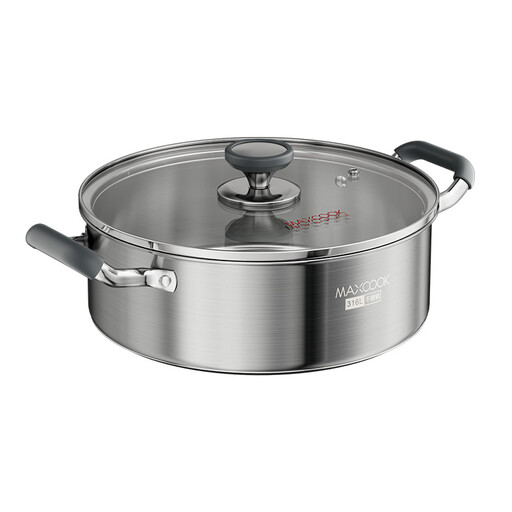
Why this choice suits this profile: Its large capacity is ideal for soups, slow-cooked dishes and meals to share. The glass lid lets you keep an eye on the cooking without lifting it.
The product page states a composite base compatible with gas, induction, electric, ceramic and halogen hobs. The 6.5 l capacity is clearly listed.
Body stated to be 316L stainless steel, handles with silicone elements and polished interior. Hand washing is advised.
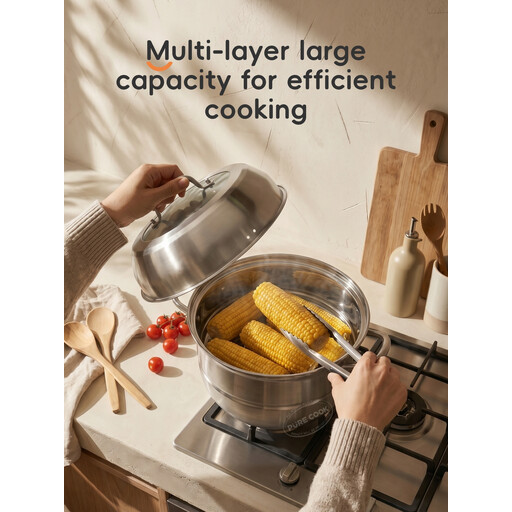
Why this choice suits this profile: Its different levels are great for families who cook large quantities of vegetables, fish, dumplings or steamed dishes.
With its 30 cm diameter and stated compatibility with induction, gas, ceramic and halogen hobs, it can be used on many different setups.
7-piece set, toughened glass lid and stated capacity for 6 to 8 people. The manufacturer indicates dishwasher compatibility.
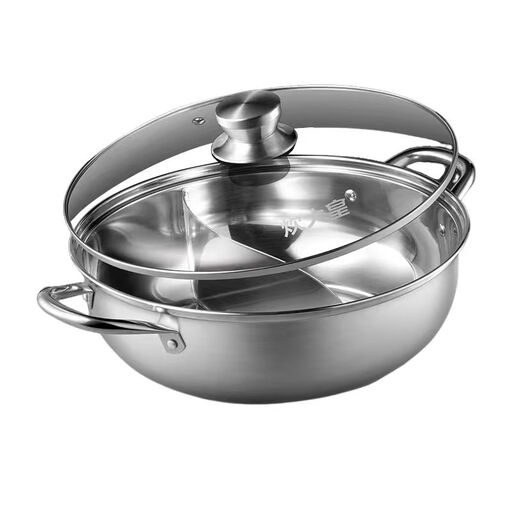
Why this choice suits this profile: The central divider lets you serve two broths or two recipes during a shared meal, without needing multiple pots.
The divider meets a very specific need and stops you from buying two stockpots for the same meal. The page states compatibility with gas, electric and induction hobs.
Stated 304 stainless steel, 30 cm diameter and two-compartment design. The handles can get hot: use protection when handling.
We’ve put together a full selection, updated in real time, of products that meet these exacting criteria as well as European safety standards.
To reduce sticking in a stainless steel frying pan, preheat it gradually, then add the fat, and place the food in the pan once the surface is hot enough. A heat setting that’s too high can cause marks and increase splattering.
Before the first use, wash each piece in hot water with a mild washing-up liquid. In a large stockpot, don’t exceed the recommended fill level and be careful when handling a pan containing hot liquid. A non-stick wok, on the other hand, should be used with utensils that won’t scratch its coating.
Yes, provided it has a compatible magnetic base. Always check the page for the model you choose and look for an explicit mention of induction compatibility. The mere presence of stainless steel isn’t enough.
These marks are often caused by minerals in the water or food residue. A little white vinegar or lemon juice, followed by a thorough rinse, can help remove them. Then dry the stockpot with a soft cloth.
A set that includes a saucepan, a 26 or 30 cm frying pan, a casserole dish with a lid and, depending on your habits, a stainless steel steamer already covers many uses. For large-quantity meals, go for a family-sized stockpot with a good capacity, taking into account its weight, storage and compatibility with your hob.