
Livraison le jour même ou le lendemain

Qualité garantie

Débloquez vos offres de bienvenue: Livraison GRATUITE | Jusqu'à -80 % | 30 jours d'essai gratuits à JoyPlus
Téléchargez l'application
Stainless steel is often touted as the sensible choice for healthy and sustainable cooking. However, this simple name hides a complex world. Between marketing promises and actual performance, there's a high risk of ending up with equipment that rusts, warps, or becomes a daily nightmare to use. Before you invest, it's best to know the few pitfalls that can lead to a purchase you'll bitterly regret.
The 3 Pitfalls to Avoid When Buying Stainless Steel Cookware?:
To equip your kitchen wisely, simply focus on a few technical characteristics that make all the difference in performance and longevity.
For healthy cooking and durable cookware, the gold standard remains 304 stainless steel, sometimes labelled 18/8 or 18/10 (referring to its chromium and nickel composition). This food-grade steel offers excellent resistance to rust and corrosion. Perfectly stable, it does not alter the taste of food and guarantees no leaching of harmful particles, even at high temperatures. It's the seal of food safety and longevity for your entire stainless steel cookware set, from the stainless steel saucepan to the stainless steel plate.
For true all-hob, including induction compatibility, the base of the utensil is the crucial point. A good stainless steel stockpot or pan must have a thick, encapsulated "sandwich" base. This structure, usually composed of three layers (stainless steel / aluminium / stainless steel), ensures?:
Beyond the materials, design details make all the difference in everyday use.
Every household has different needs. Here are a few options targeting specific uses, always keeping our quality and practicality criteria in mind.
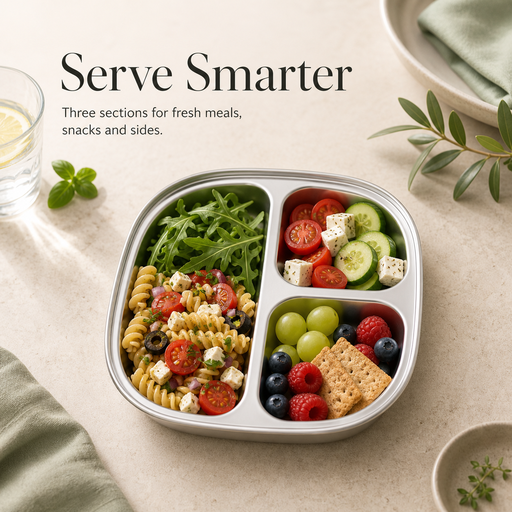
User Profile : Ideal for families with children or for portion control. Its robust design withstands bumps and drops, and the compartments allow you to separate foods to please even the pickiest eaters.
Made from food-grade 304 stainless steel and moulded from a single piece, it has no welds where bacteria can accumulate. It thus avoids pitfall #3 of poor design.
Unbreakable, lightweight, and incredibly easy to clean (dishwasher safe). The perfect companion for everyday meals, as well as for picnics and camping.
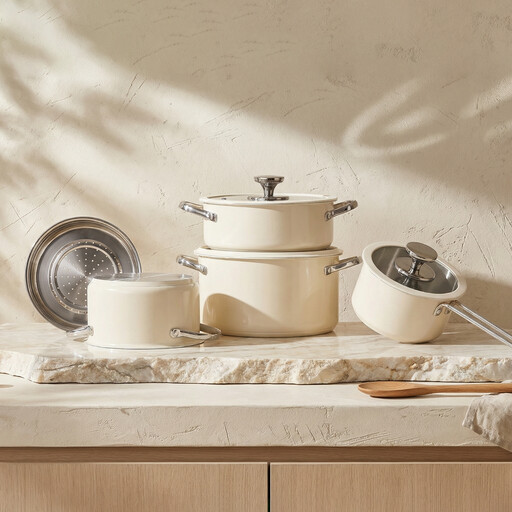
User Profile : This complete set (saucepan, stockpot with steamer, large pot) handles most kitchen situations. The ceramic exterior coating makes cleaning easier and adds a welcome touch of colour.
The base is designed for use on all hobs, including induction, with efficient heat distribution. The 304 stainless steel interior guarantees food safety, avoiding the risk of low-grade steel (pitfall #1) and superficial compatibility (pitfall #2).
An ultra-versatile set for boiling, simmering, or steaming. The glass lids with silicone rims allow you to monitor cooking and ensure a tight seal.
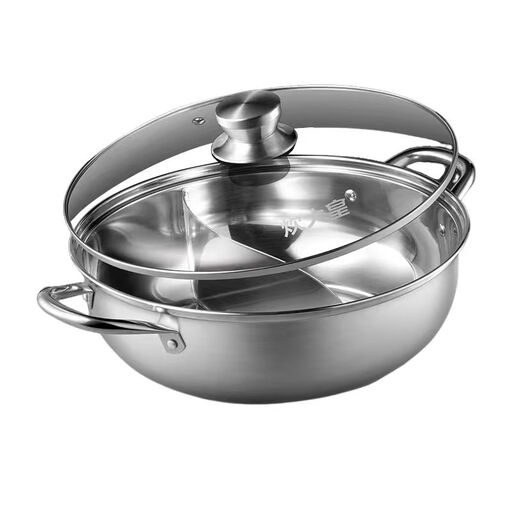
User Profile : Perfect for hot pot nights and large gatherings where everyone has their own preference. The divider allows you to prepare two different broths simultaneously.
This hot pot is made entirely of 304 stainless steel, including its divider, which eliminates any risk of corrosion. Its base is compatible with all hobs, including induction, for use on a portable stove at the centre of the table.
Its large capacity (30 cm) is perfect for large gatherings. It allows you to cook two flavours at the same time, ideal for accommodating everyone's tastes (spicy broth on one side, mild on the other).
We've curated a complete selection of products that meet our quality criteria and current safety standards.
304 stainless steel is highly resistant to corrosion, but it is not indestructible. Prolonged exposure to highly corrosive agents like salt (for example, letting very salty water sit in the pan) or deep scratches from metal scouring pads can compromise its protective passive layer and cause rust spots to appear. Proper maintenance is therefore key.
Iridescent (rainbow-coloured) stains are usually caused by overheating and are harmless. To remove them, simply wipe the area gently with a cloth soaked in white vinegar. For white spots (limescale) or burnt-on residue, a paste of baking soda and water often works wonders. In all cases, avoid scouring powders and metal sponges.
Yes, and it's non-negotiable. An induction hob works by electromagnetic induction. A thick, perfectly flat base ensures a stable contact surface, which is essential for fast and even heat transmission. Conversely, a base that is too thin will warp under thermal shock, start to vibrate, and cooking will become completely erratic, with some areas burning while others remain barely warm.