
Livraison le jour même ou le lendemain

Qualité garantie

Débloquez vos offres de bienvenue: Livraison GRATUITE | Jusqu'à -80 % | 30 jours d'essai gratuits à JoyPlus
Téléchargez l'application
Stainless steel is the star material in our kitchens, prized for its durability, impeccable hygiene, and sleek aesthetic. However, buying stainless steel cookware can quickly become a headache. Caught between marketing promises and real-world performance, it's easy to end up with equipment that rusts, warps, or is simply disappointing to use. As the Head of Product Recommendations at Joybuy, I'm here to give you the keys to avoiding these common pitfalls.
Here are the top 3 mistakes to avoid to make a smart, long-lasting investment.
To shop with confidence, the key is to focus on a few objective, technical criteria.
Before you check out, take the time to verify these three essential points. They make all the difference between a utensil you'll keep for years and a purchase you'll quickly regret.
This is the starting point. For food use, always opt for 304 stainless steel (also known as 18/8 or 18/10). This standard guarantees excellent resistance to corrosion and oxidation. It's stable, taste-neutral, and won't react with foods, even acidic ones. It's the benchmark for healthy cooking and a plastic-free lifestyle. For very specific needs, like long-term storage of highly salty or acidic foods, 316 steel offers even greater resistance, but 304 remains the quality standard for most uses.
For stockpots, saucepans, and frying pans, the base construction is critical. A quality base, often called a "sandwich" or "encapsulated" base, consists of multiple layers (usually stainless steel-aluminum-stainless steel). Aluminum, an excellent conductor, is responsible for distributing heat quickly and evenly across the entire surface, which prevents hot spots. For induction compatibility, the outer layer must be magnetic. A thick, flat base is a guarantee of stability and long-term performance.
A good utensil is, above all, a practical one for daily use.
To help you see how these criteria apply in practice, here are a few products suited for different user profiles.
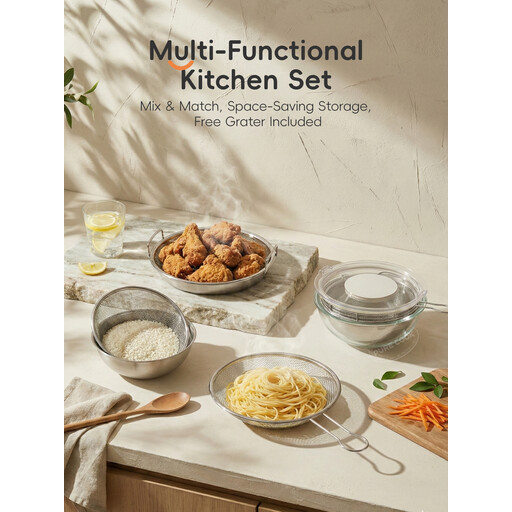
Why we chose it: A true Swiss Army knife for the kitchen, this set is perfect for meal prep or baking enthusiasts. It combines bowls, a colander, a grater, and airtight lids for unbeatable versatility.
Made from food-grade 304 stainless steel, it ensures hygiene and durability. Its airtight lids and stackable design overcome the classic pitfall of lacking practicality and versatility.
An all-in-one set to prep, mix, grate, drain, and store. Its stackable design is a major space-saver in your cabinets.
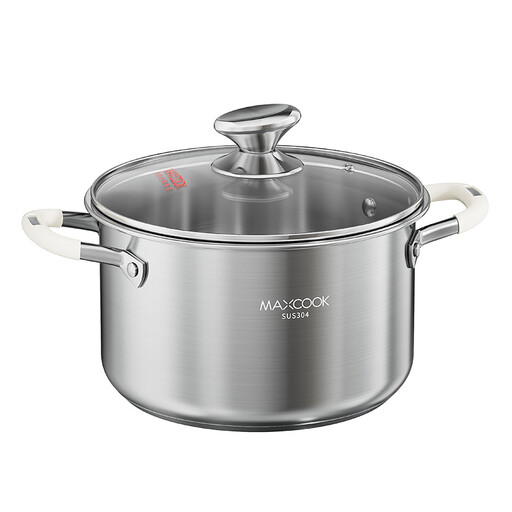
Why we chose it: With its 4.3-liter capacity, this stock pot is the ideal size for soups, stews, and family meals. It's designed for heavy-duty, safe use.
It checks the box for all-stovetop compatibility, including induction. Most importantly, its heat-resistant silicone handles solve the problem of scalding hot grips—a deal-breaking design flaw on many models.
Comfort and safety in use, thanks to its insulated handles. The transparent glass lid lets you monitor cooking at a glance without losing heat or flavor.
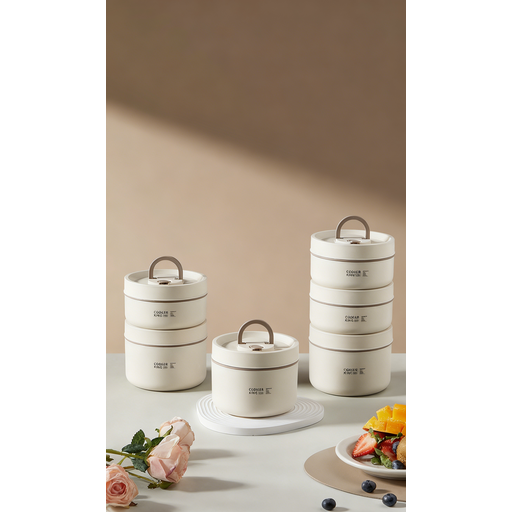
Why we chose it: This set of airtight containers is the healthy, durable alternative to plastic for packing lunches or storing leftovers. Their design emphasizes freshness and food safety.
Thanks to their 304 stainless steel construction, these containers eliminate the risks associated with plastic. The airtight locking system preserves freshness and prevents leaks—the Achilles' heel of low-quality containers.
Versatility: they are oven and steamer safe (without the lid), allowing you to reheat your meal directly in the container. The set of multiple sizes adapts to all your needs.
Find our complete, up-to-date selection of products that meet our strict selection criteria and current standards.
For daily care, a simple wash with hot, soapy water and a soft sponge is sufficient. The best practice: dry them immediately with a soft cloth to prevent water spots. For stubborn stains or bluish tints from overheating, a little white vinegar or baking soda on a damp sponge will restore their shine.
Absolutely. Type 304 stainless steel (or 18/8 and 18/10) is a benchmark for food safety. It's non-porous, which prevents bacteria from growing. Unlike some plastics, it is guaranteed to be free of controversial chemicals like BPA. Its composition makes it perfectly stable: it won't transfer any taste or odor to your food.
Not always. While most stainless steel pots work on gas, electric, and ceramic cooktops, their induction compatibility depends on their base. For a pot to work on an induction cooktop, its base must contain a ferromagnetic metal. Pro tip: always check for the "induction" pictogram (a coil-shaped symbol) or the phrase "all stovetops, including induction" on the product page.