
Livraison le jour même ou le lendemain

Qualité garantie

Débloquez vos offres de bienvenue: Livraison GRATUITE | Jusqu'à -80 % | 30 jours d'essai gratuits à JoyPlus
Téléchargez l'application
A cornerstone of any well-equipped kitchen, a good stainless steel bowl set is a powerful ally. Whether you're a weekend baker, a meal prep pro, or simply seeking durable everyday utensils, the choice might seem straightforward. However, the market is flooded with products making tempting promises that often lead to disappointment once you get them home. To avoid turning a promising purchase into a regret, it's crucial to know the most common pitfalls.
As the Head of Product Recommendations at Joybuy, I'm here to separate fact from fiction. Here are the 3 mistakes to avoid to choose a set that will serve you faithfully for years to come.
Not all stainless steel is created equal. Many budget-friendly sets use an unspecified, overly thin steel that scratches at the slightest touch, warps under heat, or worse, develops rust spots after just a few dishwasher cycles. Poor-quality stainless steel can even alter the taste of your food.
Lids that don't seal airtight, original shapes that are impossible to store, or the lack of a non-slip base on a mixing bowl are design flaws that can quickly become deal-breakers. These marketing "features" compromise the product's primary purpose: to make your life in the kitchen easier. Stackable bowls and reliable lids are non-negotiable basics.
You think you're getting a great deal on a 10-piece set, only to realise it's missing the essential large size for a stainless steel salad bowl with a lid, or that a matching stainless steel colander isn't included. This forces you to make an additional purchase, negating the initial savings and needlessly cluttering your cupboards.
To avoid falling into these traps, focus on a few technical details that make all the difference.
The gold standard for food-grade use is 304 stainless steel, sometimes called 18/8 stainless steel. This composition (18% chrome, 8% nickel) gives it excellent resistance to rust, corrosion, and acids found in foods (like vinegar and lemon). It's a guarantee of longevity and neutrality: it won't impart any metallic taste to your preparations, a critical point for food storage or for a baking bowl.
A good set should make your life easier. Here are the points to check:
A truly useful set should adapt to your daily needs. Make sure it includes:
To illustrate these criteria in practice, here are a few models that suit different user profiles.
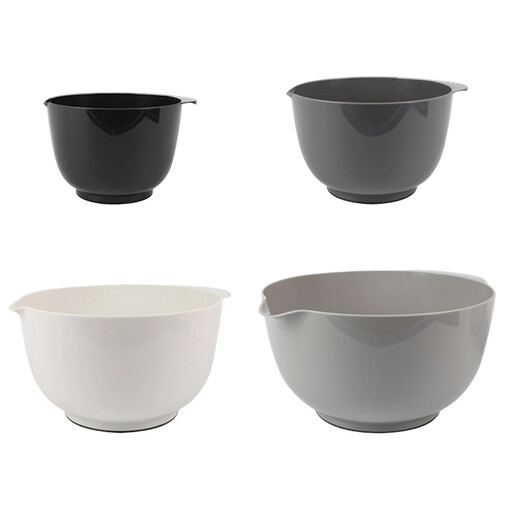
Who is it for? For those who demand perfect stability when whipping egg whites with an electric mixer or whisking a vigorous batter. The different sizes are ideal for organising ingredients (the famous *mise en place*).
It avoids the "gimmicky" design pitfall by focusing on one essential function: its non-slip base, which literally anchors the bowl to the worktop. The BPA-free lids are designed for storage.
Unbeatable stability thanks to its silicone base and optimised storage with a perfectly stackable design.
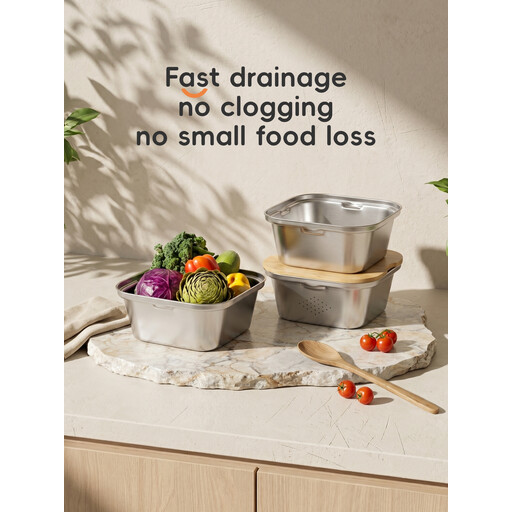
Who is it for? Perfect for organising your meals for the week. Their square shape optimises fridge space, while the integrated colanders allow you to wash and then store fresh vegetables.
It avoids the incomplete set pitfall by offering very practical bowl + colander duos. The explicit mention of 304 stainless steel eliminates any risk associated with questionable quality steel.
Square format for maximum space-saving in the fridge and natural bamboo lids for healthy and elegant storage.
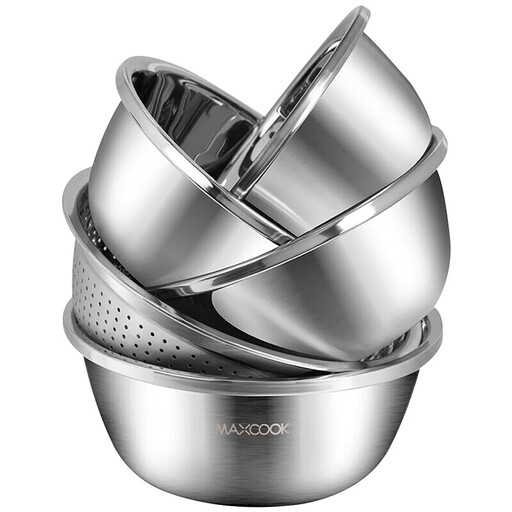
Who is it for? The perfect ally for a family's daily needs. Its large 30 cm bowl is perfect for large salads, big-batch preparations, or marinades for a weekend barbecue.
It counters the low-grade steel pitfall by featuring 304 steel and a "thickened" design that inspires confidence. The inclusion of a colander makes it highly versatile.
Its large capacity (30 cm bowl) and robust construction are built for intensive family use.
Explore our full selection of products that meet our quality criteria and food safety standards.
Yes, almost all stainless steel bowls are dishwasher-safe, which makes cleanup incredibly simple. However, be careful with the lids. Plastic lids, and especially bamboo ones, should generally be hand-washed to prevent them from warping, cracking, or losing their seal. Always refer to the manufacturer's recommendations.
To preserve their finish, never use abrasive sponges (the green scouring side!) or steel wool, which will create unsightly micro-scratches. Opt for the soft side of the sponge and standard dish soap. Using metal utensils (whisks, immersion blenders, etc.) may leave fine scratches inside. This is normal wear and tear and does not affect the food safety or effectiveness of the bowl.
304 stainless steel (or 18/8) is the benchmark standard for kitchen utensils. Its composition (chrome and nickel) gives it far superior resistance to rust and corrosion, even when in contact with acidic foods like lemon or vinegar. Other types of stainless steel, which are often cheaper (like 201 or 430), can stain, rust more quickly, and don't guarantee the same taste neutrality. For a durable and health-safe purchase, 304 stainless steel remains the only choice to prioritise.