
Livraison le jour même ou le lendemain

Qualité garantie

Débloquez vos offres de bienvenue: Livraison GRATUITE | Jusqu'à -80 % | 30 jours d'essai gratuits à JoyPlus
Téléchargez l'application
Taking a full lunch to the office, university or on a picnic is much more convenient when every food item stays in its place. But not all boxes sold as compartmentalised stainless steel bento boxes are created equal. The number of compartments, the quality of the steel and the closure system can make a real difference in daily use.
Before you place an order, here are the main pitfalls to avoid and the criteria to examine when choosing a durable, practical lunch box that suits your habits.
A four-compartment lunch box lets you separate your food, but that doesn't mean each section is leak-proof. A divider may simply stop solid foods from mixing, without holding back a sauce or liquid.
If you plan to carry a pre-dressed salad, soup or a saucy dish, check for a perimeter seal, the firmness of the closure and any information the manufacturer provides about leak-proofing. If nothing is stated, it's best to place liquid preparations in a separate container.
The term "stainless steel" covers several grades of metal. For food use, the product page should specify the grade used when this information is available. 316 grade steel, for instance, appears in the model name of the Maxcook box featured here. However, this mention alone does not guarantee unlimited resistance to knocks, moisture or all cleaning products.
Also consider the ancillary parts: lid, seals, clips and any plastic components. These are often what determine the real lifespan of a stainless steel lunch box.
In a photo, a bento box can look compact but turn out to be much bulkier once slipped into a bag. Before ordering, check its dimensions, weight and compatibility with your lunch bag. A model that's too large will be a pain to carry every day, while one that's too small won't leave enough room for a complete meal.
A four-compartment lunch box suits people who want to separate, for example, the main dish, side, fruit and a snack. This arrangement prevents textures from mixing and makes meal prep in advance much simpler.
Also check whether the compartments are fixed or removable. Fixed dividers keep your food better organised, while removable ones often make cleaning easier and offer more flexibility.
Choose product pages that clearly state the steel grade used and its intended use for food contact. The term "stainless steel" mainly refers to the metal part: it doesn't automatically give information about the lid or seals.
To keep your portable food container in good condition, avoid abrasive sponges and dry the metal parts thoroughly after washing. If the manufacturer doesn't confirm dishwasher compatibility, opt for hand washing, especially for the lid and seals.
A lid with several locking points can keep the box securely closed during a tube journey, car ride or walk. However, this doesn't replace a clear indication of leak-proofing. Before taking it out in a bag, do a first test with cold water over the sink.
A leak-proof lunch box also needs regular maintenance. Remove the seal when its design allows, clean the corners carefully and let each part dry separately to prevent lingering odours.
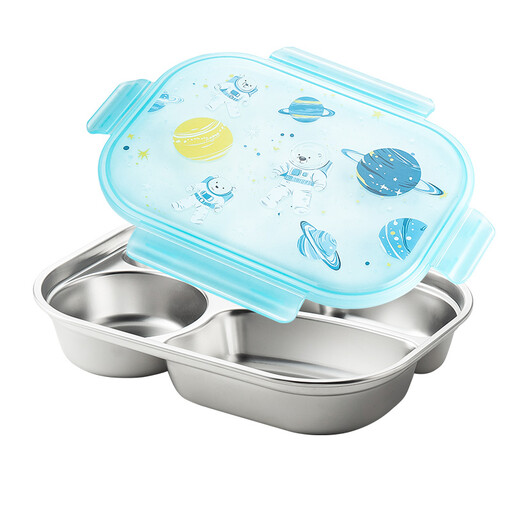
Why this choice suits this profile: Its four compartments let you prepare a varied meal without needing multiple boxes and containers. The lid with a space-themed design is a refreshing change from the most classic models.
The product page states the use of 316 stainless steel and the number of compartments. This means you can check two essential criteria before buying, rather than relying solely on the photo.
316 stainless steel stated in the product name; four storage spaces; lid decorated with an astronaut motif.
Why this choice suits this profile: Shoppers who care about materials now have a reference that mentions a specific steel grade. That's already more informative than a simple label like "metal lunch box".
The reference to 316 steel helps you avoid choosing a product with a vague composition. However, do remember to check the lid features and care instructions on the product page.
316 grade mentioned; compartmentalised design; size suitable for the office or a picnic, provided you check it fits in your bag.
Why this choice suits this profile: People who regularly take their lunch can spread their food across four spaces and reduce the use of bags or small disposable containers.
The separation of foods limits mixing during transport. For liquid preparations, however, check the stated leak-proofing and add extra protection if needed.
Four compartments; reusable design; decorated lid, suitable for a personal lunch box.
We've put together a comprehensive, real-time updated selection of products that meet these demanding criteria as well as European safety regulations.
That depends on the model and, above all, the lid. The steel can generally be cleaned without issue, but the seals, clips and decorative elements may need hand washing. Always check the manufacturer's instructions before putting the box in the dishwasher.
Not necessarily. The compartments are for organising food, but leak-proofing depends on the seal and the lid design. Test the closure with water before using it to transport a saucy dish or liquid preparation.
Wash it promptly after your meal, remove any residue stuck in the corners and dry the box, lid and seal separately. Avoid abrasive products, repeated knocks and storing it closed when the inside is still damp.