
Livraison le jour même ou le lendemain

Qualité garantie

Débloquez vos offres de bienvenue: Livraison GRATUITE | Jusqu'à -80 % | 30 jours d'essai gratuits à JoyPlus
Téléchargez l'application
Switching to a stainless steel bento box is a smart move for healthier, more cost-effective, and eco-friendly on-the-go lunches. The problem? The market is flooded with options, and disappointment is common. A poor seal, low-quality materials, or an impractical design can quickly lead to buyer's remorse.
As a Product Recommendation Manager at Joybuy, my mission is to help you navigate the options. Let's break down the common pitfalls to avoid and the essential criteria for making the right choice.
Before falling for a pretty design, it's crucial to understand the hidden flaws that can make a lunch box unusable for daily life.
To ensure the longevity and safety of your stainless steel lunch container, three key points must be verified.
The quality of your stainless steel food container depends on its composition. Two grades should be prioritized:
Properly separating food all comes down to the lid. Check if it has silicone seals that press against the dividers of each compartment. Without this mechanism, a seal between sections is nearly impossible. A crucial point: ensure that all plastic parts (lid, clips) are certified BPA-free (Bisphenol A) to rule out any contact with potentially harmful substances.
The volume, expressed in milliliters (ml), should match your appetite. An adult will typically need 800 ml to 1.2 L for a full meal. For a stainless steel bento for kids, a capacity of 500 to 900 ml is often sufficient. Some models include removable dividers, offering welcome flexibility to adapt the box to the day's menu.
Here are a few models that check all the boxes, designed for different users and based on the quality criteria we've just covered.
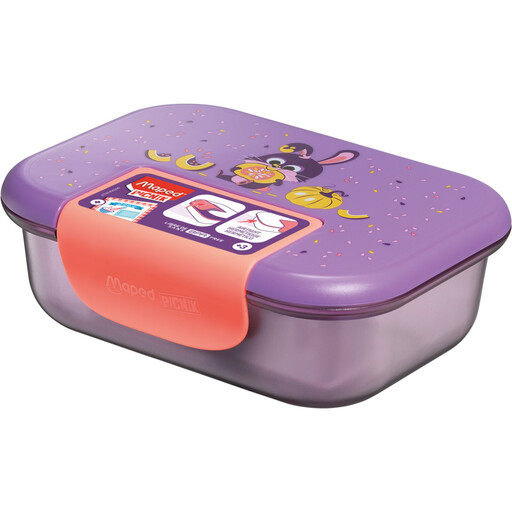
Why we chose it: This model is designed for a child's daily routine. Its opening clip is easy for small hands to manage, and the attached lid prevents it from getting lost at school. Its rectangular shape optimizes space in a backpack.
Its clever design, with an integrated lid and no complex gaskets, eliminates the cleaning headache and residue buildup.
Kid-friendly ease of use and a sturdy, dishwasher-safe stainless steel construction.

Why we chose it: This set of three different-sized containers (600, 1100, and 2200 ml) is a comprehensive solution for week-long meal prepping. They are stackable for streamlined storage and are freezer-safe.
Thanks to its high-quality 316 stainless steel, it resists both corrosion and metallic taste, even with acidic or salty foods. This avoids the low-grade steel trap entirely.
Superior material quality (316 steel), versatility with three sizes, and freezer compatibility.
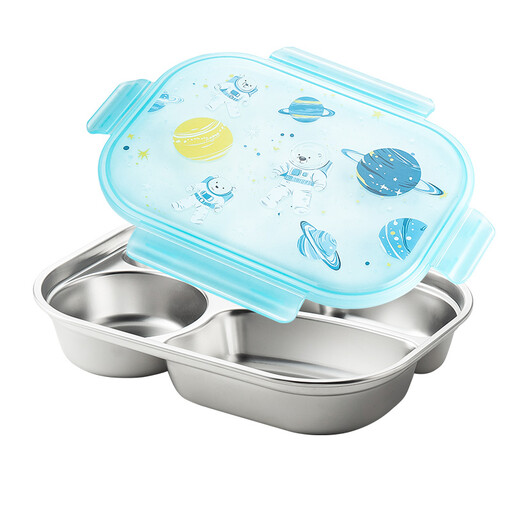
Why we chose it: Ideal for a complete and balanced meal, this box features four fixed compartments to separate a main, side, starter, and dessert. Its compact footprint is convenient for daily transport.
Its fixed-compartment structure and fitted lid solve the problem of food mixing—one of the worst nightmares for users of low-end lunch boxes.
Optimal meal organization with 4 compartments and guaranteed durability from 316 stainless steel.
We've curated a complete selection of products that meet our strict selection criteria and safety standards.
No, you should never put any metal object, including a stainless steel box, in a microwave oven. Doing so creates a fire hazard. To reheat your meal, you can either transfer the food to a microwave-safe plate or opt for an insulated stainless steel lunch box that will keep your food warm for several hours.
Most stainless steel boxes are dishwasher-safe, which greatly simplifies maintenance. However, to preserve the lifespan of the lid's silicone gaskets, hand-washing this part is often recommended. If the gasket is removable, take it out periodically for a deep clean to prevent any residue buildup.
304 steel is the quality standard for most kitchen utensils, offering very good protection against rust. 316 steel is a premium-grade version containing molybdenum, which makes it even more resistant to corrosion from salt and acids. If you often cook saucy dishes with dressings or tomatoes, 316 steel is a wise investment for unbeatable durability.